How to Read a Medicine Box or Strip in Pakistan
Most people check the medicine name and perhaps the expiry date before taking a tablet. But a medicine box, bottle or blister strip contains much more information that can help you understand what medicine you have, its strength, who manufactured it and whether it is still suitable for use.
Learning how to read medicine packaging is particularly useful when two products have similar brand names or when the same medicine is available in several strengths.
1. Start With the Brand Name
The most prominent text on the packaging is usually the brand or trade name.
For example, a medicine may be sold under a particular brand name while its active ingredient has an entirely different name.
Do not identify a medicine from the brand name alone. Different products can have similar-looking names, and some brands have multiple versions or strengths.
2. Find the Generic or Active Ingredient
Look for wording such as:
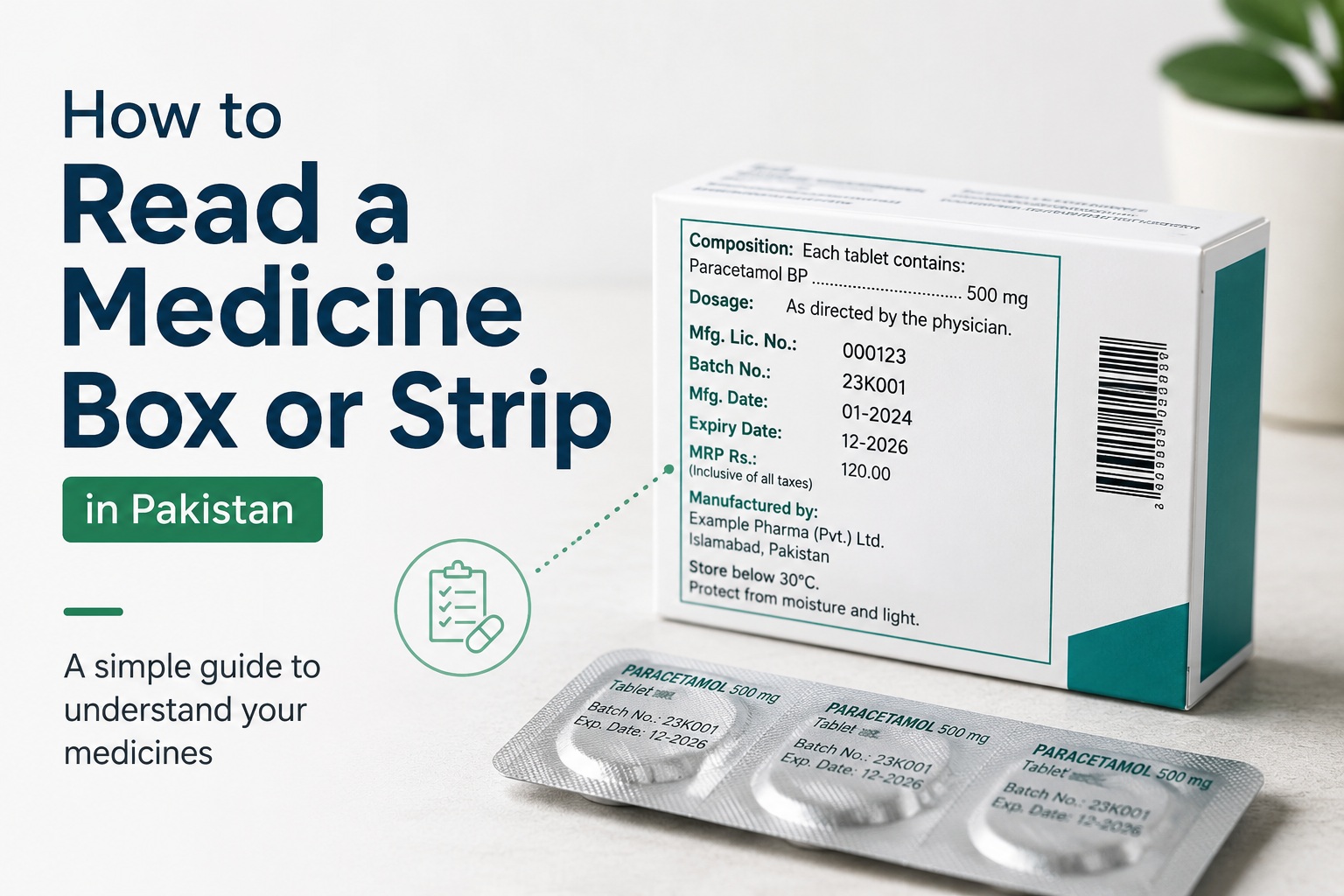
Composition, Each tablet contains, Active ingredient, or Generic name.
The generic name tells you which medicinal substance the product contains.
For example:
Brand: Panadol
Generic ingredient: Paracetamol
Knowing the generic ingredient is important because two different brands may contain the same medicine. Taking both without realizing this could result in an unintended excessive dose.
3. Check the Strength Carefully
Medicine strength is commonly written next to the brand or generic name.
You might see:
- 5 mg
- 20 mg
- 500 mg
- 125 mg/5 mL
The number matters. A 10 mg tablet and a 20 mg tablet of the same medicine are not automatically interchangeable.
For example, ITP 50mg Tablet contains itopride hydrochloride 50 mg per tablet. The “50 mg” refers to the amount of the active ingredient in each tablet, which is why checking both the generic name and strength is important.
Liquid medicines often state how much active ingredient is present in a particular volume, such as 125 mg per 5 mL.
Always check both the medicine name and its strength.
4. Look at the Dosage Form
The packaging should indicate what type of medicine it is, such as:
- Tablet
- Capsule
- Syrup
- Suspension
- Oral gel
- Cream or ointment
- Injection
- Drops
You may also encounter abbreviations such as SR, CR, ER or XR. These usually indicate formulations designed to release the medicine over a longer period.
Such tablets should not automatically be crushed, chewed or split because doing so may alter how the medicine is released.
5. Check the Manufacturing and Expiry Dates
Look for MFG/MFD and EXP.
MFG/MFD indicates when the medicine was manufactured, while EXP indicates its expiry.
Do not use a medicine simply because the tablets still look normal. Medicines should not be used beyond their stated expiry date unless specifically advised by an appropriate healthcare authority in exceptional circumstances.
Also check medicines stored at home periodically and separate expired products from medicines currently in use.
6. Find the Batch Number
Medicine packaging normally carries a batch or lot number, often written as:
Batch No.
B.No.
Lot No.
The batch number identifies the particular production batch from which the medicine came.
This becomes especially useful if a manufacturer or regulator announces a product recall affecting specific batches.
7. Identify the Manufacturer
Check which pharmaceutical company manufactured or marketed the medicine.
Packaging may show:
Manufactured by
Manufactured for
Marketed by
The manufacturer’s name and address can help identify the product and distinguish legitimate packaging from suspicious or unfamiliar products.
For medicines sold in Pakistan, the Drug Regulatory Authority of Pakistan (DRAP) is the national regulator responsible for therapeutic goods, including medicines.
8. Check the Price
Medicines sold in Pakistan commonly carry pricing information on their packaging.
When purchasing medicine, check the printed information and obtain medicines from a licensed and reputable pharmacy. Be cautious if packaging appears altered, overwritten or suspicious.
A dramatically different price alone does not prove a medicine is counterfeit, but unusual packaging or pricing can justify further verification.
9. Read the Storage Instructions
You may see instructions such as:
Store below 25°C
Store below 30°C
Protect from light
Keep in a cool, dry place
Refrigerate
Storage instructions matter because excessive heat, moisture or incorrect refrigeration can affect some medicines.
Pakistan’s hot climate makes proper storage particularly important. Avoid routinely keeping medicines in hot cars, direct sunlight or excessively humid locations.
10. Look for Prescription and Safety Warnings
Some packages carry statements indicating that the medicine should only be supplied or used on a doctor’s prescription.
Other warnings may relate to:
- Pregnancy
- Driving or operating machinery
- Drowsiness
- Use in children
- Keeping medicine out of children’s reach
- Special administration instructions
These warnings should not be ignored simply because you have used the medicine before.
What About the Information on a Blister Strip?
If the original box has been discarded, the blister strip may still contain useful information such as the:
brand name, generic ingredient, strength, manufacturer, batch number and expiry date.
However, not every instruction from the outer packaging or patient information leaflet will necessarily appear on an individual strip.
This is one reason it can be useful to keep medicines in their original packaging until they have been used.
What If You Cannot Identify a Medicine?
Do not take an unidentified tablet based only on its colour, shape or what someone remembers it being.
If the packaging is missing or unclear, show the medicine to a pharmacist or doctor. Tablet appearance alone is not a reliable method of identification.
Before Taking Any Medicine: A Quick Check
Before taking a medicine, confirm:
Right medicine → Right generic ingredient → Right strength → Right dosage form → Valid expiry → Correct instructions
For prescription medicines, also make sure the medicine was prescribed for the correct person and is being taken according to the prescribed dose.
Final Word
Understanding medicine packaging is a simple but valuable medication-safety habit. Instead of looking only at the brand name, check the generic ingredient, strength, formulation, expiry date, manufacturer, batch information and storage instructions.
If anything on the box or strip is unclear—or the packaging looks damaged, altered or suspicious—ask a pharmacist or healthcare professional before using the medicine.