
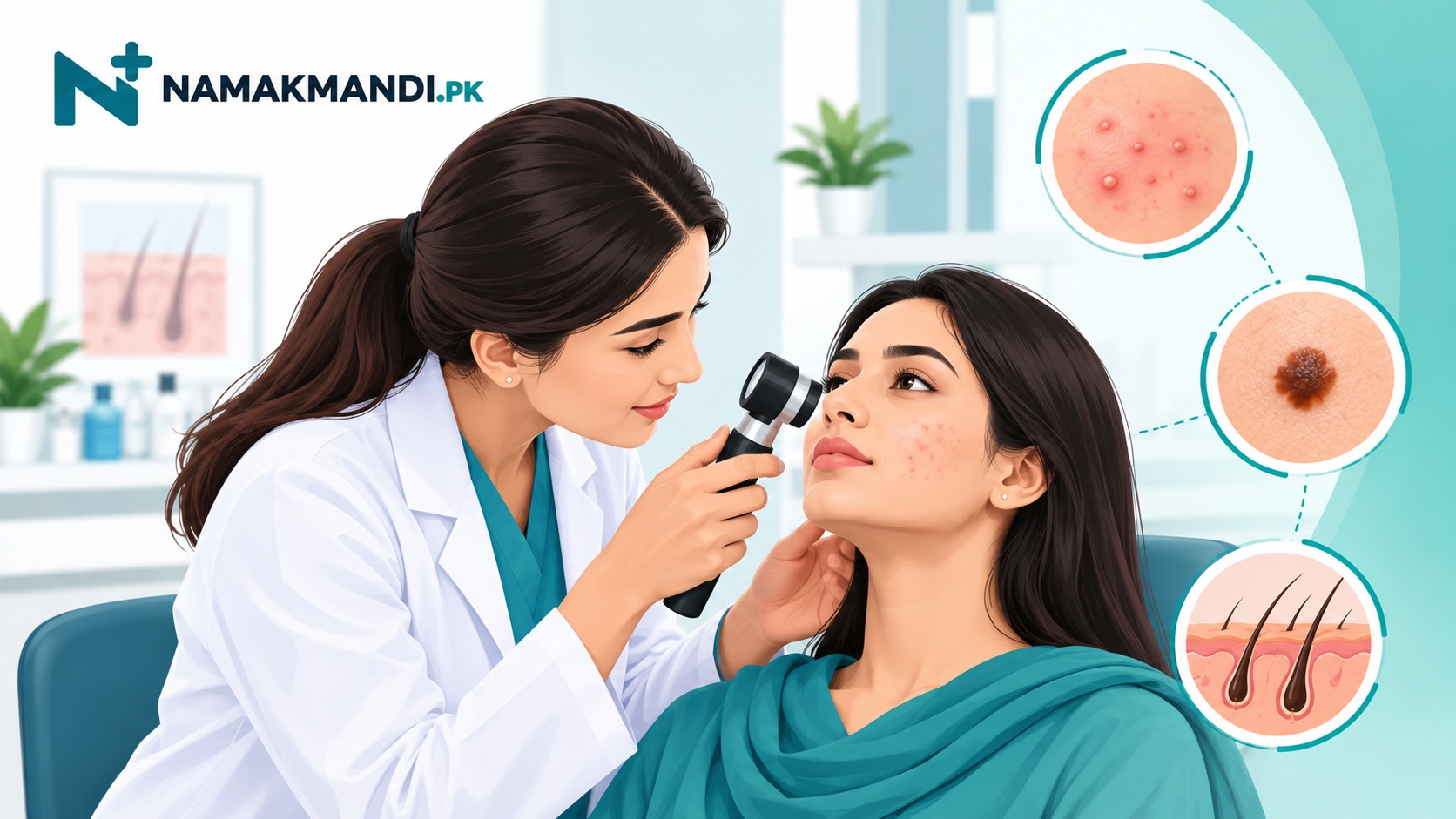
When Should You See a Dermatologist? 12 Signs You Shouldn’t Ignore
Skin problems are common, but knowing when to see a dermatologist isn’t always straightforward. A small rash may disappear within a few days, while persistent itching, recurring acne, unusual pigmentation or a changing mole may require professional evaluation.
A dermatologist is a medical doctor who specializes in diagnosing and treating conditions affecting the skin, hair, nails and certain mucous membranes. Dermatologists manage everything from acne and eczema to psoriasis, fungal infections, hair loss and skin cancer.
You don’t need to wait until a skin condition becomes severe before seeking help. Early diagnosis can prevent unnecessary discomfort, reduce the risk of complications and help avoid inappropriate treatments.
Quick Answer: When Should You See a Dermatologist?
You should consider seeing a dermatologist when a skin, hair or nail problem persists, keeps returning, worsens, affects your daily life or does not improve with appropriate basic care. Changing moles, unexplained bleeding skin lesions, significant hair loss, severe acne and recurrent skin infections also deserve professional assessment.
When to seek medical care
| Persistent acne, eczema or hair loss | Book a routine dermatology appointment |
| Changing mole or unexplained bleeding lesion | Arrange prompt dermatology assessment |
| Rapidly spreading painful rash with fever | Seek urgent medical assessment |
| Skin peeling or blistering with mouth or eye involvement | Seek emergency medical care |
1. Acne That Doesn’t Improve or Leaves Scars
Acne is one of the most common reasons people visit dermatologists. Although mild acne may improve with suitable skincare and over-the-counter treatments, some cases require prescription medicines.
Consider seeing a dermatologist if:
-
Acne continues despite consistent, appropriate treatment.
-
You develop deep, painful pimples or cysts.
-
Acne is leaving scars or dark marks.
-
Breakouts repeatedly return.
-
Acne significantly affects your confidence or emotional wellbeing.
Severe inflammatory acne can cause permanent scarring. A dermatologist may recommend topical treatments, oral medicines or other approaches depending on the type and severity of acne.
Treatment may include retinoids, benzoyl peroxide, selected antibiotics or isotretinoin when clinically appropriate. These medicines have different precautions and should not be used interchangeably.
Why early treatment matters: Preventing acne scars is generally easier than treating established scars.
2. A Rash That Persists or Keeps Coming Back
An occasional mild rash may result from irritation, sweating or contact with a new product. However, a rash that continues for several weeks, spreads or repeatedly returns may indicate an underlying skin condition.
Possible causes include eczema, contact dermatitis, fungal infections, psoriasis and other inflammatory disorders.
Different rashes can look remarkably similar, even when their causes and treatments are completely different.
For example, a fungal infection may be mistaken for eczema. Applying a steroid cream without an accurate diagnosis can sometimes suppress the visible inflammation while allowing the fungal infection to spread.
A dermatologist can examine the affected skin and, when necessary, perform tests to identify the cause.
3. A Mole That Changes in Size, Shape or Colour
Most moles are harmless, but a changing mole should not be ignored.
Dermatologists often use the ABCDE rule to help identify features that may suggest melanoma, a serious form of skin cancer.
A — Asymmetry
One half looks different from the other.
B — Border
Edges appear uneven, blurred or irregular.
C — Colour
Several colours or uneven pigmentation.
D — Diameter
Larger than about 6 mm, although melanomas can be smaller.
E — Evolving: Any noticeable change in size, shape, colour, elevation or symptoms, including new bleeding or itching.
Other concerning signs include a new lesion that looks different from your other moles, a sore that repeatedly bleeds, or a skin growth that does not heal. Skin cancer can occur in people of any skin tone. In darker skin, melanoma may also develop on the palms, soles or beneath the nails. A dermatologist may use a dermatoscope to examine suspicious lesions and recommend a biopsy when necessary.
4. Persistent Itching Without an Obvious Cause
Occasional itching is common, particularly during dry weather. However, persistent itching can interfere with sleep, concentration and everyday activities.
Possible skin-related causes include:
- Eczema
- Allergic contact dermatitis
- Scabies
- Fungal infectionsPsoriasis
- Chronic urticaria (hives)
Sometimes itching occurs without an obvious rash and may be associated with medications or medical conditions involving the liver, kidneys, thyroid or blood.
A dermatologist can help investigate skin-related causes and may recommend additional medical evaluation when appropriate.
5. Unusual Hair Loss or Bald Patches
Hair shedding is a normal part of the hair-growth cycle. However, sudden or excessive hair loss deserves attention, particularly when it develops alongside scalp inflammation.
See a dermatologist if you notice circular bald patches, widening of the hair parting, rapid thinning, scalp redness, scaling, pain or scarring.
Hair loss can have several causes, including androgenetic alopecia, alopecia areata, telogen effluvium, scalp fungal infections and certain inflammatory conditions.
Nutritional deficiencies, thyroid disorders, illness, childbirth and medications can also contribute.
A dermatologist may examine the scalp and hair follicles and recommend blood tests or other investigations based on the findings.
Early assessment is particularly important for scarring alopecia, because damage to hair follicles can become permanent.
6. Dark Patches, Uneven Skin Tone or Pigmentation Changes
Pigmentation concerns are common, particularly among people who experience prolonged sun exposure or develop dark marks after acne and skin inflammation.
Common conditions include melasma, post-inflammatory hyperpigmentation and other disorders affecting skin colour.
Some pigmentation changes may also indicate an underlying medical condition.
For example, dark, thickened, velvety skin around the neck or underarms may be acanthosis nigricans, which can be associated with insulin resistance.
A dermatologist can help determine the type of pigmentation and recommend appropriate treatment.
Unsupervised use of skin-lightening products, potent steroid creams or unregulated mixtures can damage the skin and sometimes make pigmentation problems worse.
7. Repeated Fungal or Other Skin Infections
Skin infections are particularly common in warm, humid environments where sweating and moisture can encourage certain organisms to grow.
Conditions such as ringworm, athlete’s foot and fungal infections affecting the groin may cause itching, scaling, redness or changes in skin colour.
However, not every itchy rash is fungal.
A dermatologist should be consulted when an infection repeatedly returns, spreads despite treatment, affects the nails or scalp, or is difficult to distinguish from another skin condition.
Some fungal infections require oral antifungal treatment, while others respond to topical medicines.
Recurrent bacterial infections, boils and painful skin lesions also deserve assessment, particularly in people with diabetes or reduced immunity.
8. Eczema or Psoriasis That Affects Daily Life
Eczema and psoriasis are chronic inflammatory skin conditions that may require long-term management.
Eczema often causes dry, itchy and inflamed skin. Psoriasis commonly produces well-defined, thickened, scaly patches, although its appearance varies with skin tone and body location.
Consider specialist care when symptoms interfere with sleep, affect large areas of skin, repeatedly flare or fail to respond to initial treatment.
Dermatologists can help identify triggers, develop appropriate skincare routines and prescribe medicines when needed.
Moderate to severe disease may require phototherapy, systemic medicines or other specialist treatments.
Psoriasis can also be associated with psoriatic arthritis. Patients with psoriasis who develop persistent joint pain, swelling or morning stiffness should seek medical assessment.
9. Nail Changes That Don’t Go Away
Nails can provide useful clues about skin and general health.
Changes that may justify dermatological assessment include thickened or crumbling nails, persistent discolouration, separation of the nail from the nail bed, painful nail inflammation and unexplained nail deformities.
Fungal nail infections are one possible cause, but psoriasis, trauma and other disorders can produce similar changes.
A new dark streak in one nail, especially if it widens or extends onto surrounding skin, should be assessed promptly because it can occasionally indicate nail melanoma.
A dermatologist may examine the nail and perform testing before prescribing treatment.
10. Excessive Sweating or Persistent Body Odour
Sweating helps regulate body temperature, but excessive sweating can become a medical concern when it interferes with daily activities.
This condition is called hyperhidrosis.
It commonly affects the palms, soles, underarms or face, although some people experience more widespread sweating.
Dermatologists can evaluate excessive sweating and recommend treatments such as prescription antiperspirants, iontophoresis, selected oral medicines or botulinum toxin injections.
New generalized sweating, especially when accompanied by fever, unexplained weight loss or other systemic symptoms, may require broader medical evaluation.
11. A Skin Growth, Wound or Sore That Won’t Heal
A persistent sore or growth should not be dismissed simply because it is painless.
Dermatologists evaluate conditions such as cysts, warts, benign growths, suspicious lesions and certain chronic wounds.
A skin lesion deserves prompt attention if it repeatedly bleeds, develops a crust without healing, enlarges, changes appearance or remains unexplained.
Not every persistent lesion is cancerous, but assessment is important because some skin cancers can initially resemble harmless sores or growths.
People with diabetes should seek appropriate medical care for foot wounds or ulcers without waiting for a routine dermatology appointment, as these can require urgent multidisciplinary treatment.
12. Skin Problems Caused by Cosmetics or Skincare Products
Skincare products do not suit everyone.
A new face cream, hair dye, fragrance, sunscreen or cosmetic treatment may trigger irritation or allergic contact dermatitis.
Symptoms can include burning, redness, itching, swelling, dryness, scaling or blistering.
Some people develop problems after using multiple active skincare ingredients together, particularly exfoliating acids, retinoids and strong acne treatments.
A dermatologist can help identify possible triggers and recommend a simpler, safer skincare routine.
For suspected allergic contact dermatitis, patch testing may be appropriate.
Avoid repeatedly applying products that cause significant irritation in the hope that the skin will eventually become accustomed to them.
When Is a Skin Problem an Emergency?
Some skin conditions require immediate medical attention rather than a routine dermatology appointment.
Seek urgent or emergency care for:
-
A rapidly spreading rash accompanied by fever or significant illness.
-
Extensive blistering, peeling or painful skin.
-
A severe rash that develops after starting a new medicine, particularly with fever or mouth sores.
-
Facial or lip swelling with breathing or swallowing difficulty.
-
A painful, spreading skin infection with fever or rapidly worsening swelling.
-
Purple or dark spots that do not fade when pressed, especially with fever or severe illness.
The American Academy of Dermatology highlights widespread, painful, rapidly spreading or blistering rashes, particularly those involving the eyes or mouth, as important warning signs.
Should You Visit a Dermatologist or a General Physician?
A general physician can diagnose and manage many straightforward skin problems, including mild infections, dry skin and uncomplicated rashes.
A dermatologist is particularly useful when the diagnosis is uncertain, treatment has failed, symptoms are recurring or specialized investigations are required.
You may also be referred to a dermatologist for procedures such as skin biopsies, dermoscopy, patch testing or selected treatments for chronic skin disease.
In Pakistan, patients can consult a dermatologist directly in many private clinics and hospitals, although referral arrangements may differ between institutions.
What Happens During a Dermatologist Appointment?
A dermatology consultation usually begins with a discussion about your symptoms, their duration, previous treatments and relevant medical history.
The doctor may ask when the problem started, whether it is painful or itchy, which products or medicines you use, whether family members have similar symptoms and whether the condition changes with weather, sunlight or other exposures.
Next, the dermatologist examines the affected skin, scalp or nails. Depending on the suspected condition, additional tests may include skin scrapings, fungal testing, blood tests, allergy patch testing or a biopsy.
Not every patient needs investigations. Many common skin conditions can be diagnosed through clinical examination.
How to Prepare for Your Dermatology Visit
A little preparation can help make your consultation more productive.
-
Bring a list or photographs of the creams, medicines and skincare products you have used.
-
Take photographs of intermittent rashes when they are visible.
-
Make a note of when symptoms began and what makes them better or worse.
-
Bring relevant previous test results or prescriptions.
-
Avoid covering the affected area with heavy makeup immediately before examination when practical.
If a rash has already disappeared by the time of your appointment, clear photographs may still help the dermatologist understand its appearance.
Finding a Dermatologist in Peshawar
Patients in Peshawar can consult dermatologists for medical conditions such as acne, eczema, psoriasis, fungal infections, hair loss, pigmentation disorders and suspicious skin lesions.
When choosing a specialist, consider the doctor’s qualifications, clinical experience, the type of condition being treated and access to appropriate follow-up care.
For example, someone with severe inflammatory acne may need ongoing medical management, while a patient with a suspicious mole may require dermoscopy or biopsy services.
NamakMandi.pk includes dermatologist profiles such as Dr. Fahad Faizullah and Dr. Syed Mujahid Hussain to help patients learn about available specialists.
Frequently Asked Questions
When should I see a dermatologist for acne?
Consider visiting a dermatologist if acne is painful, deep, persistent, causing scars or not improving with suitable treatment. Earlier assessment can help reduce the risk of permanent scarring.
How long should I wait before seeing a dermatologist for a rash?
A mild rash that improves quickly may not need specialist care. If it persists, spreads, repeatedly returns or fails to improve with appropriate treatment, arrange an assessment. Painful, blistering or rapidly spreading rashes accompanied by illness need urgent evaluation.
Can a dermatologist treat hair loss?
Yes. Dermatologists diagnose and treat many causes of hair loss, including alopecia areata, hereditary hair thinning, scalp infections and inflammatory scalp disorders.
Should I see a dermatologist for dark spots on my face?
Persistent or unexplained dark spots may benefit from dermatological assessment, especially when pigmentation is spreading, changing or worsening after skincare treatments. The correct treatment depends on the cause.
Can a dermatologist treat fungal infections?
Yes. Dermatologists diagnose and treat fungal infections affecting the skin, scalp and nails. They can also distinguish fungal infections from other conditions that may appear similar.
Is a dermatologist only for cosmetic problems?
No. Dermatology is a medical specialty covering diseases of the skin, hair and nails. Cosmetic treatments are only one part of dermatological practice.
Should children see a dermatologist?
Children may need dermatological care for severe eczema, persistent rashes, birthmarks, scalp infections, unusual skin lesions or other conditions requiring specialist assessment. Some problems may be managed by a pediatrician or pediatric dermatologist.
Do I need a dermatologist for a changing mole?
Yes. A mole that changes in size, shape or colour, bleeds, itches or looks different from your other moles should be assessed promptly.
Key Takeaways
-
Persistent, recurring or worsening skin conditions deserve professional assessment.
-
Severe acne should be treated early to help prevent permanent scars.
-
Changing moles and non-healing skin lesions should not be ignored.
-
Dermatologists also treat hair loss, nail disorders and excessive sweating.
-
Not every rash requires a specialist, but rapid spreading, blistering or fever can indicate an urgent problem.
-
Avoid prolonged self-treatment with potent steroid or skin-lightening creams without a diagnosis.
Final Thoughts
Knowing when to see a dermatologist can help you distinguish minor skin concerns from problems that require specialist care.
You do not need to wait until a condition becomes unbearable. Persistent acne, recurring rashes, unusual hair loss, unexplained pigmentation and changing skin lesions are all reasonable reasons to seek medical advice.
A timely diagnosis can help identify the cause, guide effective treatment and reduce the risk of avoidable complications.
Medical disclaimer: This article is intended for general health education and does not replace professional diagnosis or treatment. Skin conditions cannot always be identified from symptoms or photographs alone.