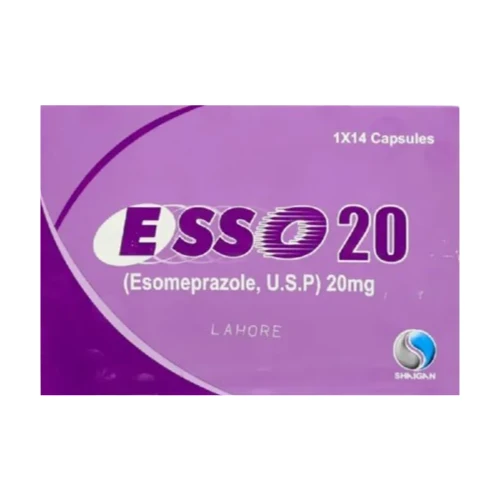
Esso 20 mg Capsule
- Current Price:
Rs. 338
Price may vary by pharmacy and location.
- Generic Name (Formula)
Esomeprazole
- Strength
- 20 mg
- Dosage Form
Capsule
- Manufacturer
- Shaigan Pharmaceuticals
- Primary Use
- Acid Reflux
More Details About the Medicine
Esso 20 mg Capsule is an acid-reducing medicine containing Esomeprazole 20 mg. It belongs to a group of medicines called proton pump inhibitors (PPIs) and is manufactured by Shaigan Pharmaceuticals in Pakistan.
Esso 20 is primarily used for conditions caused by excessive stomach acid, including gastroesophageal reflux disease (GERD), heartburn, acid reflux, and erosive esophagitis. It may also form part of combination treatment for Helicobacter pylori (H. pylori)-associated duodenal ulcers.
Primary Uses of Esso 20
- Gastroesophageal reflux disease (GERD)
- Heartburn
- Acid reflux
- Erosive esophagitis
- Acid-related indigestion
- Peptic and duodenal ulcer disease in appropriate patients
- H. pylori-associated ulcers as part of combination therapy
- Prevention or treatment of certain NSAID-associated ulcers when prescribed
How Does Esso 20 Work?
The stomach contains proton pumps that play an important role in producing gastric acid. Esomeprazole blocks these pumps, reducing the amount of acid released into the stomach.
Reducing stomach acid can relieve heartburn and acid regurgitation while allowing acid-damaged tissue in the esophagus or stomach to heal.
How to Take Esso 20 mg
Esomeprazole is commonly taken before food, but the dose, timing, and duration depend on the condition being treated. Follow your doctor’s instructions.
Because Esso 20 contains delayed-release pellets, the capsule should be used according to its product instructions rather than crushed or chewed in a way that damages the enteric-coated pellets.
For GERD and erosive esophagitis, treatment duration can vary depending on symptoms and healing response. Shaigan’s prescribing information describes short-term treatment of confirmed erosive esophagitis and maintenance treatment in appropriate patients.
Esso 20 mg vs Esso 40 mg
Both Esso 20 mg and Esso 40 mg contain esomeprazole and work in the same way to reduce stomach acid. The main difference is the strength: Esso 40 mg contains twice the amount of esomeprazole and may be prescribed when stronger acid suppression is needed, such as in more severe GERD or erosive esophagitis. The appropriate strength depends on the condition and treatment plan, so patients should not switch between Esso 20 mg and 40 mg without medical advice.
Possible Side Effects
Esomeprazole is generally well tolerated, but possible side effects include:
- Headache
- Abdominal pain
- Nausea
- Diarrhea
- Constipation
- Gas or bloating
- Vomiting
Long-term PPI treatment requires appropriate medical supervision. Depending on dose, duration, and individual risk factors, prolonged use may be associated with issues such as low magnesium, vitamin B12 deficiency, certain intestinal infections, and an increased risk of some bone fractures.
Precautions
Tell your doctor before taking Esso 20 if you:
- Have liver disease
- Are pregnant or breastfeeding
- Take other prescription medicines
- Have persistent or unexplained digestive symptoms
- Have previously had an allergic reaction to esomeprazole or another PPI
Seek medical assessment rather than repeatedly self-treating if heartburn is persistent or accompanied by difficulty swallowing, unexplained weight loss, persistent vomiting, vomiting blood, or black stools.
Esso 20 and H. pylori
Esso 20 may be used as part of a treatment regimen for H. pylori infection associated with duodenal ulcer disease. In this situation, esomeprazole is combined with appropriate antibiotics; Esso 20 alone does not eradicate H. pylori.
Disclaimer: This information is for educational purposes only and does not replace professional medical advice. Esso 20 should be used according to the product instructions or a healthcare professional’s advice. Persistent or recurrent digestive symptoms should be medically evaluated.
Explore More Medicines
Browse our Medicines A–Z directory to find information about other medicines, including their uses, strengths, side effects and precautions.
Need Medical Advice?
Find a qualified doctor on NamakMandi.pk to review your symptoms and treatment.
Medical Disclaimer
The content on NamakMandi.pk is written and reviewed for general information only. It does not replace a diagnosis, treatment plan, prescription, or advice from a qualified healthcare professional. Never delay seeking medical care because of something you have read here. In an emergency, contact your nearest hospital immediately.