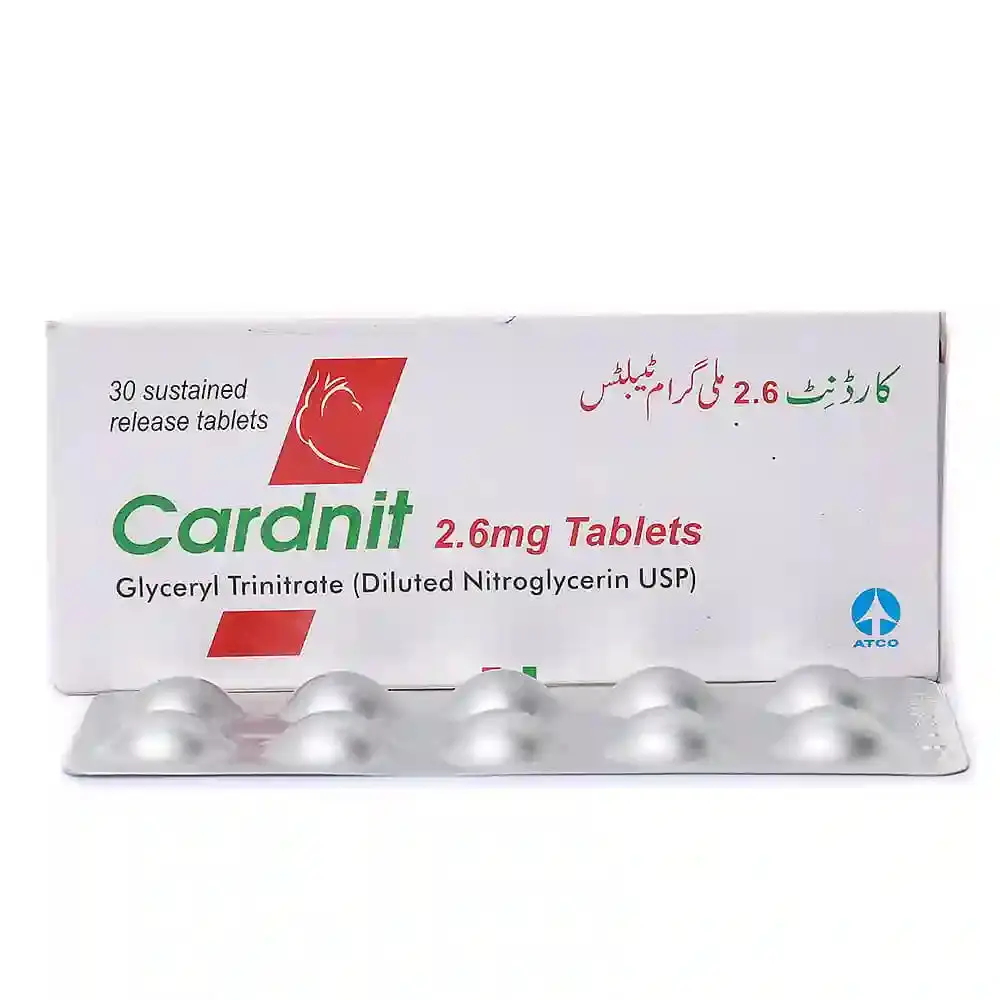
Cardnit 2.6 mg Tablet
- Current Price:
Rs. 278
Price may vary by pharmacy and location.
- Generic Name (Formula)
Glyceryl Trinitrate (Nitroglycerin/GTN)
- Strength
- 2.6 mg
- Dosage Form
Tablet
- Manufacturer
- ATCO
- Primary Use
- Angina Prevention
More Details About the Medicine
Cardnit 2.6 mg Tablet is a nitrate medicine containing Glyceryl Trinitrate (Nitroglycerin) 2.6 mg in a sustained/controlled-release formulation. It is primarily used for the prevention of angina, a type of chest pain that occurs when the heart muscle does not receive enough oxygen-rich blood.
Unlike sublingual nitroglycerin tablets used for rapid relief of an ongoing angina attack, sustained-release Cardnit is intended to provide a longer-lasting nitrate effect and help reduce the frequency of angina episodes. It should therefore not be relied upon for immediate relief of sudden chest pain unless specifically instructed by a healthcare professional.
What Is Cardnit 2.6 mg Used For?
Cardnit may be prescribed for:
- Prevention of angina attacks
- Long-term management of stable angina
- Chest pain associated with coronary artery disease
- Reducing the heart’s workload
- Preventing exercise- or activity-related angina
Patients with established angina may receive Cardnit as part of a broader treatment plan that can include other cardiovascular medicines and management of risk factors such as hypertension, high cholesterol, diabetes, and smoking.
How Does Cardnit Work?
Glyceryl trinitrate belongs to a group of medicines called organic nitrates. In the body, it produces effects mediated by nitric oxide that relax smooth muscle in blood vessel walls.
The resulting vasodilation reduces the amount of blood returning to the heart and lowers the workload and oxygen demand of the heart muscle. This helps prevent the imbalance between oxygen supply and demand that produces angina.
The sustained-release formulation is designed to release the medicine gradually rather than providing the very rapid effect associated with sublingual GTN.
Cardnit 2.6 mg vs Sublingual Nitroglycerin
This distinction is particularly important.
Cardnit 2.6 mg sustained-release tablets are generally used to PREVENT angina, whereas sublingual glyceryl trinitrate is formulated to act rapidly during an acute angina attack.
A sustained-release tablet should not automatically be substituted for a prescribed sublingual GTN product when immediate relief is required.
How to Take Cardnit 2.6 mg
Take Cardnit exactly according to your doctor’s prescription.
Because it is a modified/sustained-release medicine, the tablet should generally be swallowed according to the product instructions and not crushed or chewed, as damaging the dosage form can interfere with controlled release.
The number of doses and their timing depend on the patient’s angina pattern and treatment regimen.
With continuous nitrate exposure, the body can develop nitrate tolerance, reducing the medicine’s effectiveness. Doctors may therefore design the dosing schedule to provide a nitrate-free or low-nitrate interval. Patients should not alter this schedule themselves.
Possible Side Effects
The blood-vessel-widening action of glyceryl trinitrate can cause:
- Headache
- Dizziness
- Lightheadedness
- Flushing
- Low blood pressure
- Weakness
- Palpitations
- Fainting
Headache is particularly common with nitrate medicines, especially when treatment begins.
Getting up slowly from a sitting or lying position may help reduce dizziness caused by a sudden fall in blood pressure.
Important Interaction with Erectile Dysfunction Medicines
Cardnit must not be combined with PDE-5 inhibitor medicines used for erectile dysfunction, such as:
- Sildenafil
- Tadalafil
- Vardenafil
Combining these medicines with nitrates can produce a dangerous and potentially life-threatening fall in blood pressure.
Certain medicines used for pulmonary hypertension can present similar concerns. Patients should tell their doctor about all medicines they use.
Precautions
Before using Cardnit, inform your doctor if you have:
- Low blood pressure
- Severe anemia
- Certain structural heart conditions
- Recent head injury or intracranial bleeding
- Significant dehydration
- Other cardiovascular diseases
Alcohol may increase the blood-pressure-lowering effects of nitrates and worsen dizziness or faintness.
What If Chest Pain Suddenly Occurs?
Cardnit 2.6 mg is intended primarily for angina prevention rather than emergency relief.
People diagnosed with angina should follow the acute chest-pain plan provided by their doctor, which may include a separate fast-acting sublingual nitrate.
New, unusually severe, worsening, or persistent chest pain requires urgent medical assessment, particularly when accompanied by shortness of breath, sweating, nausea, fainting, or pain spreading to the arm, shoulder, jaw, neck, or back.
Disclaimer: This information is for educational purposes only and does not replace medical advice or emergency care. Cardnit should be taken only as prescribed. New, severe, worsening, or persistent chest pain requires urgent medical assessment.
Need Medical Advice?
Find a qualified doctor on NamakMandi.pk to review your symptoms and treatment.
Medical Disclaimer
The content on NamakMandi.pk is written and reviewed for general information only. It does not replace a diagnosis, treatment plan, prescription, or advice from a qualified healthcare professional. Never delay seeking medical care because of something you have read here. In an emergency, contact your nearest hospital immediately.