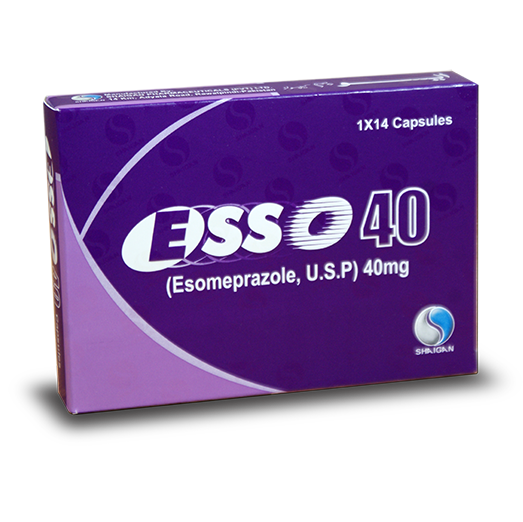
Esso 40 mg Capsule
- Current Price:
Rs. 640
Price may vary by pharmacy and location.
- Generic Name (Formula)
Esomeprazole
- Strength
- 40 mg
- Dosage Form
Capsule
- Manufacturer
- Shaigan Pharmaceuticals
- Primary Use
- Acid Reflux
More Details About the Medicine
Esso 40 mg Capsule contains esomeprazole 40 mg, a proton pump inhibitor (PPI) used to reduce the production of acid in the stomach. It is manufactured by Shaigan Pharmaceuticals and may be prescribed for acid-related digestive conditions such as gastroesophageal reflux disease (GERD), erosive esophagitis, and peptic ulcer disease.
The 40 mg strength provides a higher dose of esomeprazole than Esso 20 mg. This does not mean that Esso 40 is automatically the better option. The appropriate strength depends on the condition being treated, symptom severity, treatment response, and the patient’s medical history.
What Is Esso 40 mg Used For?
Doctors may prescribe esomeprazole 40 mg for conditions including:
- Gastroesophageal reflux disease (GERD)
- Erosive esophagitis
- Frequent or troublesome acid reflux
- Acid-related damage to the esophagus
- Peptic ulcer disease
- Duodenal ulcers
- Certain NSAID-associated gastrointestinal problems
- Helicobacter pylori (H. pylori) eradication regimens with appropriate antibiotics
- Other conditions involving excessive gastric acid production
Esomeprazole controls acid production rather than simply providing temporary neutralization of acid already present in the stomach.
Esso 40 mg for GERD and Erosive Esophagitis
GERD develops when stomach contents repeatedly travel backwards into the esophagus. Patients may experience heartburn, acid regurgitation, a sour taste in the mouth, or discomfort behind the breastbone.
Repeated exposure to stomach acid can sometimes cause inflammation and damage to the lining of the esophagus, known as erosive esophagitis.
By substantially reducing gastric acid production, Esso 40 mg can create an environment that allows damaged esophageal tissue to heal while reducing acid-related symptoms.
Patients with persistent reflux should still be medically evaluated rather than relying indefinitely on acid-suppressing medicines, particularly when symptoms are new, worsening, or accompanied by warning signs.
How Esso 40 Reduces Stomach Acid
Esomeprazole acts on the proton pumps located in acid-producing cells of the stomach. By inhibiting these pumps, it suppresses the final stage of gastric acid secretion.
This mechanism distinguishes proton pump inhibitors from conventional antacids.
Antacids neutralize some acid that has already been produced, whereas PPIs such as Esso 40 reduce the production of new stomach acid for a prolonged period.
Esso 40 mg and Stomach Ulcers
Acid suppression can form an important part of treatment for certain gastric and duodenal ulcers.
When an ulcer is associated with H. pylori infection, esomeprazole may be prescribed alongside antibiotics as part of an eradication regimen. The PPI helps reduce acid and promote healing, while the antibiotics target the bacterial infection.
Esso 40 mg by itself does not eliminate H. pylori.
People taking NSAID painkillers may also develop gastrointestinal irritation or ulcers. PPIs can be prescribed to selected higher-risk patients for treatment or prevention of NSAID-associated ulcers.
How Should Esso 40 mg Be Taken?
The exact dose and duration should be determined by a healthcare professional.
Esomeprazole is generally taken before a meal, and consistency in timing can help achieve effective acid suppression.
Esso is a delayed-release formulation. The gastro-resistant pellets are designed to protect esomeprazole from stomach acid until it reaches the appropriate part of the digestive tract.
Do not crush or chew the delayed-release pellets.
Treatment length varies considerably. Some conditions require a relatively short course, while others may require maintenance therapy under medical supervision.
Esso 20 mg vs Esso 40 mg
Both products contain esomeprazole, but they provide different amounts of the medicine.
| Feature | Esso 20 mg | Esso 40 mg |
|---|---|---|
| Active ingredient | Esomeprazole | Esomeprazole |
| Strength | 20 mg | 40 mg |
| Medicine class | Proton Pump Inhibitor | Proton Pump Inhibitor |
| Acid suppression | Standard prescribed strength | Higher prescribed strength |
| Selection | Depends on condition | Depends on condition |
| Self-switching | Not recommended | Not recommended |
A patient taking Esso 20 should not increase the dose to 40 mg simply because symptoms persist. Ongoing symptoms may require reassessment of the diagnosis, treatment adherence, diet, other medicines, or underlying gastrointestinal disease.
Common Side Effects
Possible side effects of esomeprazole include:
- Headache
- Abdominal discomfort
- Diarrhea
- Constipation
- Nausea
- Vomiting
- Flatulence
Most people tolerate PPIs well, particularly during short courses of treatment.
Long-Term Use of Esso 40
Long-term PPI treatment should have an appropriate medical indication and may require periodic review.
Prolonged use has been associated with issues such as:
- Reduced vitamin B12 absorption
- Low magnesium levels
- Increased susceptibility to certain gastrointestinal infections
- Possible increased fracture risk in some long-term or high-dose users
These potential risks do not mean that medically necessary PPI therapy should automatically be stopped. The benefits and risks should instead be reviewed with a healthcare professional.
When Should You See a Doctor?
Seek medical evaluation if acid-related symptoms are persistent or if you experience:
- Difficulty or pain when swallowing
- Unexplained weight loss
- Recurrent vomiting
- Vomiting blood
- Black or tarry stools
- Severe or persistent abdominal pain
- Symptoms that continue despite appropriate treatment
These symptoms can require further investigation rather than continued self-treatment for acidity.
Frequently Asked Questions
Is Esso 40 mg stronger than Esso 20 mg?
Yes. Esso 40 contains twice the amount of esomeprazole per capsule. However, the higher strength is not necessarily appropriate for every patient.
Is Esso 40 an antacid?
Esso 40 is a proton pump inhibitor, not a conventional antacid. It reduces acid production rather than simply neutralizing existing stomach acid.
Can I take Esso 40 for severe acidity?
Esomeprazole can be used for acid-related disorders, but persistent or severe symptoms should be assessed by a healthcare professional rather than automatically treated with a higher dose.
Can Esso 40 cure an H. pylori infection?
No. Esomeprazole does not kill H. pylori. When H. pylori eradication is required, a PPI is used as part of a treatment regimen that includes appropriate antibiotics.
Can I switch from Esso 20 to Esso 40?
Do not increase the strength without medical advice. Your doctor should determine whether a higher dose is necessary.
Disclaimer: This information is intended for educational purposes and should not replace professional medical advice. Esso 40 mg should be taken according to the prescribed dose and duration. Persistent, recurrent, or severe gastrointestinal symptoms should be assessed by a qualified healthcare professional.
Need Medical Advice?
Find a qualified doctor on NamakMandi.pk to review your symptoms and treatment.
Medical Disclaimer
The content on NamakMandi.pk is written and reviewed for general information only. It does not replace a diagnosis, treatment plan, prescription, or advice from a qualified healthcare professional. Never delay seeking medical care because of something you have read here. In an emergency, contact your nearest hospital immediately.