
Quick Answer
A low platelet count is common in dengue fever, but a low number alone does not always mean the disease is severe. Many patients recover without needing a platelet transfusion, even when their platelet count drops significantly. Doctors assess both the platelet count and the patient’s overall condition, including signs of bleeding, blood pressure, hydration status, and other laboratory findings.
A platelet count below 150,000 platelets per microliter (µL) is considered lower than normal. However, the risk of complications depends on several factors, not just the platelet number. Patients who develop bleeding, severe abdominal pain, persistent vomiting, breathing difficulty, or signs of shock require immediate medical attention, regardless of their platelet count.
What Are Platelets?
Platelets, also known as thrombocytes, are tiny blood cells that play a vital role in stopping bleeding. When you have a cut or injury, platelets gather at the site and help form a blood clot to prevent excessive blood loss.
Besides clotting, platelets also help maintain the integrity of blood vessel walls. When platelet levels become very low, the risk of bruising and bleeding increases.
Why Does Dengue Cause Low Platelets?
The dengue virus affects the body in several ways that can reduce platelet levels.
Scientists believe platelet counts fall because:
- The virus temporarily suppresses platelet production in the bone marrow.
- Platelets are destroyed more rapidly by the body’s immune response.
- Platelets are consumed during the inflammatory process caused by dengue infection.
The platelet count usually begins to decrease during the first few days of illness and often reaches its lowest point around the critical phase, which commonly occurs between days 3 and 7 of the illness. In most patients who recover, platelet levels gradually improve as the infection resolves.
What Is a Normal Platelet Count?
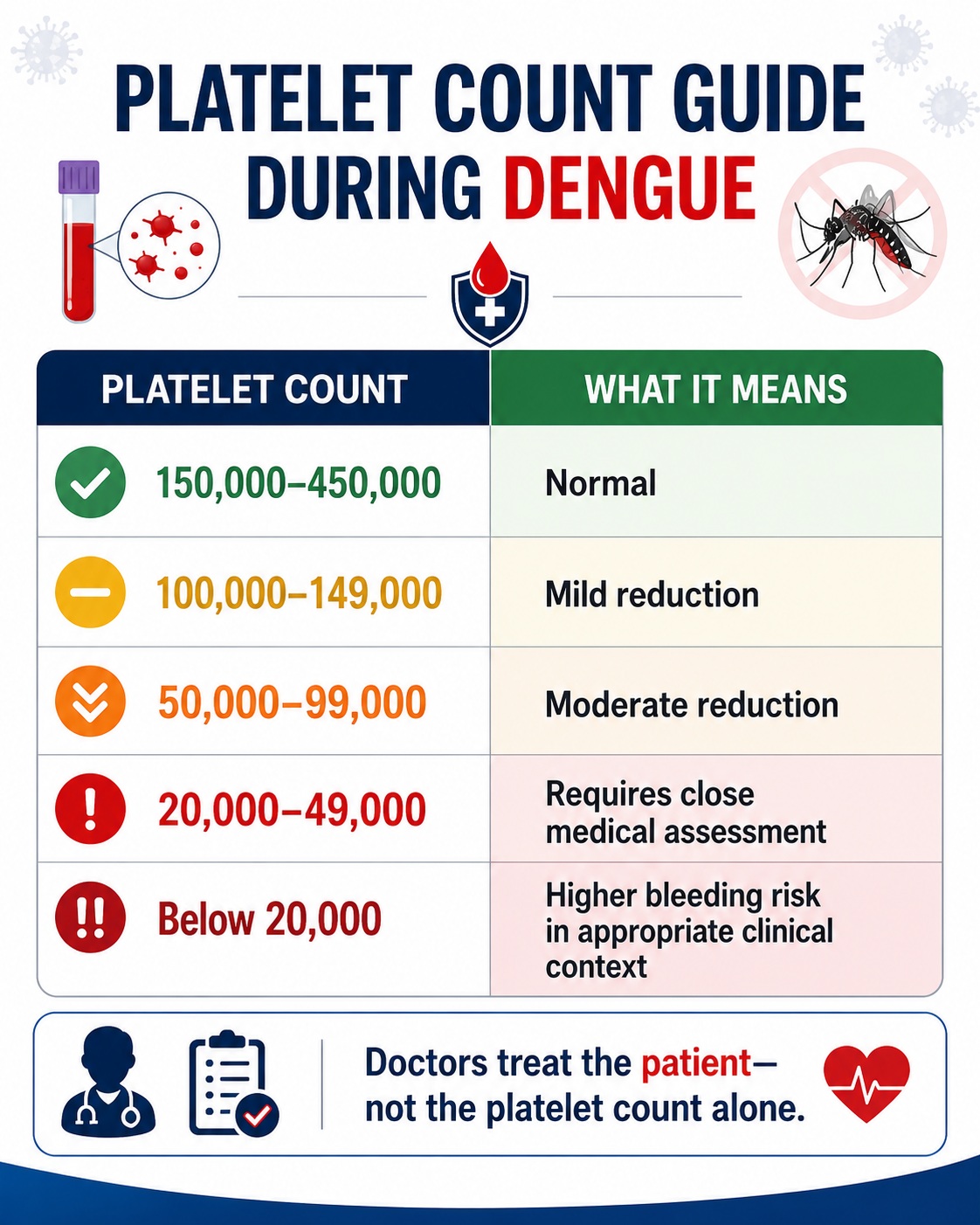
A healthy platelet count generally ranges between 150,000 and 450,000 platelets per microliter (µL) of blood.
| Platelet Count | Interpretation |
|---|---|
| 150,000–450,000/µL | Normal |
| 100,000–149,000/µL | Mild thrombocytopenia |
| 50,000–99,000/µL | Moderate thrombocytopenia |
| 20,000–49,000/µL | Severe thrombocytopenia; requires close medical assessment |
| Below 20,000/µL | Very severe thrombocytopenia; may increase the risk of spontaneous bleeding, especially if accompanied by other warning signs |
Important: Doctors do not rely on the platelet count alone. A patient with a platelet count of 40,000/µL who is stable and has no bleeding may require observation rather than a platelet transfusion, while another patient with a higher platelet count but active bleeding may need urgent treatment.
Does Every Dengue Patient Develop Low Platelets?
No.
Although a falling platelet count is common in dengue fever, not every patient experiences significant thrombocytopenia.
Some patients may have only a mild decrease, while others experience a more noticeable drop. The severity varies depending on factors such as:
- Individual immune response
- Type (serotype) of dengue virus
- Whether it is a first or subsequent dengue infection
- Overall health of the patient
- Presence of other medical conditions
For this reason, doctors often recommend regular Complete Blood Count (CBC) tests during dengue illness to monitor platelet levels and other important blood parameters.
Why Do Doctors Also Monitor Hematocrit?
Many people focus only on platelets, but hematocrit is another important blood test during dengue.
A rising hematocrit level may indicate that plasma is leaking from blood vessels, which can be an early sign of severe dengue.
Doctors usually evaluate:
- Platelet count
- Hematocrit
- White blood cell count
- Blood pressure
- Pulse rate
- Urine output
- Signs of bleeding
Together, these findings provide a much clearer picture of a patient’s condition than the platelet count alone.
At What Platelet Count Is Dengue Dangerous?
One of the most common questions patients ask is, “What platelet count is dangerous?”
The answer is there is no single platelet number that determines whether dengue is severe. Doctors evaluate the entire clinical picture, including symptoms, bleeding, blood pressure, hydration status, hematocrit, and other laboratory findings.
For example:
- A patient with 45,000 platelets/µL who is stable, drinking fluids, and has no bleeding may be managed with close monitoring.
- Another patient with 90,000 platelets/µL who has severe bleeding, low blood pressure, or signs of shock may require urgent hospital treatment.
This is why healthcare providers emphasize treating the patient, not just the laboratory report.
Warning Signs That Matter More Than the Platelet Count
While platelet levels are important, certain symptoms may indicate that dengue is becoming severe.
Seek immediate medical attention if you experience:
- Severe or persistent abdominal pain
- Repeated vomiting
- Vomiting blood
- Black, tarry stools
- Bleeding from the gums or nose
- Blood in the urine
- Difficulty breathing
- Extreme weakness
- Cold, clammy skin
- Restlessness or confusion
- Severe dizziness or fainting
- Very little urine output
These warning signs may suggest severe dengue or significant plasma leakage and require prompt medical evaluation.
When Is a Platelet Transfusion Needed?
Many people believe that every dengue patient with a low platelet count requires a platelet transfusion. This is not true.
Current medical practice is based on the patient’s overall clinical condition, not the platelet count alone.
A doctor may consider platelet transfusion in selected situations, such as:
- Significant active bleeding
- Severe hemorrhage
- Certain invasive medical procedures when clinically necessary
- Other specific situations determined by the treating specialist
Many patients recover safely without platelet transfusions, even when their platelet counts fall below normal.
Unnecessary platelet transfusions may expose patients to avoidable risks and are therefore not routinely recommended.
How Often Should Platelet Counts Be Checked?
The frequency of blood tests depends on:
- The stage of dengue infection
- The patient’s symptoms
- Whether platelet counts are falling
- Presence of warning signs
- Advice from the treating physician
Some patients may require daily Complete Blood Count (CBC) tests, while others need testing less frequently.
Patients should avoid repeated blood testing without medical advice, as test frequency should be guided by clinical assessment.
Can Platelets Recover Naturally?
Yes.
For most patients, platelet counts begin to increase naturally once the body starts recovering from the viral infection.
Recovery usually occurs after the critical phase of dengue has passed.
The speed of recovery varies from person to person depending on factors such as:
- Age
- Overall health
- Severity of infection
- Hydration status
- Presence of other medical conditions
Most patients notice gradual improvement over several days without requiring medications specifically aimed at increasing platelets.
What Can Help During Recovery?
Although no food or supplement has been proven to rapidly increase platelet counts during dengue, maintaining good overall health can support recovery.
Doctors generally recommend:
- Drinking plenty of water and ORS as advised
- Eating a balanced, nutritious diet
- Getting adequate rest
- Following prescribed medications
- Attending follow-up appointments
- Monitoring for warning signs
Patients should avoid alcohol and medicines that increase bleeding risk unless prescribed by a healthcare professional.
Common Myths About Platelets in Dengue
Myth: Every low platelet count requires hospital admission.
Fact: Many patients with low platelet counts recover safely at home under medical supervision if they have no warning signs.
Myth: Platelet transfusion should be given as soon as platelets fall.
Fact: Platelet transfusions are reserved for selected clinical situations. They are not routinely given solely because the platelet count is low.
Myth: Platelets can be restored overnight with a special food or juice.
Fact: While a healthy diet supports overall recovery, no food, fruit, juice, or herbal remedy has been conclusively proven to rapidly increase platelet counts in dengue. Patients should be cautious about claims circulating on social media and follow evidence-based medical advice. But there are certain foods that the patient should take during dengue to overcome the overall weakness.
Can Foods or Supplements Increase Platelet Count?
During dengue outbreaks, social media often promotes various foods, juices, and supplements that supposedly increase platelet counts within hours or days. While maintaining a healthy diet is important for recovery, there is currently no strong scientific evidence that any single food or natural remedy can rapidly restore platelet counts in dengue patients.
Recovery of platelet levels primarily depends on how the body responds to the dengue virus. As the infection improves, the bone marrow gradually resumes normal platelet production, and platelet counts usually begin to rise naturally.
A balanced diet rich in fluids, fruits, vegetables, lean protein, and essential nutrients can support overall recovery, but it should not replace medical treatment or monitoring.
What About Papaya Leaf Juice?
Papaya leaf juice is one of the most commonly discussed home remedies for dengue in Pakistan and many other countries.
Some small studies have suggested that papaya leaf extract may be associated with an increase in platelet counts, but the available research is limited and not conclusive. Larger, high-quality clinical trials are still needed before it can be routinely recommended as part of standard dengue treatment.
If someone chooses to use papaya leaf preparations, they should:
- Inform their treating physician.
- Never stop prescribed treatment.
- Continue adequate hydration.
- Monitor for warning signs.
- Avoid assuming that papaya leaf juice can prevent severe dengue.
Papaya leaf juice should not be considered a substitute for medical care.
Does Kiwi Fruit Increase Platelets?
Kiwi fruit is often promoted online as a way to boost platelet counts.
While kiwi is a nutritious fruit containing vitamin C, vitamin K, antioxidants, and dietary fiber, there is no reliable scientific evidence showing that eating kiwi rapidly increases platelet counts in dengue patients.
However, kiwi can still be part of a healthy recovery diet because it helps provide important nutrients and supports overall health.
Do Pomegranate and Beetroot Help?
Pomegranate and beetroot are frequently recommended during dengue because they contain vitamins, minerals, and antioxidants.
Although these foods may contribute to a balanced diet, there is no convincing evidence that they directly increase platelet production or shorten dengue recovery.
Patients should view them as nutritious foods rather than medicines.
Can Coconut Water Help?
Coconut water does not increase platelet counts, but it can contribute to hydration in some patients.
Since dehydration is a common concern in dengue, drinking appropriate fluids—including water, ORS, soups, and other doctor-recommended beverages—is an important part of supportive care.
Patients with kidney disease or other medical conditions requiring fluid restrictions should seek medical advice before significantly increasing fluid intake.
Is It Safe to Exercise While Platelets Are Low?
Most patients with dengue should avoid strenuous physical activity during the acute illness.
Low platelet counts and weakness can increase the risk of:
- Falls
- Bruising
- Bleeding
- Delayed recovery
Rest is important during the fever and critical phases. Physical activity can usually be resumed gradually after recovery, following advice from a healthcare professional.
How Long Does It Take for Platelets to Recover?
In many uncomplicated cases, platelet counts begin to improve within a few days after reaching their lowest level, usually as the patient enters the recovery phase.
However, recovery time varies depending on factors such as:
- Severity of dengue infection
- Age
- Existing medical conditions
- Hydration status
- Overall health
Some patients recover quickly, while others may continue to experience fatigue and gradual normalization of blood counts over the following days or weeks.
Can Dengue Become Severe Even If Platelets Improve?
Yes.
An improving platelet count is generally a positive sign, but patients should continue monitoring their symptoms until they have fully recovered.
If warning signs such as bleeding, severe abdominal pain, persistent vomiting, difficulty breathing, or confusion develop, immediate medical attention is still necessary, regardless of whether platelet counts have started to rise.
A doctor’s assessment remains more important than relying on a single laboratory value.
Frequently Asked Questions (FAQs)
Is a platelet count of 100,000 dangerous in dengue?
Not necessarily. A platelet count of 100,000/µL is lower than normal, but many patients with this count recover without complications. Doctors evaluate your overall condition, symptoms, bleeding risk, blood pressure, hydration status, and other laboratory findings—not just the platelet number.
Is a platelet count of 50,000 dangerous?
A platelet count of 50,000/µL requires close medical assessment and regular monitoring. Some patients remain stable without bleeding, while others may develop complications. Your doctor will decide whether hospital admission or additional treatment is necessary based on your clinical condition.
At what platelet count is a platelet transfusion required?
There is no fixed platelet count at which every patient needs a transfusion. Platelet transfusions are generally considered for patients with significant bleeding or other specific clinical indications, rather than based solely on a low platelet count.
How often should a CBC test be repeated during dengue?
The frequency of Complete Blood Count (CBC) testing depends on your symptoms, the stage of illness, platelet trend, and your doctor’s assessment. Some patients may need daily monitoring, while others may require less frequent testing.
Can platelet counts increase overnight?
Platelet counts usually recover gradually as the body overcomes the dengue virus. Although some patients experience a noticeable rise over one or two days during the recovery phase, there is no guaranteed method to increase platelets overnight.
Can I recover from dengue without a platelet transfusion?
Yes. Most people with dengue recover without requiring a platelet transfusion. Supportive care—including hydration, rest, symptom management, and medical monitoring—is sufficient for many patients.
What foods should I eat if my platelets are low?
A balanced diet can support recovery but should not be viewed as a treatment for low platelets. Doctors generally recommend:
- Plenty of fluids
- Fresh fruits and vegetables
- Lean protein
- Soft, nutritious meals
- ORS if advised
No specific food has been conclusively proven to rapidly increase platelet counts during dengue.
Should I stay at home if my platelet count is falling?
Not always. Some patients with low platelet counts can safely recover at home under medical supervision. However, if you develop warning signs such as persistent vomiting, severe abdominal pain, bleeding, breathing difficulty, confusion, or signs of dehydration, seek immediate medical care.
Key Takeaways
- Low platelet counts are common in dengue, but they do not always indicate severe disease.
- Doctors assess the patient’s overall condition, not just the platelet count.
- Many patients recover naturally without requiring a platelet transfusion.
- Warning signs such as bleeding, severe abdominal pain, and persistent vomiting require urgent medical evaluation.
- A healthy diet and adequate hydration support recovery, but no food or supplement has been proven to rapidly restore platelet counts.
- Always follow your healthcare provider’s advice and attend recommended follow-up appointments.
Final Thoughts
Seeing a falling platelet count on a blood test can be worrying, but it is important to remember that numbers alone do not determine how serious dengue is. Many patients experience temporary thrombocytopenia and recover fully with supportive care, regular monitoring, and adequate hydration.
Rather than focusing solely on platelet numbers, patients and caregivers should pay close attention to warning signs, overall symptoms, and their doctor’s recommendations. Timely medical assessment is especially important during the critical phase of dengue, when complications are most likely to develop.
If you or a family member has dengue, avoid relying on unverified home remedies or social media claims about “instant platelet boosters.” Early diagnosis, evidence-based treatment, and close follow-up remain the safest approach to recovery.
Medical Disclaimer
This article is intended for educational and informational purposes only and should not be considered a substitute for professional medical advice, diagnosis, or treatment. Platelet counts should always be interpreted by a qualified healthcare professional in the context of your overall clinical condition. If you develop severe abdominal pain, persistent vomiting, bleeding, difficulty breathing, confusion, or any other warning signs of severe dengue, seek immediate medical attention.