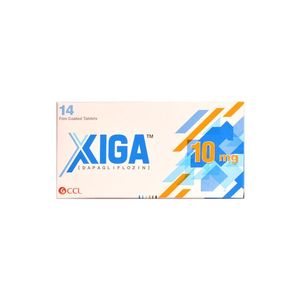
Xiga 10 mg Tablet
- Current Price:
Rs. 645
Price may vary by pharmacy and location.
- Generic Name (Formula)
Dapagliflozin
- Strength
- 10 mg
- Dosage Form
Tablet
- Manufacturer
- CCL Pharmaceuticals (Pvt.) Ltd
- Primary Use
- Type 2 Diabetes Management
More Details About the Medicine
Xiga 10 mg Tablet is a prescription medicine containing dapagliflozin 10 mg. Dapagliflozin belongs to a group of medicines called sodium-glucose cotransporter-2 (SGLT2) inhibitors.
It is used in the management of type 2 diabetes mellitus and may also be prescribed for certain patients with heart failure or chronic kidney disease (CKD).
Uses of Xiga 10 mg
Dapagliflozin may be prescribed for:
- Type 2 diabetes mellitus – to help improve blood glucose control alongside appropriate diet and physical activity.
- Heart failure – to reduce the risk of cardiovascular death, hospitalization for heart failure and urgent heart-failure visits in appropriate adults.
- Chronic kidney disease – to reduce the risk of worsening kidney function, kidney failure, cardiovascular death and hospitalization for heart failure in adults at risk of CKD progression.
The reason for prescribing Xiga can therefore differ between patients. It should not be assumed that everyone taking dapagliflozin has diabetes.
How Does Xiga 10 mg Work?
The kidneys normally filter glucose from the blood and then reabsorb much of it back into the bloodstream.
Dapagliflozin blocks a protein in the kidneys called SGLT2. This reduces glucose reabsorption and causes more glucose to leave the body through urine. It also affects sodium handling in the kidneys, which contributes to its cardiovascular and kidney effects.
How to Take Xiga 10 mg
Take Xiga according to the instructions provided by your doctor. Dapagliflozin can generally be taken with or without food.
The appropriate dose and whether treatment should be started or continued depend on why dapagliflozin is being prescribed, kidney function and other individual factors.
Do not increase, reduce or discontinue Xiga without consulting your healthcare professional.
Common Side Effects
Possible adverse effects associated with dapagliflozin include:
- Genital fungal infections
- Urinary tract infections
- Increased urination
- Changes related to loss of body fluid
- Dizziness or low blood pressure in susceptible patients
- Low blood sugar when used with medicines such as insulin or sulfonylureas
Because dapagliflozin increases glucose in the urine, genital infections can occur more frequently in some patients.
Kidney Function and Xiga
Kidney function should be assessed when clinically appropriate. Whether dapagliflozin can be started or continued depends partly on the reason it is being prescribed and the patient’s estimated glomerular filtration rate (eGFR).
Importantly, the kidney-function recommendations for dapagliflozin have evolved considerably since older Xiga prescribing leaflets were published. Current prescribing decisions should therefore be based on up-to-date professional guidance rather than older package information found online.
Is Xiga 10 mg Insulin?
No. Xiga is not insulin.
Dapagliflozin is an oral SGLT2 inhibitor. In people with type 2 diabetes, it may be used alone or alongside other glucose-lowering treatments depending on the patient’s individual treatment plan.
Medical Disclaimer
This profile is for general educational purposes and does not replace medical advice, diagnosis or treatment. Xiga 10 mg is a prescription medicine. Dapagliflozin has important precautions and should be used under the supervision of a qualified healthcare professional.
Need Medical Advice?
Find a qualified doctor on NamakMandi.pk to review your symptoms and treatment.
Medical Disclaimer
The content on NamakMandi.pk is written and reviewed for general information only. It does not replace a diagnosis, treatment plan, prescription, or advice from a qualified healthcare professional. Never delay seeking medical care because of something you have read here. In an emergency, contact your nearest hospital immediately.