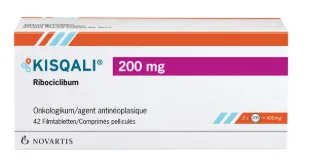
Kisqali 200mg Tablet
- Current Price:
Rs. 448000
Price may vary by pharmacy and location.
- Generic Name (Formula)
Ribociclib
- Strength
- 200 mg
- Dosage Form
Tablet
- Manufacturer
- Novartis Pharma Pakistan Ltd
- Primary Use
- HER2-negative Breast Cancer
More Details About the Medicine
Kisqali 200mg Tablet contains ribociclib, a targeted anticancer medicine belonging to the cyclin-dependent kinase 4 and 6 (CDK4/6) inhibitor group. It is used as part of hormone-based treatment for selected patients with hormone receptor-positive (HR-positive), HER2-negative breast cancer. Depending on the approved indication and treatment plan, it may be used for certain early breast cancers at high risk of recurrence or locally advanced/metastatic breast cancer. It is generally used together with endocrine therapy rather than as a stand-alone breast cancer treatment.
How Kisqali Works
Ribociclib blocks CDK4 and CDK6 proteins, which are involved in controlling cell-cycle progression. Blocking these proteins can slow the growth and division of hormone receptor-positive breast cancer cells. Kisqali is therefore used as a targeted treatment alongside appropriate endocrine therapy.
How to Take Kisqali
The commonly used adult regimen for advanced or metastatic breast cancer is 600mg once daily, equivalent to three 200mg tablets, taken for 21 consecutive days followed by 7 days without Kisqali. However, the exact dose and schedule can differ according to the indication, treatment combination, side effects, liver or kidney function and the oncologist’s instructions.
Kisqali can generally be taken with or without food. Tablets should be swallowed whole and should not be crushed or chewed. Do not change the dose or treatment cycle without medical supervision.
Side Effects
Commonly reported effects include:
- Low white blood cell count (neutropenia/leukopenia)
- Infections
- Nausea or vomiting
- Diarrhea or constipation
- Tiredness
- Headache
- Hair loss
- Rash
- Back pain
- Anemia
- Abnormal liver-function tests
Important complications can include serious infections, liver toxicity, changes in heart rhythm due to QT prolongation, and interstitial lung disease or pneumonitis. Regular blood tests and appropriate cardiac monitoring may be required during treatment.
Warnings and Precautions
Kisqali requires specialist oncology supervision. Tell the treating doctor about liver disease, kidney problems, heart rhythm disorders, electrolyte abnormalities, previous lung disease, pregnancy or breastfeeding.
Medicines that prolong the QT interval should generally be avoided or carefully assessed. Strong CYP3A inhibitors can increase ribociclib exposure. Grapefruit and grapefruit juice may also increase exposure and should be avoided unless the treating clinician advises otherwise. Patients should also report fever, breathing difficulty, severe weakness, jaundice or symptoms of an abnormal heartbeat promptly.
Kisqali should not be used simply to treat breast pain, a breast lump, hormonal symptoms or general fatigue without a confirmed diagnosis requiring this medicine.
Important Drug Interactions
Potential interactions include:
- Strong CYP3A inhibitors and inducers
- Medicines that prolong the QT interval
- Some antibiotics and antifungal medicines
- Certain anticonvulsants
- Other medicines that can affect liver enzymes
A complete medication list should be reviewed before starting treatment.
Kisqali Strength and Pack Comparison
Kisqali is supplied as 200mg film-coated tablets. The standard advanced/metastatic breast-cancer regimen may require three 200mg tablets to provide 600mg once daily during the 21-day treatment period. International product information lists presentations including 21- and 63-tablet configurations, but the Pakistan online listing reviewed for this profile is internally inconsistent: it names “63’s” while describing the pack as 60 tablets. The physical Pakistan pack should therefore be checked before publishing a definitive local pack size.
Frequently Asked Questions
What is Kisqali 200mg used for?
It is used with endocrine therapy for selected patients with HR-positive, HER2-negative breast cancer.
Is Kisqali a chemotherapy tablet?
Kisqali is an oral targeted cancer medicine and belongs to the CDK4/6 inhibitor class rather than traditional cytotoxic chemotherapy.
Should Kisqali be taken before or after food?
It can generally be taken with or without food.
How many Kisqali 200mg tablets are usually taken?
For certain advanced or metastatic breast-cancer regimens, the standard target dose is 600mg once daily, equal to three 200mg tablets, for 21 days followed by 7 days off. The actual regimen must be determined by the oncologist.
Can Kisqali cure breast cancer?
Kisqali is a cancer treatment, but whether treatment is intended to reduce recurrence risk, control advanced disease or achieve another treatment goal depends on the patient’s diagnosis and treatment plan.
Can Kisqali be used for any type of breast cancer?
No. Its use depends on factors such as hormone-receptor status, HER2 status, cancer stage and the approved treatment setting.
Does Kisqali treat breast pain or a breast lump?
No. Breast pain or a lump requires proper clinical assessment. Kisqali is not a general treatment for these symptoms.
Explore More Medicines
Browse our Medicines A–Z directory to find information about other medicines, including their uses, strengths, side effects and precautions.
Need Medical Advice?
Find a qualified doctor on NamakMandi.pk to review your symptoms and treatment.
Medical Disclaimer
The content on NamakMandi.pk is written and reviewed for general information only. It does not replace a diagnosis, treatment plan, prescription, or advice from a qualified healthcare professional. Never delay seeking medical care because of something you have read here. In an emergency, contact your nearest hospital immediately.