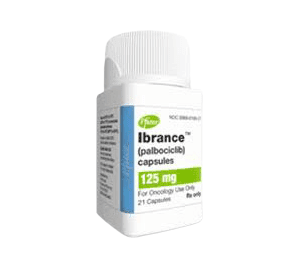
Ibrance 125 mg Capsule
- Current Price:
Rs. 18000
Price may vary by pharmacy and location.
- Generic Name (Formula)
Palbociclib
- Strength
- 125 mg
- Dosage Form
Capsule
- Manufacturer
- Pfizer Pakistan
- Primary Use
- Breast Cancer
More Details About the Medicine
Ibrance 125 mg Capsule is a prescription anticancer medicine containing palbociclib 125 mg. It belongs to a group of targeted cancer medicines called cyclin-dependent kinase (CDK) inhibitors.
In Pakistan, Ibrance is registered by Pfizer Pakistan Limited. The Pakistan product information lists 75 mg, 100 mg and 125 mg capsule strengths, with the 125 mg capsule registered as Reg. No. 103788.
Ibrance is mainly used as part of combination treatment for certain types of hormone receptor-positive (HR-positive) breast cancer. It is not chemotherapy in the traditional sense, although it is an important systemic cancer treatment and requires close monitoring.
Composition
Each capsule contains:
Palbociclib — 125 mg
Palbociclib is a kinase inhibitor that specifically inhibits CDK4 and CDK6.
Primary Use
The primary use of Ibrance is the treatment of certain types of advanced or metastatic breast cancer, particularly cancers driven by hormone receptors.
It is generally prescribed in combination with hormonal/endocrine therapy, rather than being used by itself. The appropriate combination depends on the characteristics of the cancer and the patient’s previous treatment.
Because breast-cancer treatment is highly individualized, Ibrance should only be used under the supervision of an oncologist.
How Ibrance Works
Cancer cells depend on several mechanisms to control their growth and division.
Palbociclib inhibits two enzymes known as:
- Cyclin-dependent kinase 4 (CDK4)
- Cyclin-dependent kinase 6 (CDK6)
Blocking these enzymes can interfere with progression of susceptible cancer cells through the cell cycle, slowing their proliferation.
This targeted mechanism is different from conventional cytotoxic chemotherapy.
Ibrance 125 mg Dosage
A commonly recommended treatment schedule for the capsule formulation is:
125 mg once daily for 21 consecutive days, followed by 7 days without Ibrance.
This creates a 28-day treatment cycle.
However, 125 mg is not necessarily the correct dose for every patient.
Depending on blood counts, side effects, other medicines and individual circumstances, an oncologist may temporarily interrupt treatment or reduce the dose to 100 mg or 75 mg.
Patients should follow their oncology team’s treatment schedule exactly.
Should Ibrance Capsules Be Taken With Food?
Yes. Ibrance capsules should be taken with food.
This distinction is important because Pfizer also produces a tablet formulation, and administration instructions differ between the capsule and tablet formulations.
The capsule should generally be swallowed whole. It should not be opened, crushed or chewed.
Try to take each dose at approximately the same time according to the treatment schedule provided by your oncology team.
What If You Miss a Dose?
If a dose is missed, patients generally should not take an extra dose to compensate.
Similarly, if vomiting occurs after taking Ibrance, another dose should not automatically be taken that day.
The next scheduled dose is generally taken at the usual time, but patients should follow the instructions provided by their oncology team.
Side Effects of Ibrance 125 mg
Ibrance can cause significant adverse effects and requires medical monitoring.
One of the most important is neutropenia, which means a reduction in neutrophils, a type of white blood cell important for fighting infections. Pfizer identifies neutropenia as a very common adverse effect of palbociclib treatment.
Other adverse effects can include:
- Low white blood cell counts
- Infections
- Fatigue
- Nausea
- Mouth sores
- Diarrhea
- Hair thinning or hair loss
- Reduced appetite
- Low red blood cell count (anemia)
- Low platelet count
- Changes in liver tests
Not everyone experiences the same side effects, and their severity can vary considerably.
Why Are Blood Tests Required?
Regular blood tests are an important part of treatment with Ibrance.
A complete blood count (CBC) is used to monitor white blood cells, neutrophils, red blood cells and platelets.
Blood counts can fall during treatment, particularly neutrophils. Depending on the results, the oncology team may:
- Continue the existing dose
- Delay the next cycle
- Temporarily stop treatment
- Reduce the dose
This is why patients should not independently change their treatment schedule.
Drug and Food Interactions
Palbociclib is substantially metabolized through the CYP3A enzyme system. Medicines that strongly inhibit or induce this pathway can change palbociclib exposure.
Patients should therefore tell their oncologist about all prescription medicines, over-the-counter medicines, vitamins and herbal products they use.
Grapefruit and grapefruit products may also affect CYP3A activity and are generally avoided during treatment.
Do not start or stop another medicine without discussing it with the treating oncology team.
Ibrance 125 mg vs 100 mg vs 75 mg
The three capsule strengths contain the same active medicine:
| Strength | Active Ingredient |
|---|---|
| Ibrance 75 mg | Palbociclib 75 mg |
| Ibrance 100 mg | Palbociclib 100 mg |
| Ibrance 125 mg | Palbociclib 125 mg |
Explore More Medicines
Browse our Medicines A–Z directory to find information about other medicines, including their uses, strengths, side effects and precautions.
Need Medical Advice?
Find a qualified doctor on NamakMandi.pk to review your symptoms and treatment.
Medical Disclaimer
The content on NamakMandi.pk is written and reviewed for general information only. It does not replace a diagnosis, treatment plan, prescription, or advice from a qualified healthcare professional. Never delay seeking medical care because of something you have read here. In an emergency, contact your nearest hospital immediately.