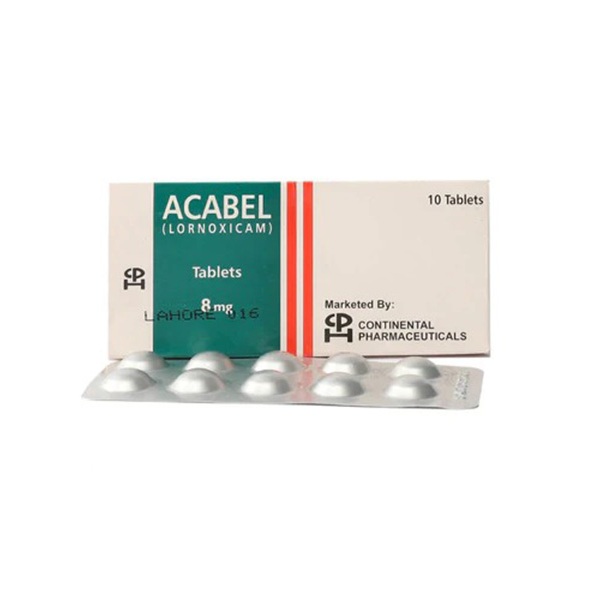
Acabel Tablet
- Current Price:
Rs. 250
Price may vary by pharmacy and location.
- Generic Name (Formula)
Lornoxicam
- Strength
- 8 mg
- Dosage Form
Tablet
- Manufacturer
- Continental Pharmaceuticals
- Primary Use
- Pain & Inflammation Relief
More Details About the Medicine
Acabel Tablets are a prescription non-steroidal anti-inflammatory drug (NSAID) that contain Lornoxicam as the active ingredient. They are available in 4 mg and 8 mg strengths and are manufactured by Continental Pharmaceuticals in Pakistan. Acabel is used for the short-term treatment of pain and inflammation associated with musculoskeletal disorders, arthritis, injuries, and other painful conditions.
Lornoxicam works by blocking the production of prostaglandins, chemicals in the body that cause pain, inflammation, and swelling. By reducing these chemicals, Acabel helps relieve pain, improve mobility, and reduce inflammation in affected joints and muscles. It is commonly prescribed for acute and chronic painful conditions but should only be used under the guidance of a qualified healthcare professional.
Doctors may prescribe Acabel Tablets for:
- Osteoarthritis
- Rheumatoid arthritis
- Ankylosing spondylitis
- Acute back pain
- Muscle and joint pain
- Dental pain
- Post-operative pain
- Sports injuries
- Sprains and strains
- Menstrual pain (dysmenorrhea)
- Gout-related pain and inflammation
Acabel should be taken exactly as prescribed. The tablet should be swallowed whole with water and may be taken after food to reduce stomach irritation. Patients should not exceed the prescribed dose or continue treatment for longer than recommended without consulting their doctor.
Like other NSAIDs, Acabel may cause side effects in some patients. Common side effects include:
- Stomach pain or discomfort
- Heartburn or indigestion
- Nausea
- Diarrhea
- Headache
- Dizziness
More serious but less common side effects include stomach ulcers, gastrointestinal bleeding, kidney impairment, allergic reactions, and increased cardiovascular risk, particularly with prolonged use or in patients with existing heart disease. Patients should seek immediate medical attention if they experience vomiting blood, black stools, severe abdominal pain, swelling of the face, or difficulty breathing.
Acabel should be used cautiously in patients with a history of stomach ulcers, gastrointestinal bleeding, kidney disease, liver disease, heart disease, uncontrolled hypertension, or asthma triggered by NSAIDs. It is generally not recommended during the third trimester of pregnancy unless specifically advised by a healthcare professional.
If pain or swelling persists despite treatment, or if you develop persistent joint pain, stiffness, or recurrent musculoskeletal symptoms, consult an Orthopedic Surgeon, Rheumatologist, or General Physician for further evaluation. On NamakMandi.pk, you can also browse our directories of Orthopedic Surgeons in Peshawar and Rheumatologists in Peshawar to find specialists for expert care.
Need Medical Advice?
Find a qualified doctor on NamakMandi.pk to review your symptoms and treatment.
Medical Disclaimer
The content on NamakMandi.pk is written and reviewed for general information only. It does not replace a diagnosis, treatment plan, prescription, or advice from a qualified healthcare professional. Never delay seeking medical care because of something you have read here. In an emergency, contact your nearest hospital immediately.