What Should You Do With Expired Medicines at Home?
Most homes have a few medicines sitting in a drawer, cabinet or refrigerator long after they were last needed. Some may be past their expiry date, while others may be leftover antibiotics, syrups, eye drops or prescription medicines that are no longer being used.
Keeping these medicines indefinitely is not a good idea. However, throwing every medicine directly into the household bin or flushing it down the toilet is not the right approach either.
Knowing how to store, identify and dispose of unwanted medicines can help prevent accidental poisoning, misuse and unnecessary environmental contamination.
What Does a Medicine’s Expiry Date Mean?
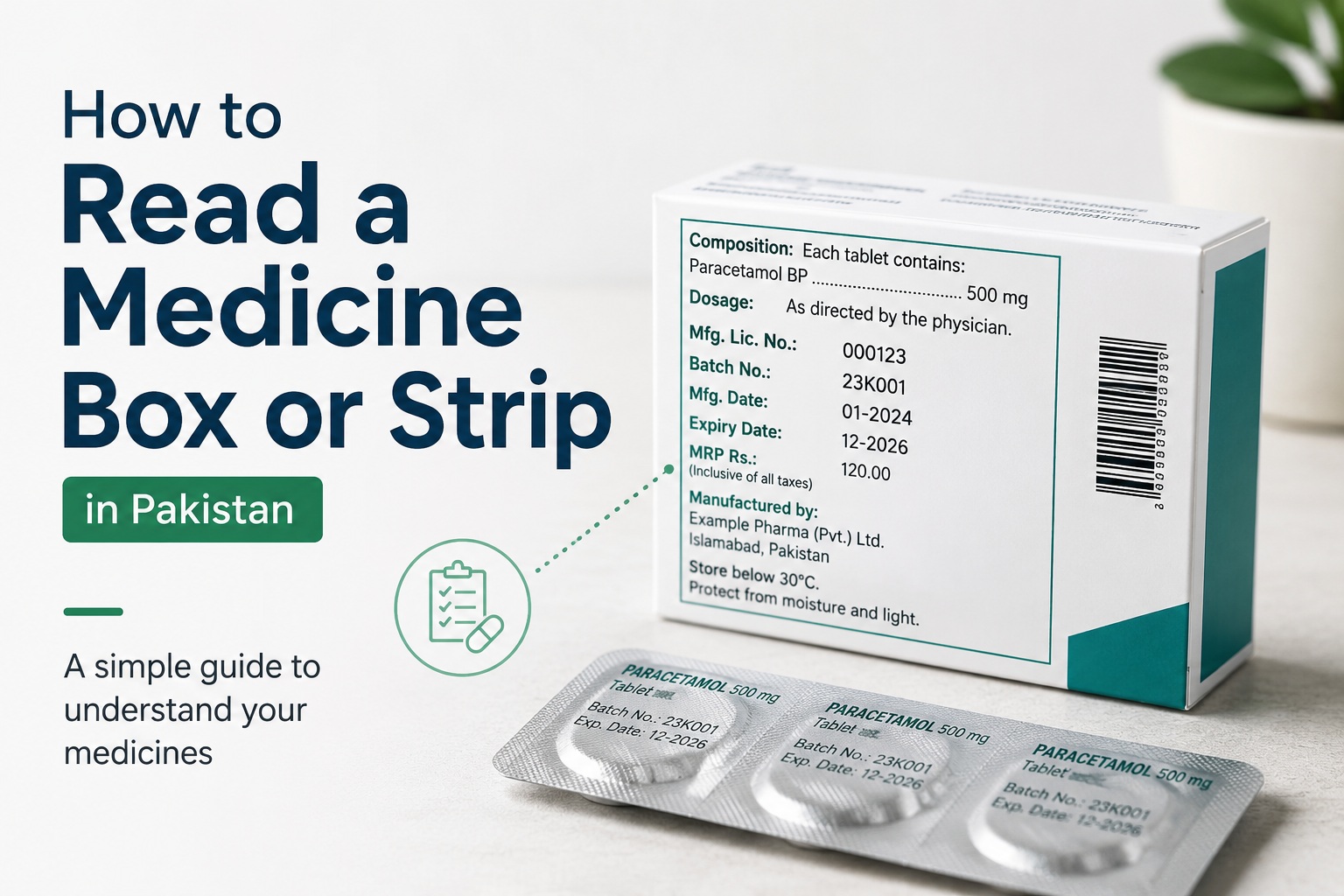
The expiry date printed on a medicine indicates the period during which the manufacturer guarantees the medicine will meet its required standards for quality, strength and stability when stored correctly.
After that date, the manufacturer can no longer guarantee that the medicine will perform as intended.
Medicines can also become unsuitable before their printed expiry date if they have been exposed to excessive heat, moisture, sunlight or inappropriate storage conditions.
For this reason, both the expiry date and storage instructions on the medicine box, bottle or strip are important.
Should You Take Medicine After Its Expiry Date?
As a general rule, do not use an expired medicine unless a qualified healthcare professional specifically advises otherwise in an exceptional situation.
The concern is not simply that a medicine suddenly becomes poisonous the day after its expiry date. More commonly, its potency, stability or overall quality may no longer be assured.
This can be particularly important for medicines where accurate strength and sterility matter.
Do not rely on appearance alone. A tablet can look completely normal even when it is past its expiry date.
Check Your Medicines Regularly
A simple medicine-cabinet check every few months can prevent expired products from accumulating.
Look for:
- Medicines past their printed expiry date
- Unlabelled tablets or capsules
- Damaged or opened packaging
- Leftover prescription medicines no longer required
- Old antibiotics
- Medicines prescribed for another family member
- Discoloured or unusually smelling medicines
- Liquids that have separated or changed appearance
- Eye drops that have been open longer than recommended
- Medicines stored incorrectly
Do not keep a medicine if you can no longer confidently identify what it is.
The Best Option: Use a Medicine Take-Back Service
Where available, a pharmacy, hospital or authorized medicine take-back programme is generally the preferred way to dispose of expired and unwanted medicines.
These systems allow medicines to be collected and disposed of through controlled waste-management processes rather than entering ordinary household waste or wastewater.
In Pakistan, medicine-return facilities are not uniformly available at every pharmacy. You can ask a nearby licensed pharmacy or hospital pharmacy whether they accept expired medicines or can advise you about an appropriate local disposal option.
Do not leave medicines at a pharmacy without first confirming that it accepts them.
Can You Throw Expired Medicines in the Bin?
If an appropriate take-back or collection option is unavailable, disposal instructions depend on the particular medicine.
For many ordinary medicines that do not have special disposal requirements, household disposal may be an option. Rather than throwing loose tablets or capsules directly into the bin, take precautions to reduce the chance of accidental ingestion or misuse.
You can:
- Remove the medicine from its original container when appropriate.
- Mix it with something undesirable, such as used coffee grounds, dirt or cat litter.
- Place the mixture inside a sealed bag or container.
- Put the sealed package into the household rubbish.
- Remove or obscure personal information from prescription labels before disposing of the empty packaging.
Do not crush tablets or open capsules unless the disposal instructions specifically require it.
Should Medicines Be Flushed Down the Toilet?
Most medicines should not be flushed down the toilet or sink.
Medicines entering wastewater can contribute to pharmaceutical contamination of the environment.
There are limited exceptions for certain medicines for which regulatory authorities specifically recommend immediate flushing when a take-back option is unavailable because accidental exposure could be especially dangerous. However, such recommendations are medicine-specific.
For routine household medicines, do not assume flushing is appropriate simply because it is convenient.
What About Expired Antibiotics?
Leftover antibiotics should not be saved for the next cough, fever, sore throat or infection.
Different infections require different treatments, and many common respiratory illnesses are caused by viruses rather than bacteria. Using an inappropriate antibiotic can cause side effects and contribute to antimicrobial resistance.
Expired or leftover antibiotics should therefore be disposed of appropriately rather than kept for future self-medication.
How Should You Dispose of Syrups and Liquid Medicines?
Do not automatically pour expired syrups or liquid medicines into a sink or toilet.
If a pharmacy or medicine-return programme accepts them, use that option.
If household disposal is appropriate for the particular product, keep the liquid securely contained and follow local disposal guidance. The bottle should be closed tightly so that the contents cannot easily leak or be accessed by children or animals.
Special medicines may require different handling, so check the packaging or ask a pharmacist when uncertain.
Eye Drops Need Special Attention
Eye drops can have a shorter usable period after opening than the expiry date printed on an unopened package.
This is because contamination becomes a concern once the bottle has been opened. Some multidose eye drops, for example, may need to be discarded a specified number of days after first opening.
Follow the manufacturer’s instructions for the particular product rather than relying only on the expiry date printed on the box.
Writing the date opened on the bottle or carton can make this easier to track.
What About Insulin and Refrigerated Medicines?
Medicines requiring refrigeration need particular attention because their stability can be affected by incorrect temperatures.
Insulin and some other refrigerated medicines may also have specific in-use periods after opening or removal from refrigeration.
If a refrigerated medicine has expired, been frozen, remained outside its recommended temperature range for too long or was stored during an extended power outage, ask a pharmacist or healthcare professional whether it remains suitable.
Do not judge temperature-sensitive medicines only by appearance.
Inhalers, Needles and Injectable Medicines
Some medical products should not be treated like ordinary tablets.
Needles, syringes and lancets can cause injuries and should be placed in an appropriate puncture-resistant sharps container rather than thrown loose into household rubbish.
Inhalers and aerosol containers may be pressurized and should not be punctured, burned or placed near fire.
Injectable medicines and prefilled devices may also have specific disposal requirements. A pharmacy, hospital or healthcare facility can advise on suitable local arrangements.
Keep Medicines Away From Children
Expired medicines can still cause poisoning.
Until they are properly disposed of, keep them locked or securely stored away from children and pets. Child-resistant packaging can reduce risk but should never be considered completely childproof.
This is especially important for medicines that can cause serious harm even in relatively small amounts.
If a child accidentally swallows a medicine, seek urgent medical assistance rather than waiting for symptoms to appear.
Remove Your Personal Information
Prescription packaging can contain:
- Patient name
- Doctor’s name
- Prescription number
- Pharmacy information
- Medication details
Before recycling or throwing away empty medicine packaging, remove, tear off or permanently obscure identifying information.
This protects your privacy while allowing suitable packaging to be discarded.
Don’t Give Your Leftover Medicine to Someone Else
A medicine prescribed for one person should not simply be passed to a relative or friend who appears to have similar symptoms.
The correct medicine and dose can depend on age, diagnosis, allergies, pregnancy, kidney or liver function, other illnesses and medicines already being taken.
This applies even when the medicine has not yet expired.
A Simple Home Medicine-Cabinet Routine
Every three to six months, check the medicines kept at home. Separate expired and unwanted products from medicines that are still required, check storage conditions and make sure every medicine remains clearly labelled.
Keep regularly used medicines in a cool, dry and secure location unless their packaging specifies otherwise. Bathrooms and hot kitchens may not be ideal storage locations because heat and humidity can affect some medicines.
Prescription medicines should remain in clearly identifiable packaging whenever practical.
Frequently Asked Questions
Can expired medicine become poisonous?
Medicines do not generally become poisonous immediately after the expiry date. The main issue is that their quality, stability or potency can no longer be guaranteed. Certain products also have additional concerns related to sterility or degradation.
Can I take a tablet one month after its expiry date?
It is better not to self-use an expired medicine. Obtain an in-date replacement or ask a pharmacist or doctor for advice.
Can expired medicines be flushed down the toilet?
Most should not be. Flushing is appropriate only for specific medicines where official disposal instructions recommend it and a suitable take-back option is unavailable.
Can I throw tablets directly into the rubbish bin?
A medicine take-back programme is preferable where available. If household disposal is appropriate, medicines should generally be made less accessible and placed in a sealed container or bag rather than discarded as loose tablets.
Should I keep leftover antibiotics for another infection?
No. Antibiotics should not be saved for future self-treatment. A later illness may not require an antibiotic or may require a different one.
What should I do if there is no medicine disposal service near me?
Check the product’s disposal instructions and ask a licensed pharmacy or hospital pharmacy for local guidance. For medicines suitable for household disposal, take precautions to prevent accidental ingestion and misuse.
Final Advice
Expired and unwanted medicines should not simply accumulate in the home. Use an authorized medicine take-back option whenever one is available. If one is not accessible, check whether the particular medicine has special disposal requirements before using an appropriate household-disposal method.
Most importantly, do not reuse expired medicines, save old antibiotics for another illness, share prescription medicines or leave unwanted medicines where children can reach them.
Regularly checking your home medicine supply is a small habit that can make medication use safer for the entire household.