What Is a Pacemaker and Who Might Need One?
The heart normally beats according to electrical signals generated and conducted through its own electrical system. These signals coordinate the upper and lower chambers so that blood is pumped efficiently around the body.
Sometimes this electrical system becomes too slow, pauses unexpectedly, or fails to carry signals properly from one part of the heart to another. When the problem is significant enough to cause symptoms or put a person at risk, a pacemaker may be recommended.
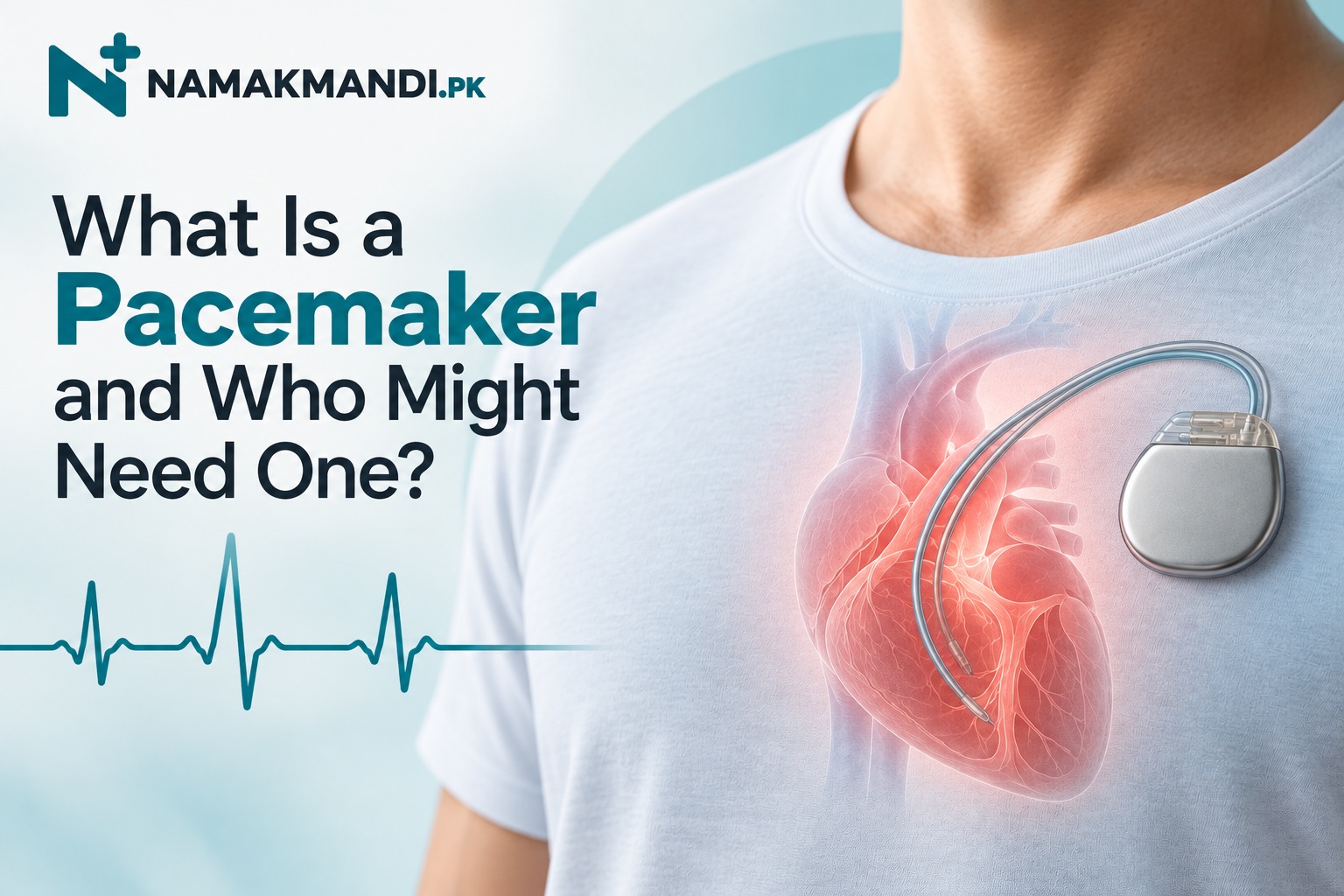
A pacemaker is a small electronic device that helps maintain an appropriate heart rate. It does not replace the heart and usually does not make every heartbeat happen. Instead, it monitors the heart continuously and provides electrical stimulation when the natural heartbeat becomes too slow or certain electrical signals fail to reach the ventricles.
What Does a Pacemaker Do?
A healthy resting heart rate varies from person to person. A slow heart rate is not automatically abnormal—for example, some physically fit people naturally have relatively slow pulses without symptoms.
The concern arises when the heart’s electrical activity becomes too slow or unreliable to supply the body adequately.
A pacemaker can detect this and deliver a small electrical impulse to stimulate the heart to beat.
Modern pacemakers can also adjust pacing according to the patient’s activity and provide doctors with information about the heart’s rhythm and device performance.
What Does a Pacemaker Look Like?
A conventional pacemaker has two main components:
Pulse generator: A small unit containing the battery and electronic circuitry. It is usually implanted beneath the skin in the upper chest.
Leads: Thin insulated wires that connect the generator to the heart. They sense the heart’s electrical activity and deliver pacing impulses when required.
Some newer patients may be suitable for a leadless pacemaker. This is a much smaller device placed directly inside a chamber of the heart through a catheter, so it does not require a conventional chest pocket and lead arrangement.
The best system depends on the patient’s particular rhythm disorder and other medical factors.
Understanding the Heart’s Electrical System
To understand why someone might need a pacemaker, it helps to know how a normal heartbeat begins.
The electrical impulse usually starts in the sinoatrial (SA) node, a small group of specialized cells in the right atrium. The signal spreads through the atria and reaches the atrioventricular (AV) node.
It then travels through specialized electrical pathways into the ventricles, causing them to contract.
Problems can develop when:
- The SA node produces impulses too slowly.
- The heart develops prolonged pauses.
- Signals cannot travel normally from the atria to the ventricles.
- The heart rate does not increase appropriately during activity.
- Certain treatments or procedures affect the heart’s natural conduction system.
A pacemaker can compensate for some of these electrical problems.
Who Might Need a Pacemaker?
Pacemakers are not implanted simply because someone’s pulse is occasionally slow. The decision usually considers the type of rhythm abnormality, symptoms, ECG findings and overall clinical situation.
Some of the more important reasons include the following.
1. Symptomatic Bradycardia
Bradycardia means that the heart is beating more slowly than expected.
Some people have bradycardia without any problem. Others may develop symptoms because the heart is not pumping enough blood to meet the body’s needs.
Symptoms can include:
- Dizziness
- Fainting or near-fainting
- Unusual fatigue
- Shortness of breath
- Exercise intolerance
- Confusion
- Weakness
When significant symptoms are clearly related to an abnormally slow heart rhythm and the cause cannot simply be corrected, permanent pacing may be considered.
2. Sick Sinus Syndrome
The SA node is often described as the heart’s natural pacemaker.
In sinus node dysfunction, sometimes called sick sinus syndrome, this natural pacemaker does not work reliably.
The heart may:
- Beat persistently too slowly
- Pause for abnormal periods
- Fail to increase its rate appropriately during exercise
- Alternate between unusually slow and fast rhythms
When sinus node dysfunction produces clinically important symptoms, an implanted pacemaker may be appropriate.
3. Heart Block
Heart block occurs when electrical signals travelling between the atria and ventricles are delayed or interrupted.
There are different degrees of AV block.
First-degree AV block involves delayed conduction and often does not require a pacemaker by itself.
Second-degree AV block means some impulses fail to reach the ventricles. Certain forms are more concerning than others.
Third-degree or complete heart block occurs when electrical communication between the atria and ventricles is completely interrupted.
Significant high-grade or complete heart block is one of the important situations in which permanent pacing may be required.
4. Certain Patients With Heart Failure
Pacemakers are not routinely implanted in everyone with heart failure.
However, some people with heart failure have abnormal electrical conduction that causes the two ventricles to contract out of sync. In carefully selected patients, a specialized device called cardiac resynchronization therapy (CRT) can coordinate ventricular contraction more effectively.
CRT may improve symptoms and heart function in appropriate patients.
This is more sophisticated than simply preventing a slow heartbeat, and eligibility depends on factors such as symptoms, ECG findings and the heart’s pumping function.
5. After Certain Heart Procedures
Occasionally, the heart’s conduction system can be affected by cardiac surgery or procedures involving the heart valves.
For example, conduction problems can occur in some patients following transcatheter aortic valve replacement (TAVR/TAVI) or other cardiac interventions.
Some conduction abnormalities resolve, while others persist and may require permanent pacing.
6. After AV Node Ablation
Some patients with difficult-to-control atrial fibrillation undergo a procedure called AV node ablation.
The procedure intentionally prevents abnormal electrical signals from reaching the ventricles through the AV node. Because the normal electrical connection is interrupted, a pacemaker is then needed to maintain an appropriate ventricular rate.
What Symptoms Could Suggest a Slow Heart Rhythm?
A rhythm problem does not always produce obvious symptoms.
When symptoms occur, they may include:
- Unexplained fainting
- Recurrent dizziness
- Persistent fatigue
- Shortness of breath
- Reduced ability to exercise
- Feeling unusually weak
- Episodes of confusion
- Awareness of pauses or unusually slow heartbeats
These symptoms do not automatically mean that a pacemaker is needed. Many other heart and non-heart conditions can produce similar problems.
Proper testing is necessary to determine the cause.
How Do Doctors Decide Whether a Pacemaker Is Needed?
The decision is based on more than a pulse measurement.
Evaluation may include:
Electrocardiogram (ECG)
An ECG records the heart’s electrical activity and can identify bradycardia, AV block and other conduction abnormalities.
Holter Monitor
A Holter monitor records the rhythm continuously, usually over a day or longer. It can help detect intermittent abnormalities that may not appear during a short ECG.
Longer-Term Rhythm Monitoring
If symptoms occur infrequently, longer monitoring may be necessary to determine what the heart is doing when symptoms occur.
Echocardiogram
An echocardiogram uses ultrasound to examine the heart’s structure and pumping function. It can be particularly important when heart failure or structural heart disease is suspected.
Exercise Testing
In selected cases, an exercise test can show whether the heart rate rises appropriately with physical activity.
Doctors also review medications because some drugs can slow the heart rate. Correcting a reversible cause may eliminate the need for permanent pacing.
How Is a Pacemaker Implanted?
Conventional pacemaker implantation is usually performed in a hospital under local anesthesia with sedation.
A small incision is commonly made below the collarbone.
The pacing lead or leads are guided through a vein into the appropriate chambers of the heart using imaging. Once their position and electrical performance are satisfactory, they are connected to the pulse generator.
The generator is then positioned beneath the skin, and the incision is closed.
Patients are monitored afterward to ensure that the pacemaker and leads are functioning correctly.
Single-Chamber vs Dual-Chamber Pacemakers
Pacemakers can be configured differently according to the rhythm problem.
A single-chamber pacemaker typically uses one pacing lead in either an atrium or ventricle.
A dual-chamber pacemaker generally has leads in both the right atrium and right ventricle, allowing the device to coordinate activity between these chambers when appropriate.
More specialized pacing systems are available for particular conditions.
The number of leads does not determine whether one pacemaker is simply “better” than another. Device selection depends on the patient’s underlying rhythm.
What Is a Leadless Pacemaker?
A leadless pacemaker is a compact pacing device implanted directly inside the heart, usually through a catheter introduced through a large vein in the leg.
Because there is no traditional generator pocket under the chest skin and no conventional transvenous pacing lead, some lead-related and pocket-related complications can be avoided.
However, leadless pacing is not suitable for every patient or every type of pacing requirement.
A cardiologist or cardiac electrophysiologist determines whether this approach is appropriate.
Is Pacemaker Surgery Dangerous?
Pacemaker implantation is a well-established procedure, but no invasive procedure is completely without risk.
Possible complications can include:
- Bleeding or bruising
- Infection
- Lead displacement
- Blood-vessel injury
- Pneumothorax (air around the lung)
- Heart perforation
- Device-related problems
Serious complications are uncommon, but patients should understand the potential benefits and risks before implantation.
How Long Does a Pacemaker Battery Last?
Pacemakers use long-lasting batteries designed to function for many years.
Battery life varies according to the device, how frequently pacing is required and how it is programmed. Many pacemaker batteries last roughly 5–15 years, with around a decade being common for conventional systems.
Importantly, the battery does not normally stop without warning.
Regular pacemaker checks allow the healthcare team to estimate remaining battery life well before replacement becomes necessary.
When the battery is nearing depletion, the generator is replaced. Existing leads can often remain in place if they are functioning properly.
Can You Live a Normal Life With a Pacemaker?
For many people, yes.
After recovery from implantation, most patients can return to many normal activities, including:
- Walking
- Exercise appropriate for their health
- Work
- Travel
- Driving when medically permitted
- Household activities
Individual restrictions depend on the patient’s heart condition and the type of device implanted.
Immediately after conventional pacemaker implantation, temporary restrictions on vigorous shoulder and arm movements may be recommended while the lead and incision heal.
Can You Use a Mobile Phone With a Pacemaker?
Modern pacemakers are designed with protection against everyday electromagnetic interference.
Mobile phones can generally be used, although patients should follow the device manufacturer’s recommendations. A common precaution is to avoid keeping a mobile phone directly over the pacemaker—for example, in a shirt pocket above the device.
Patients should also tell healthcare professionals that they have a pacemaker before undergoing procedures involving strong electromagnetic fields.
Can Someone With a Pacemaker Have an MRI?
Many newer pacemaker systems are MRI-conditional, meaning an MRI may be performed under specified conditions.
However, not every pacemaker and lead combination is MRI-compatible.
Before an MRI, the medical team needs to identify the exact implanted system and determine whether scanning can be performed safely. The device may also require special programming before and after the scan.
Never assume MRI compatibility solely because the pacemaker is relatively new.
Pacemaker vs ICD: What’s the Difference?
These devices are sometimes confused.
| Pacemaker | Implantable Cardioverter-Defibrillator (ICD) |
|---|---|
| Primarily manages certain slow or conduction-related rhythms | Primarily protects against dangerous fast ventricular rhythms |
| Can stimulate the heart when it beats too slowly | Can deliver therapies, including a shock when necessary |
| Common in significant bradycardia and heart block | Used in selected patients at risk of ventricular tachycardia or ventricular fibrillation |
| Does not automatically mean a patient is at risk of cardiac arrest | Often implanted specifically because of serious ventricular arrhythmia risk |
Some devices combine pacing and defibrillation capabilities.
Does Having a Pacemaker Mean the Heart Is Weak?
Not necessarily.
Many people requiring pacemakers have a heart muscle that pumps normally. Their main problem is with the electrical conduction system, not the strength of the heart muscle.
Conversely, some people with heart failure may receive specialized pacing such as CRT because both electrical coordination and pumping function are involved.
Does a Pacemaker Cure Heart Disease?
A pacemaker treats particular electrical rhythm and conduction problems. It does not cure every type of heart disease.
For example, a pacemaker does not directly remove blocked coronary arteries, reverse high cholesterol or eliminate hypertension.
Patients may still require other medicines and treatments for their underlying cardiovascular conditions.
When Should You Seek Urgent Medical Care?
Seek prompt medical attention for symptoms such as:
- New or unexplained fainting
- Severe chest pain
- Significant breathing difficulty
- Sudden weakness or neurological symptoms
- Persistent severe dizziness
- An extremely slow pulse accompanied by symptoms
Someone who already has a pacemaker should also contact their healthcare team for unexplained fainting, persistent hiccups or muscle twitching near the device, or redness, swelling, discharge or increasing pain around the implantation site.
Frequently Asked Questions
Is a pacemaker used for a slow heartbeat?
Yes. Significant symptomatic bradycardia is one of the major reasons a pacemaker may be considered. However, not every person with a slow resting pulse needs one.
Who decides whether I need a pacemaker?
Assessment is usually performed by a cardiologist, often with involvement from a cardiac electrophysiologist or another specialist experienced in heart rhythm disorders.
Is a pacemaker permanent?
Many pacemakers are implanted for long-term use. Temporary pacemakers can also be used in hospitals when the underlying rhythm problem may resolve.
Can a pacemaker prevent a heart attack?
A standard pacemaker is not designed to prevent coronary artery blockage or a heart attack. Its main role is managing specific electrical rhythm and conduction problems.
Can a young person need a pacemaker?
Yes. Although pacemakers are more common among older adults, younger people can require pacing because of congenital conduction abnormalities, heart surgery, certain diseases or other electrical problems.
Can you exercise with a pacemaker?
Most patients can exercise after appropriate recovery, but the type and intensity should reflect their underlying heart condition and their cardiologist’s recommendations.
Will I feel the pacemaker working?
Most pacing impulses are not felt. A patient should discuss unusual sensations, palpitations, twitching or recurrent symptoms with their pacemaker clinic.
How often does a pacemaker need to be checked?
Pacemakers require regular follow-up, either in a clinic, through remote monitoring, or both. The schedule depends on the device and the patient’s condition.
The Bottom Line
A pacemaker is a small but sophisticated device that helps the heart maintain an appropriate rhythm when its natural electrical system is unable to do so reliably.
It is most commonly considered for problems such as symptomatic bradycardia, sinus node dysfunction and significant heart block. Specialized pacing systems can also help selected patients with heart failure or those undergoing certain cardiac procedures.
Most importantly, a slow pulse alone does not determine whether someone needs a pacemaker. The decision depends on the type of electrical abnormality, its severity, symptoms, reversible causes and the patient’s overall heart condition.