
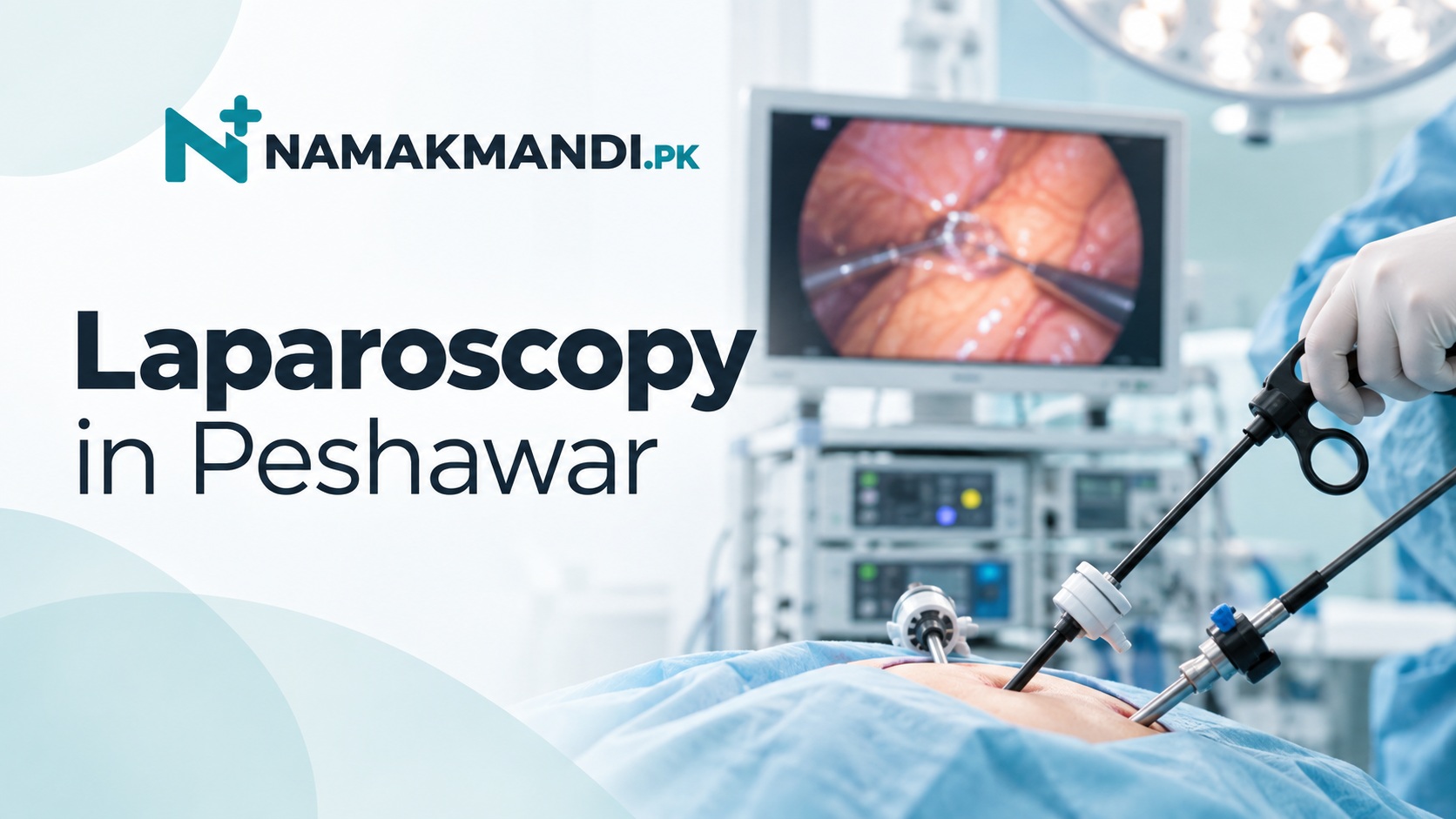
Laparoscopy in Peshawar: Procedures, Specialists & Hospitals
Laparoscopy, often called keyhole surgery or minimally invasive surgery, is now used for many abdominal, pelvic, gynecological and urological procedures. Instead of making one large surgical incision, a surgeon uses a camera called a laparoscope and specialized instruments inserted through small cuts.
For patients looking for laparoscopy in Peshawar, the important question is not simply whether laparoscopic surgery is available. The appropriate hospital and specialist depend on the condition being treated. Gallbladder and hernia surgery, for example, usually fall under general surgery, while ovarian cysts and endometriosis require a gynecologist experienced in gynecological laparoscopy. Kidney and urinary procedures may require a urologist.
Several major hospitals in Peshawar document laparoscopic services, including Hayatabad Medical Complex, Khyber Teaching Hospital, Rehman Medical Institute, Northwest General Hospital and Peshawar General Hospital. The range of procedures varies between hospitals and departments.
What Is Laparoscopy?
Laparoscopy allows a surgeon to examine or operate inside the abdomen or pelvis without making the larger incision generally required for traditional open surgery.
A small incision is usually made near the navel. Carbon dioxide gas is introduced into the abdomen to create working space, and a laparoscope—a thin instrument containing a camera—is inserted. The camera sends an enlarged view of the internal organs to a monitor.
When an operation is being performed, additional small incisions allow specialized surgical instruments to be inserted. Most laparoscopic operations are performed under general anesthesia.
The exact number and size of incisions depend on the operation.
Diagnostic Laparoscopy vs Laparoscopic Surgery
These terms are closely related but do not always mean exactly the same thing.
Diagnostic laparoscopy is primarily performed to look inside the abdomen or pelvis and identify the cause of a medical problem. It can be useful when symptoms persist but imaging and other investigations have not provided a definite diagnosis.
Laparoscopic surgery uses the same minimally invasive approach to perform an operation, such as removing the gallbladder or appendix or repairing a hernia.
Sometimes a diagnostic laparoscopy can progress to treatment during the same procedure if an appropriate problem is identified and consent and circumstances allow it.
Common Laparoscopic Procedures in Peshawar
Laparoscopy is not one operation. It is a surgical technique used across multiple specialties.
Laparoscopic Gallbladder Surgery
Laparoscopic cholecystectomy is the removal of the gallbladder through small incisions and is commonly performed for symptomatic gallstones and certain gallbladder diseases.
There is a long-established history of this procedure in Peshawar. A published Lady Reading Hospital study evaluated hundreds of laparoscopic cholecystectomies performed there between 2006 and 2009. More recent official hospital information from HMC, KTH, RMI and PGH also documents laparoscopic gallbladder surgery or broader laparoscopic surgical services.
Dr. Muhammad Zarin also performs laparoscopic gallbladder surgery at the Khyber Teaching Hospital (KTH), Peshawar and his private clinic at Khyber Medical Center, Dabgari, Peshawar.
Laparoscopic Appendectomy
An inflamed appendix can often be removed laparoscopically.
Laparoscopic appendectomy has also been studied locally. Research from Lady Reading Hospital compared laparoscopic and open appendectomy in patients with suspected acute appendicitis. HMC and PGH currently document laparoscopic appendectomy among their surgical capabilities.
Whether an individual case is suitable for a laparoscopic approach depends on the patient’s condition and surgical assessment.
Laparoscopic Hernia Repair
Selected inguinal, ventral and other abdominal-wall hernias can be repaired laparoscically.
Peshawar-based surgical literature includes evaluation of laparoscopic inguinal hernia repair at Lady Reading Hospital, while HMC and PGH list laparoscopic hernia procedures among their services.
Not every hernia requires the same technique. The location and size of the hernia, previous surgery, whether it is recurrent or bilateral, and the patient’s overall health can influence the choice between open and laparoscopic repair.
Colorectal and Gastrointestinal Surgery
Laparoscopy can also be used for selected operations involving the colon, rectum, stomach and other parts of the gastrointestinal system.
Khyber Teaching Hospital, for example, documents both open and laparoscopic approaches for selected colorectal conditions, including hemicolectomy and surgery for cancers of the sigmoid colon and rectum.
These are more complex procedures and should be considered separately from routine gallbladder or appendix surgery.
Bariatric and Metabolic Surgery
Weight-loss operations are another important application of minimally invasive surgery.
Peshawar General Hospital currently has a dedicated Bariatric, Metabolic & Advanced Laparoscopic Surgery department. Its documented procedures include sleeve gastrectomy, one-anastomosis gastric bypass, Roux-en-Y gastric bypass, revisional bariatric surgery and laparoscopic hiatal hernia repair.
Khyber Teaching Hospital also lists laparoscopic bariatric surgery among its General Surgery services.
Bariatric surgery is not simply a cosmetic weight-loss procedure. Patient selection normally requires assessment of obesity, associated medical conditions, previous weight-management attempts, nutritional factors and surgical risk.
Gynecological Laparoscopy in Peshawar
Laparoscopy also has an important role in gynecology.
Depending on the patient’s condition, gynecological laparoscopy may be considered in the evaluation or treatment of:
- Endometriosis
- Ovarian cysts
- Ectopic pregnancy
- Infertility
- Chronic pelvic pain
- Pelvic adhesions
- Selected uterine fibroids
- Some hysterectomies and other gynecological operations
Diagnostic laparoscopy can sometimes help investigate pelvic pain or infertility when other tests do not provide sufficient information.
A woman looking for laparoscopy for an ovarian, uterine or fertility-related condition should therefore look for a gynecologist with relevant laparoscopic experience, rather than simply searching for a general laparoscopic surgeon.
Urological Laparoscopy
Minimally invasive surgery is also used in urology.
Procedures may include selected:
- Nephrectomies
- Adrenal surgery
- Pyeloplasty
- Varicocele procedures
- Other kidney and urinary-tract operations
Hayatabad Medical Complex specifically documents laparoscopic urology involving renal and suprarenal procedures, while Peshawar General Hospital’s Urology Department lists endourological and laparoscopic surgery among its services.
Northwest General Hospital also documents laparoscopic nephrectomy, adrenalectomy, varicocelectomy and pyeloplasty among the special interests of its urology service through Prof. Dr. Aziz Ur Rahman’s profile.
This illustrates why choosing a surgeon according to the organ and disease involved is more useful than looking for a generic “laparoscopy doctor.”
Hospitals Offering Laparoscopic Surgery in Peshawar
Several Peshawar hospitals have documented laparoscopic capabilities. The following is not a ranking, and the availability of a particular operation should always be confirmed directly with the relevant department.
Hayatabad Medical Complex
Hayatabad Medical Complex documents laparoscopic general surgical procedures including cholecystectomy, appendectomy, splenectomy and hernia repair, as well as laparoscopic renal and suprarenal urology. The surgical unit also has facilities for laparoscopic training on simulators.
Its current hospital information identifies Dr. Jamshed Khattak as a professor of surgery with a special interest in laparoscopic surgery, while HMC’s department listing identifies Dr. Muhammad Shah as a general and laparoscopic surgeon.
Khyber Teaching Hospital
Khyber Teaching Hospital’s General Surgery department documents a broad range of open and laparoscopic procedures. These include laparoscopic cholecystectomy, bariatric surgery, selected colorectal surgery and adrenal surgery.
KTH also documents minimally invasive laparoscopic and endoscopic procedures within its Pediatric Surgery department, demonstrating that laparoscopy in Peshawar is not limited to adult general surgery.
Rehman Medical Institute
Rehman Medical Institute’s General Surgery department specifically lists laparoscopic surgery among its services and describes minimally invasive surgery as an approach used where appropriate to reduce incision size and support recovery.
RMI currently identifies Prof. Dr. Jamil Ahmad as Professor and Head of General Surgery, with expertise in laparoscopic and general abdominal surgery. It also lists Prof. Dr. Qutbi Alam Jan, who has a Fellowship in Minimal Access Surgery, and Prof. Dr. Zubair Ahmad Khan, whose documented expertise includes general and laparoscopic surgery, cholecystectomy and appendectomy.
Northwest General Hospital & Research Centre
Northwest General Hospital has several surgeons whose official profiles specifically identify laparoscopic surgery.
Dr. Tariq Jabbar Khan is listed as a General & Laparoscopic Surgeon and holds a Diploma in Laparoscopic Surgery from France.
Dr. Muhammad Farid Khan is documented as a general, colorectal and laparoscopic surgeon at Northwest General Hospital, with previous consultant experience in Ireland and a Diploma in Laparoscopic Surgery from France.
The hospital also documents laparoscopic procedures within urology.
Peshawar General Hospital
Peshawar General Hospital documents laparoscopic surgery within its General Surgery department and has also established a dedicated Department of Bariatric, Metabolic & Advanced Laparoscopic Surgery.
Its current profiles include Prof. Dr. Khurshid Ahmad, whose areas include laparoscopic, colorectal, upper-GI and hepatobiliary surgery, and Prof. Dr. Ataur Rehman, listed as a consultant general, urological and laparoscopic surgeon.
For advanced bariatric and metabolic procedures, PGH identifies Dr. Muhammad Usman as Consultant Bariatric, Metabolic, Advanced Laparoscopic & Robotic Surgeon.
Laparoscopic Surgeons in Peshawar
There is no single type of “laparoscopic surgeon.”
For gallbladder, appendix, abdominal hernia and many gastrointestinal operations, a general surgeon with appropriate laparoscopic training is usually the relevant specialist.
For ovarian cysts, endometriosis, ectopic pregnancy and other female reproductive conditions, the relevant specialist is generally a gynecologist experienced in laparoscopy.
For kidney, adrenal and urinary-tract conditions, a urologist with laparoscopic expertise may be required.
For bariatric surgery, look for a surgeon and center specifically experienced in bariatric and metabolic procedures.
For children, pediatric laparoscopic surgery requires a pediatric surgical service.
This distinction matters because experience in one type of laparoscopic operation does not automatically mean that a surgeon performs every minimally invasive procedure.
What Are the Advantages of Laparoscopic Surgery?
Compared with an equivalent open operation, a laparoscopic approach can offer advantages in appropriately selected patients, including:
- Smaller surgical incisions
- Less postoperative pain in many procedures
- Smaller scars
- Shorter hospital stay for many operations
- Faster return to normal activities
These advantages are well established for many procedures, but they should not be interpreted to mean that laparoscopy is always the better or safer option for every patient.
The underlying disease, previous abdominal surgery, complexity of the operation, surgical findings and the patient’s overall health all matter.
Is Laparoscopy Safer Than Open Surgery?
Neither approach can be labelled universally safer.
Laparoscopy avoids a large incision in many procedures and may reduce some aspects of postoperative recovery. However, it remains real surgery performed under anesthesia and has its own potential complications.
Possible complications include:
- Bleeding
- Infection
- Injury to a blood vessel
- Injury to the bowel, bladder or another organ
- Blood clots
- Complications related to anesthesia
- Hernia at an incision site
- Need to convert to open surgery
Serious complications are uncommon, but they can occur.
Why Is Laparoscopic Surgery Sometimes Converted to Open Surgery?
A surgeon may begin an operation laparoscopically and decide that continuing through a larger open incision is safer.
Possible reasons include difficult anatomy, extensive scar tissue or adhesions, unexpected bleeding, severe inflammation, difficulty safely identifying important structures, or findings that require a different surgical approach.
Conversion should therefore not automatically be viewed as a failed operation. In some situations, it is a safety decision made during surgery.
Historical experience from Lady Reading Hospital also demonstrates that conversion from laparoscopic to open surgery occurs in real clinical practice; dense adhesions were among the reasons identified in its published laparoscopic cholecystectomy series.
Preparing for Laparoscopic Surgery
Preparation depends on the operation and your medical history.
Before surgery, your team may request blood tests and, depending on the procedure and patient, imaging, ECG or other investigations.
Patients are generally given specific instructions about when to stop eating and drinking before anesthesia. nhs.uk
Tell the surgeon and anesthetist about all medicines and supplements you take, particularly:
- Blood-thinning medicines
- Diabetes medicines and insulin
- Blood-pressure medicines
- Herbal supplements
- Previous reactions to anesthesia
- Drug allergies
Do not independently stop prescription medicines before surgery. Your surgical or anesthesia team should tell you which medicines to continue, modify or temporarily stop.
What Happens on the Day of Surgery?
Most laparoscopic operations are performed under general anesthesia.
Once the patient is asleep, the surgeon creates a small incision, usually around the navel, and introduces carbon dioxide into the abdominal cavity. This creates space between the abdominal wall and internal organs.
The laparoscope is then introduced, allowing the surgeon to see the operative area on a monitor. Additional small ports are used for surgical instruments when treatment is being performed.
At the end of the procedure, the instruments are removed and the small incisions are closed.
The exact process varies considerably according to the operation.
Recovery After Laparoscopy
Recovery should be discussed in terms of the specific operation, not laparoscopy alone.
A patient undergoing a short diagnostic procedure will usually recover much faster than someone having colorectal, kidney or bariatric surgery through a laparoscopic approach.
After laparoscopy, temporary symptoms can include:
- Pain around the incisions
- Abdominal bloating
- Mild nausea
- Tiredness
- Sore throat after general anesthesia
- Shoulder-tip discomfort
Shoulder discomfort can occur because the carbon dioxide used during surgery irritates the diaphragm and associated nerves.
Some patients undergoing uncomplicated procedures can leave hospital the same day or the following day, while major operations require longer admission and recovery.
For example, NHS guidance notes that recovery after diagnostic laparoscopy may be around 10 days, while complete recovery following an operation can take considerably longer depending on the procedure.
Always follow the discharge instructions given for your specific operation rather than relying on a general recovery timeline.
Warning Signs After Laparoscopic Surgery
Contact your surgical team or seek urgent medical care if you develop concerning symptoms after surgery, particularly:
- Increasing or severe abdominal pain
- Persistent vomiting
- Fever or chills
- Increasing redness, swelling, bleeding or pus around an incision
- Significant abdominal swelling
- Difficulty breathing
- Chest pain
- Coughing up blood
- Pain or swelling in one leg
- Unusual or significant bleeding
- Rapid deterioration in how you feel
These symptoms do not necessarily mean a serious complication has occurred, but they warrant medical assessment.
Cost of Laparoscopy in Peshawar
There is no meaningful single price for “laparoscopy in Peshawar.”
A diagnostic laparoscopy, laparoscopic gallbladder removal, hernia repair, hysterectomy, kidney operation and bariatric procedure are completely different procedures.
The total cost can depend on:
- Type and complexity of surgery
- Public or private hospital
- Surgeon and anesthesia charges
- Operating-theatre charges
- Number of hospital days
- Preoperative investigations
- Medicines and disposable surgical equipment
- Room category
- Whether ICU or high-dependency care is required
- Whether additional procedures become necessary
For that reason, patients should request an estimate for the specific procedure, rather than asking only for the general “laparoscopy cost.”
It is also worth asking what the quoted amount includes. A surgical package may or may not include the surgeon, anesthetist, room, laboratory tests, medicines, surgical consumables and follow-up.
I would avoid publishing a fixed Peshawar price range here because I did not find sufficiently reliable, current hospital-published pricing that would support one.
How to Choose a Laparoscopic Surgeon in Peshawar
Start with the condition that needs treatment.
For example, someone with gallstones should look for an appropriate general/laparoscopic surgeon, while someone considering surgery for endometriosis should look for a gynecologist with relevant laparoscopic experience.
Useful things to discuss during consultation include the surgeon’s experience with the specific operation you need, whether laparoscopy is appropriate in your case, alternatives to surgery, expected hospital stay and recovery, the possibility of conversion to open surgery, and the major risks relevant to your health and procedure.
A surgeon recommending open surgery is not necessarily offering an outdated treatment. For some conditions and patients, an open approach may be medically preferable.
Questions to Ask Before Laparoscopic Surgery
Before deciding on surgery, consider asking:
- Why is this operation recommended?
- Is surgery necessary now?
- Is a laparoscopic approach suitable for me?
- Are there non-surgical alternatives?
- How frequently do you perform this particular operation?
- What are the important risks in my case?
- Could the procedure need to be converted to open surgery?
- How long will I probably stay in hospital?
- When can I return to work?
- What tests are required beforehand?
- Which medicines should I stop or continue?
- What will the estimated total hospital cost include?
- What symptoms after discharge should make me contact the hospital?
The answers will vary considerably from one operation and patient to another.
Frequently Asked Questions
Is laparoscopy available in Peshawar?
Yes. Multiple major hospitals in Peshawar document laparoscopic surgical services, including HMC, KTH, RMI, Northwest General Hospital and Peshawar General Hospital. The exact procedures available differ between departments and institutions.
Is laparoscopic surgery painful?
The operation itself is usually performed under general anesthesia. Pain and discomfort can occur afterward, although smaller incisions generally mean less wound-related pain than comparable open surgery. Abdominal bloating and temporary shoulder-tip pain can also occur.
How many cuts are made during laparoscopy?
It depends on the procedure. A diagnostic laparoscopy may require very few incisions, while an operation may require several small ports for the camera and instruments.
Can gallstones be treated with laparoscopy?
When gallbladder removal is indicated, laparoscopic cholecystectomy is a commonly used surgical approach. The surgeon determines suitability after considering symptoms, imaging, inflammation and the patient’s health.
Can hernia surgery be performed laparoscopically in Peshawar?
Yes. HMC and Peshawar General Hospital, among others, document laparoscopic hernia surgery. However, open repair remains appropriate for some hernias and patients.
Can women have laparoscopy for infertility?
Laparoscopy may be used in selected infertility evaluations, particularly when conditions such as endometriosis, adhesions or tubal/pelvic disease are suspected. It is not required for every woman experiencing infertility.
How long does laparoscopic surgery take?
There is no standard duration. A diagnostic laparoscopy may take roughly 30–60 minutes, whereas complex therapeutic operations can take substantially longer.
How soon can I return to work?
This depends on the operation and the nature of your job. Recovery after a simple diagnostic procedure may be relatively quick, whereas major abdominal, colorectal, urological or bariatric surgery can require several weeks. Follow the timeline given by your surgeon.
Finding Laparoscopic Care in Peshawar
Peshawar has laparoscopic services across public teaching hospitals and private tertiary-care hospitals, ranging from routine general surgery to colorectal, bariatric, pediatric and urological minimally invasive procedures.
The key is to match the condition to the appropriate surgical specialty and then evaluate experience with the particular procedure required.
For NamakMandi.pk, hospital and doctor profiles can provide additional information about specialists, hospital affiliations, locations and available services. Because consultant schedules and services can change, confirm the specific procedure and appointment details with the hospital before visiting.