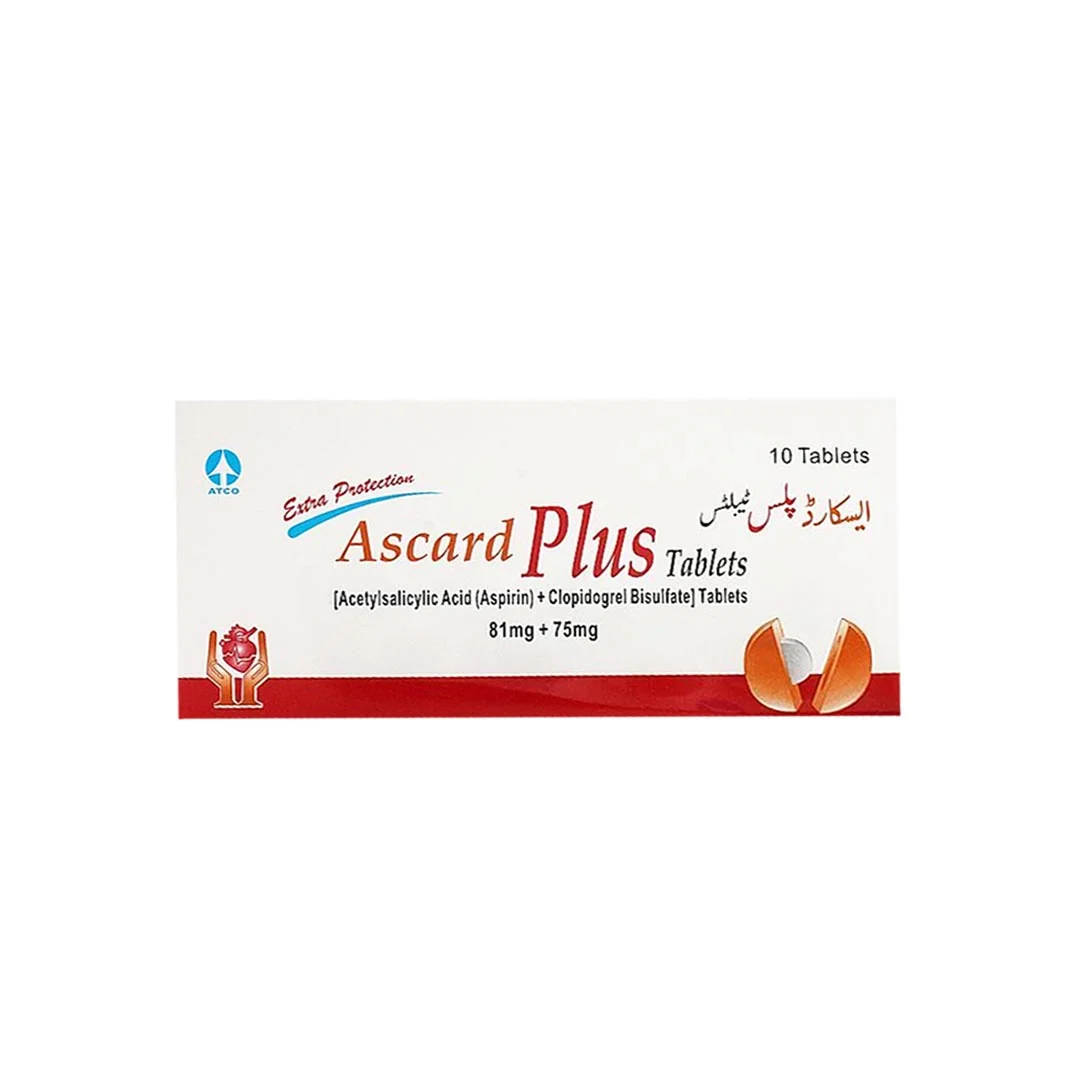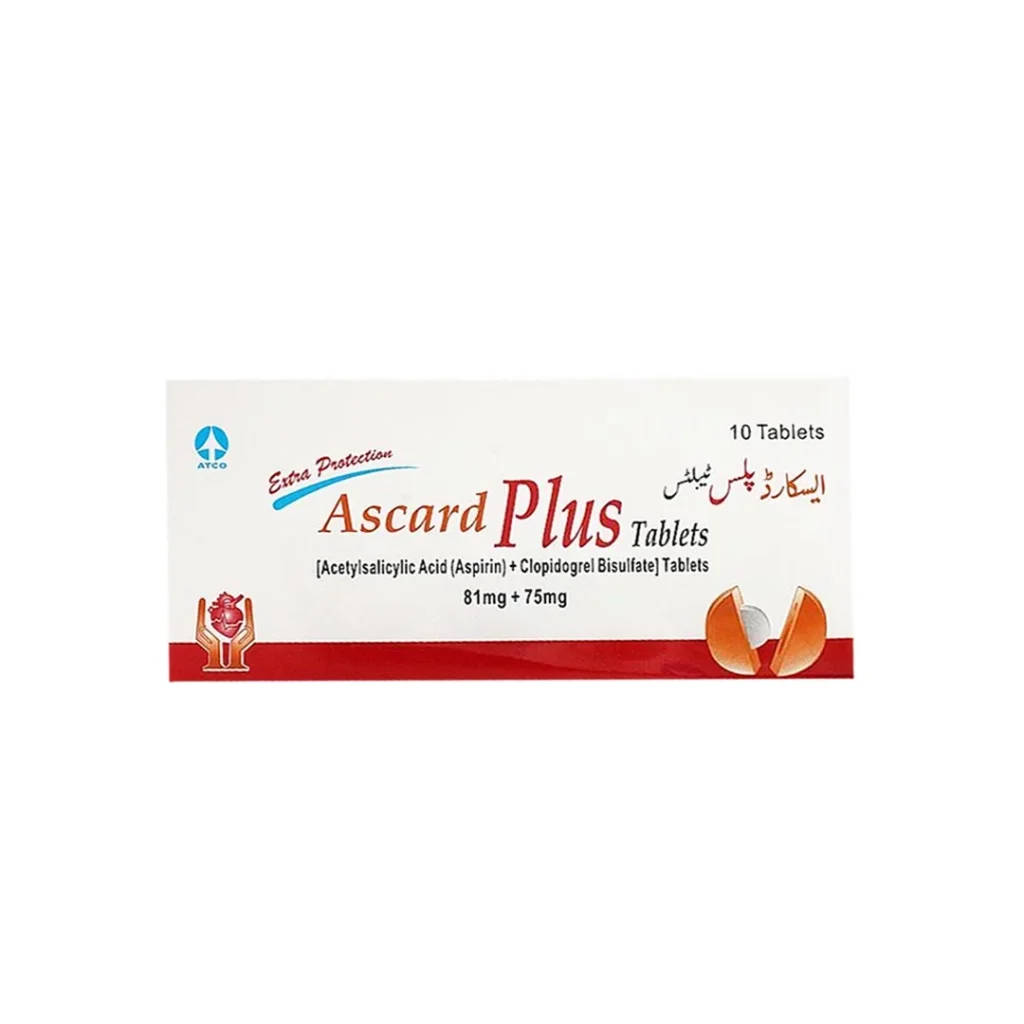
Ascard Plus 81mg + 75mg Tablet
- Current Price:
Rs. 276
Price may vary by pharmacy and location.
- Generic Name (Formula)
Aspirin + Clopidogrel
- Strength
- Dosage Form
Tablet
- Manufacturer
- ATCO
- Primary Use
- Prevention of harmful blood clots
More Details About the Medicine
Ascard Plus Tablet is an antiplatelet medicine containing aspirin (acetylsalicylic acid) and clopidogrel. It is used to help prevent the formation of harmful blood clots in people at increased risk of heart attack, stroke, or other cardiovascular complications.
The combination works by reducing the ability of platelets in the blood to stick together. Because this also increases the risk of bleeding, Ascard Plus should be taken only when prescribed by a doctor.
Important: Ascard Plus is available in specific strengths/formulations. The strength printed on the patient’s pack should be checked rather than assuming the dose from the brand name alone.
What is Ascard Plus used for?
Doctors may prescribe aspirin and clopidogrel together when stronger antiplatelet protection is required, particularly for people with certain cardiovascular conditions.
Common situations include:
- After a heart attack
- Acute coronary syndrome (ACS)
- After coronary angioplasty and stent placement
- Certain cases of ischemic stroke or transient ischemic attack (TIA)
- Established coronary artery disease
- Prevention of recurrent cardiovascular events in selected high-risk patients
Not everyone with heart disease needs both medicines. The decision to use dual antiplatelet therapy and its duration depends on the patient’s condition and bleeding risk.
How does Ascard Plus work?
Ascard Plus combines two antiplatelet medicines that act through different pathways.
Aspirin irreversibly inhibits platelet cyclooxygenase-1 (COX-1), reducing production of thromboxane A2, a substance involved in platelet aggregation.
Clopidogrel blocks the platelet P2Y12 ADP receptor. This further reduces platelet activation and aggregation.
Together, they provide a stronger antiplatelet effect than either medicine alone, but this also means that the risk of bleeding is higher.
How to take Ascard Plus
Take Ascard Plus exactly as prescribed. It is commonly taken once daily, but the correct dose and duration depend on why it has been prescribed.
Swallow the tablet with water and try to take it at approximately the same time each day.
Do not stop Ascard Plus suddenly without speaking to your doctor, particularly if it was prescribed after placement of a coronary stent. Premature discontinuation of antiplatelet treatment can increase the risk of a clot forming within the stent and causing a heart attack.
If you miss a dose, follow the instructions provided by your doctor or pharmacist rather than taking extra tablets to compensate.
Common Side Effects
Possible side effects include:
- Easy bruising
- Nosebleeds
- Bleeding that takes longer to stop
- Indigestion or heartburn
- Abdominal discomfort
- Nausea
- Diarrhea
Minor bruising can occur during antiplatelet treatment, but unusual or persistent bleeding should be discussed with a healthcare professional.
Bleeding Warning
The most important risk associated with Ascard Plus is bleeding.
Seek urgent medical attention if you experience:
- Vomiting blood
- Coughing up blood
- Black or tarry stools
- Blood in urine
- Severe or unexplained bleeding
- Severe headache accompanied by neurological symptoms
- Unusual weakness, dizziness or fainting following significant bleeding
Patients should inform doctors and dentists that they are taking aspirin and clopidogrel before undergoing surgery or dental procedures.
Who should be particularly careful?
Tell your doctor before taking Ascard Plus if you have:
- A current or previous stomach ulcer
- A history of gastrointestinal bleeding
- A bleeding disorder
- Severe liver disease
- Kidney disease
- Previous bleeding in the brain
- Aspirin allergy
- Asthma triggered by aspirin or other NSAIDs
- An upcoming surgical or dental procedure
People who are already taking medicines that increase bleeding risk require particularly careful assessment.
Drug Interactions
Ascard Plus can interact with other medicines. Important examples include:
- Warfarin and other anticoagulants
- Apixaban, rivaroxaban and similar medicines
- Ibuprofen, diclofenac and other NSAIDs
- Other antiplatelet medicines
- Certain antidepressants
- Corticosteroids
- Some medicines used to reduce stomach acid
In particular, omeprazole and esomeprazole can reduce activation of clopidogrel and may therefore be unsuitable in some patients taking clopidogrel.
Do not routinely add painkillers or other medicines while taking Ascard Plus without checking with a doctor or pharmacist.
Need Medical Advice?
Find a qualified doctor on NamakMandi.pk to review your symptoms and treatment.
Medical Disclaimer
The content on NamakMandi.pk is written and reviewed for general information only. It does not replace a diagnosis, treatment plan, prescription, or advice from a qualified healthcare professional. Never delay seeking medical care because of something you have read here. In an emergency, contact your nearest hospital immediately.