Britanyl 1.5 mg/5ml Syrup
- Current Price:
Rs. 95
Price may vary by pharmacy and location.
- Generic Name (Formula)
Terbutaline Sulphate
- Strength
- 1.5 mg/5ml
- Dosage Form
Syrup
- Manufacturer
- Barrett Hodgson Pakistan
- Primary Use
- Bronchitis & Breathing Problems
More Details About the Medicine
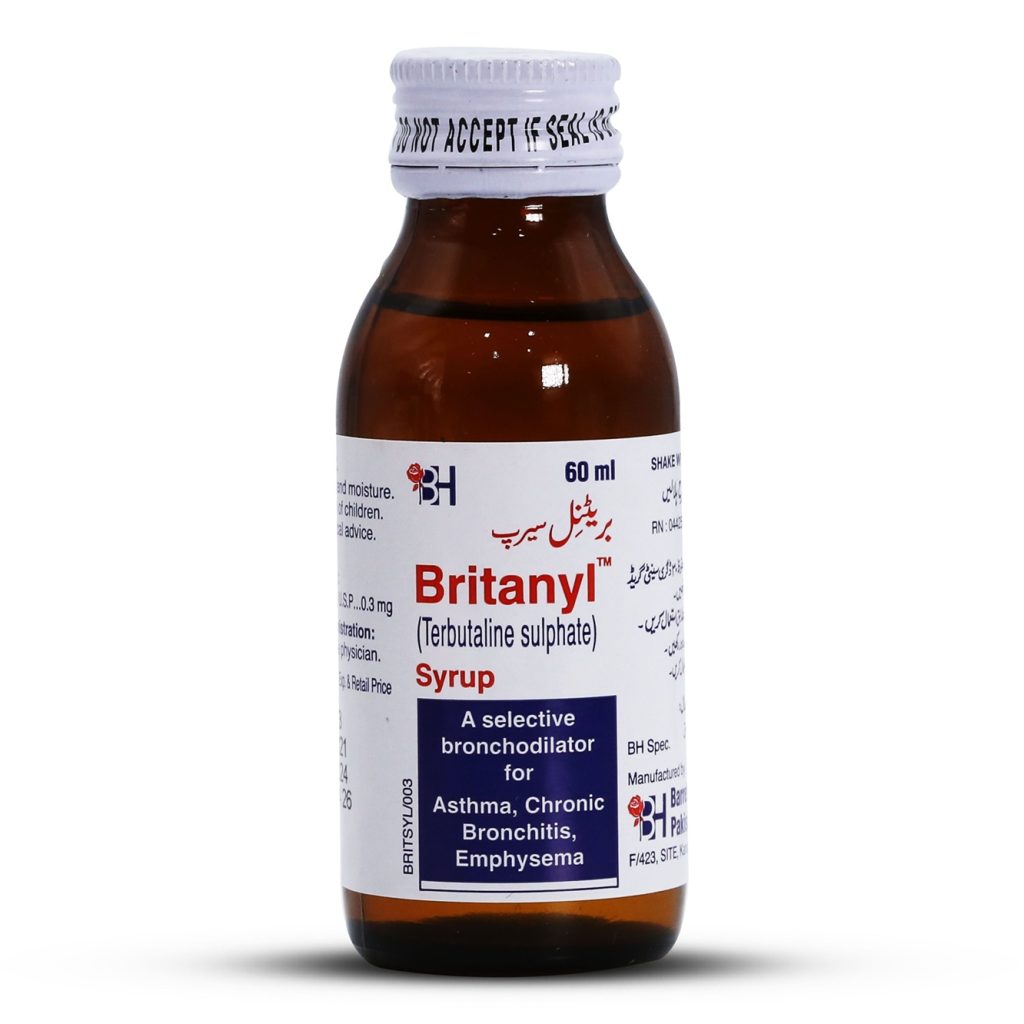
Britanyl Syrup 1.5 mg/5 mL is a bronchodilator medicine containing terbutaline. It is manufactured by Barrett Hodgson Pakistan (Pvt.) Ltd. and is commonly supplied in a 60 mL bottle in Pakistan. Pakistani pharmacy and medicine records identify the concentration as terbutaline 0.3 mg/mL, equivalent to 1.5 mg in each 5 mL.
Britanyl helps relax tightened muscles around the airways, making breathing easier. It may be prescribed for wheezing, shortness of breath and chest tightness caused by bronchospasm, including in patients with asthma and certain other obstructive airway conditions.
Primary Uses of Britanyl Syrup
Britanyl may be prescribed for:
- Bronchospasm
- Wheezing
- Shortness of breath associated with narrowed airways
- Chest tightness associated with bronchospasm
- Asthma
- Chronic bronchitis with bronchospasm
- Selected patients with chronic obstructive pulmonary disease (COPD)
It is important to distinguish wheezing caused by bronchospasm from an ordinary cough. Britanyl is a bronchodilator, not a general-purpose cough syrup or an antibiotic.
How Does Britanyl Work?
Terbutaline belongs to a group of medicines called beta-2 adrenergic agonists.
It stimulates beta-2 receptors in the smooth muscle surrounding the bronchial airways. This causes the muscles to relax, allowing the airways to widen and making it easier for air to move in and out of the lungs.
This is why Britanyl can help relieve symptoms such as wheezing and chest tightness when those symptoms are caused by bronchoconstriction.
Britanyl Syrup Strength
Each 5 mL contains 1.5 mg of terbutaline, equivalent to:
1 mL = 0.3 mg terbutaline
Pakistani records sometimes describe Britanyl as 0.3 mg/mL, while some pharmacy listings display it as 1.5 mg/5 mL. These represent the same concentration.
This distinction is useful because some online listings incorrectly display the strength as 0.3 mg/5 mL.
How to Take Britanyl Syrup
The amount of Britanyl required depends on factors such as age, medical condition, severity of symptoms and response to treatment. Children should receive an age- and clinically appropriate dose prescribed or recommended by a healthcare professional.
Measure liquid medicine using a proper medicine spoon, cup or oral syringe rather than an ordinary household teaspoon.
Do not take additional doses simply because breathing symptoms have not improved. Needing increasingly frequent bronchodilator treatment can indicate inadequate control or worsening respiratory disease and requires medical assessment.
Possible Side Effects
Because terbutaline stimulates beta receptors, some of its side effects can be noticeable, particularly when treatment begins or higher doses are used.
Possible side effects include:
- Shaking or tremor
- Increased or noticeable heartbeat
- Palpitations
- Headache
- Nervousness or restlessness
- Muscle cramps
- Dizziness
- Nausea
These effects are often related to the medicine’s beta-adrenergic activity.
Seek medical attention for severe or persistent palpitations, significant chest pain, fainting, severe breathing difficulty or symptoms that worsen despite treatment.
Precautions
Tell your doctor before using Britanyl if you have:
- Heart disease
- Abnormal heart rhythms
- High blood pressure
- Diabetes
- Overactive thyroid
- Low potassium levels
- A history of significant reactions to bronchodilator medicines
Terbutaline can affect heart rate, blood glucose and potassium levels, particularly at higher systemic doses or in susceptible patients.
Other medicines that stimulate the cardiovascular system or affect potassium may also require consideration.
Britanyl for Children
Britanyl syrup may be prescribed to children when an oral bronchodilator is considered appropriate, but the dose should not be guessed simply from the child’s age.
More importantly, a child with significant breathing difficulty, rapid breathing, bluish lips, difficulty speaking or feeding, marked chest recession, unusual drowsiness, or symptoms that are worsening requires prompt medical assessment rather than repeated doses of cough or bronchodilator syrup at home.
Britanyl Syrup vs Inhaled Bronchodilators
Both oral and inhaled bronchodilators can relax airway muscles, but the route of administration is important.
An inhaled medicine delivers the bronchodilator more directly to the airways and generally acts faster while limiting systemic exposure. Oral terbutaline circulates throughout the body and can therefore produce systemic effects such as tremor and palpitations more readily.
The appropriate treatment depends on the patient’s condition and should be determined by a healthcare professional.
Is Britanyl a Cough Syrup?
Britanyl comes in syrup form, but it is not primarily a cough suppressant.
It may help when coughing accompanies bronchospasm or wheezing because terbutaline opens narrowed airways. It will not treat every cause of cough, such as many viral infections, throat irritation, acid reflux or other respiratory conditions.
Is Britanyl an Antibiotic?
No. Terbutaline is a bronchodilator, not an antibiotic.
Britanyl does not kill bacteria and should not be used as a substitute for antibiotics when a bacterial infection genuinely requires antibiotic treatment.
Explore More Medicines
Browse our Medicines A–Z directory to find information about other medicines, including their uses, strengths, side effects and precautions.
Need Medical Advice?
Find a qualified doctor on NamakMandi.pk to review your symptoms and treatment.
Medical Disclaimer
The content on NamakMandi.pk is written and reviewed for general information only. It does not replace a diagnosis, treatment plan, prescription, or advice from a qualified healthcare professional. Never delay seeking medical care because of something you have read here. In an emergency, contact your nearest hospital immediately.