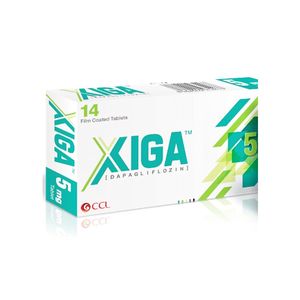
Xiga 5 mg Tablet
- Current Price:
Rs. 435
Price may vary by pharmacy and location.
- Generic Name (Formula)
Dapagliflozin
- Strength
- 5 mg
- Dosage Form
Tablet
- Manufacturer
- CCL Pharmaceuticals (Pvt.) Ltd
- Primary Use
- Type 2 Diabetes Management
More Details About the Medicine
Xiga 5 mg Tablet contains dapagliflozin 5 mg, an oral prescription medicine belonging to the SGLT2 inhibitor class. It is primarily used to help manage blood glucose levels in adults with type 2 diabetes mellitus, alongside appropriate diet, exercise and other treatment recommended by a doctor.
Dapagliflozin works through the kidneys rather than directly stimulating insulin production. This makes its mechanism different from several other commonly used diabetes medicines.
What is Xiga 5 mg Used For?
The main use of Xiga 5 mg is the management of type 2 diabetes. It can help lower elevated blood glucose by increasing the amount of glucose removed from the body through urine.
Depending on an individual’s condition, a doctor may prescribe dapagliflozin on its own or alongside other diabetes medicines.
Dapagliflozin also has established roles in the management of certain patients with heart failure and chronic kidney disease, although the appropriate strength and treatment regimen must be determined by a healthcare professional.
How Xiga Helps Control Blood Sugar
A protein called SGLT2 (sodium-glucose cotransporter 2) normally helps the kidneys return filtered glucose to the bloodstream.
Dapagliflozin inhibits this protein. As a result, less glucose is reabsorbed by the kidneys and more is passed out through urine, helping reduce blood glucose levels.
Its glucose-lowering action is largely independent of insulin secretion.
Taking Xiga 5 mg
Take Xiga exactly as prescribed by your healthcare professional. Dapagliflozin is generally taken once daily and can be taken with or without food.
Try to take the medicine consistently according to your prescribed schedule.
Do not take additional tablets to compensate for a missed dose unless your healthcare professional has advised you to do so.
Possible Side Effects
Some people taking dapagliflozin may experience:
- Increased urination
- Genital fungal infections
- Urinary tract infections
- Dizziness
- Increased thirst
- Reduced blood pressure due to fluid loss
The risk of low blood sugar (hypoglycaemia) may increase when dapagliflozin is taken together with insulin or certain other glucose-lowering medicines.
Important: Risk of Ketoacidosis
Although uncommon, medicines in the SGLT2 inhibitor class have been associated with diabetic ketoacidosis (DKA). Importantly, blood glucose may sometimes be lower than typically expected with DKA.
Seek urgent medical attention for symptoms such as persistent nausea or vomiting, abdominal pain, unusual tiredness or difficulty breathing.
Before Using Xiga 5 mg
Make sure your doctor knows if you have:
- Kidney or liver problems
- Type 1 diabetes
- A previous episode of ketoacidosis
- Recurrent urinary or genital infections
- Low blood pressure or dehydration
- An upcoming operation or period of prolonged fasting
Also tell your doctor about insulin, diabetes medicines, diuretics and other medications you currently use.
Can Xiga 5 mg Be Used for Type 1 Diabetes?
Xiga should not be treated as a routine medicine for type 1 diabetes. SGLT2 inhibitors can increase the risk of diabetic ketoacidosis in susceptible patients.
Patients should only use dapagliflozin for an indication and treatment regimen specifically recommended by their healthcare professional.
Important Advice
Xiga helps manage an underlying condition; it does not replace appropriate diet, physical activity, blood glucose monitoring or other treatments recommended as part of a diabetes management plan.
Do not change from Xiga 5 mg to Xiga 10 mg or 25 mg simply because blood glucose remains elevated. Treatment changes should be made by the prescribing healthcare professional.
Medical Disclaimer
This medicine profile is intended for general informational purposes only. It does not replace professional medical advice, diagnosis or treatment. Xiga 5 mg (dapagliflozin) is a prescription medicine and should be taken according to the instructions of a qualified healthcare professional.
Need Medical Advice?
Find a qualified doctor on NamakMandi.pk to review your symptoms and treatment.
Medical Disclaimer
The content on NamakMandi.pk is written and reviewed for general information only. It does not replace a diagnosis, treatment plan, prescription, or advice from a qualified healthcare professional. Never delay seeking medical care because of something you have read here. In an emergency, contact your nearest hospital immediately.