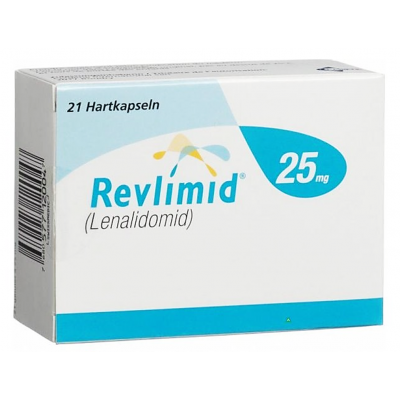
Revlimid 25 mg Capsule
- Current Price:
Rs. 35171
Price may vary by pharmacy and location.
- Generic Name (Formula)
Lenalidomide
- Strength
- 25 mg
- Dosage Form
Capsule
- Manufacturer
- Bristol Myers Squibb
- Primary Use
- Multiple Myeloma
More Details About the Medicine
Revlimid 25 mg Capsule contains lenalidomide, an immunomodulatory medicine used in the treatment of certain blood cancers and bone marrow disorders. It works by influencing immune-system activity and interfering with processes that support the growth of abnormal cells.
Revlimid is commonly prescribed as part of specialist treatment for multiple myeloma, a cancer affecting plasma cells in the bone marrow. It may also be prescribed for certain types of lymphoma and myelodysplastic syndromes, depending on the diagnosis and treatment protocol.
Revlimid must only be used under the supervision of a hematologist or oncologist. It requires regular blood tests and strict pregnancy-prevention precautions.
Uses of Revlimid 25 mg Capsule
Revlimid is used for selected hematological cancers and disorders.
1. Multiple Myeloma
Multiple myeloma is a cancer of plasma cells, a type of white blood cell found in the bone marrow.
Revlimid may be prescribed in combination with dexamethasone or other cancer treatments. It helps control abnormal plasma-cell growth and may delay disease progression.
Lenalidomide is also used as maintenance therapy following certain stem cell transplants, although lower strengths are commonly used for that purpose.
2. Mantle Cell Lymphoma
Revlimid may be used for adults with mantle cell lymphoma whose disease has returned or progressed following specified previous treatments.
3. Follicular and Marginal Zone Lymphoma
In selected patients who have already received treatment, Revlimid may be prescribed with rituximab for follicular lymphoma or marginal zone lymphoma.
4. Myelodysplastic Syndromes
Lenalidomide is also used for certain patients with myelodysplastic syndromes associated with a deletion of part of chromosome 5, known as del(5q).
The prescribed strength for these conditions may differ from 25 mg.
How Does Revlimid Work?
Lenalidomide affects several biological processes involved in cancer-cell survival.
It can:
- Modify the activity of certain immune cells.
- Interfere with signals that support abnormal cell growth.
- Influence the bone marrow environment.
- Help reduce the activity of susceptible cancer cells.
Its effects vary according to the disease being treated and the other medicines used in the treatment regimen.
Revlimid 25 mg Dosage
The dose and treatment schedule depend on the patient’s diagnosis, kidney function, blood counts and response to treatment.
For some adults receiving combination treatment for multiple myeloma, a commonly prescribed starting regimen is 25 mg once daily on days 1–21 of a 28-day treatment cycle.
This is not the correct schedule for every patient. Other conditions and maintenance treatments may require different strengths or dosing schedules.
Capsules should be swallowed whole with water and should not be opened, crushed or chewed. They may generally be taken with or without food.
Patients must follow their specialist’s exact prescription and should never change the dose or treatment cycle independently.
What If a Dose Is Missed?
If fewer than 12 hours have passed since the usual dosing time, the missed dose may generally be taken.
If more than 12 hours have passed, skip the missed dose and take the next dose at the scheduled time.
Do not take two doses together to compensate for a missed dose.
Possible Side Effects
Commonly reported side effects of lenalidomide include:
- Fatigue and weakness
- Diarrhea or constipation
- Nausea
- Skin rash or itching
- Muscle cramps
- Reduced appetite
- Low red blood cell counts (anemia)
- Low white blood cell counts (neutropenia)
- Low platelet counts (thrombocytopenia)
- Swelling of the hands or feet
Some side effects may result from the underlying cancer or other medicines used alongside Revlimid.
Serious Side Effects
Revlimid can cause potentially life-threatening complications, including:
- Blood clots: Deep vein thrombosis, pulmonary embolism, heart attack or stroke.
- Severe blood-cell suppression: Increased risk of serious infections, anemia and bleeding.
- Liver injury: Potentially serious changes in liver function.
- Severe skin reactions: Extensive rash, blistering or peeling skin.
- Severe allergic reactions: Swelling of the face or throat and difficulty breathing.
- Tumor lysis syndrome: A potentially dangerous metabolic complication in susceptible patients.
Seek emergency medical attention for chest pain, sudden shortness of breath, one-sided weakness, severe allergic symptoms or uncontrolled bleeding.
Important Warnings and Precautions
Pregnancy and Birth Defect Risk
Revlimid can cause severe birth defects or fetal death and must not be used during pregnancy.
Strict pregnancy testing and contraception requirements apply to patients who can become pregnant. Male patients must also follow pregnancy-prevention precautions because lenalidomide can be present in semen.
Patients must follow the applicable lenalidomide pregnancy-prevention programme and should not donate blood or sperm during treatment or for the specified period afterward.
Blood Clot Risk
Lenalidomide, particularly when combined with dexamethasone, increases the risk of blood clots.
A specialist may prescribe medication to reduce this risk after evaluating the patient’s medical history and individual risk factors.
Kidney Function
Lenalidomide is eliminated mainly through the kidneys. Patients with reduced kidney function may require lower doses.
Regular Blood Monitoring
Blood counts must be checked before and during treatment because Revlimid can lower white blood cells and platelets.
Liver and kidney function may also need monitoring.
Drug Interactions
Revlimid may require additional precautions when used with:
- Dexamethasone and other medicines that increase clotting risk
- Estrogen-containing hormonal treatments
- Other medicines that suppress bone marrow function
- Digoxin, which may require monitoring
Patients should inform their oncologist about all prescription medicines, supplements and herbal products they use.
Medical Disclaimer
This information is provided for educational purposes only. Revlimid is a high-risk prescription anticancer medicine requiring specialist supervision, laboratory monitoring and pregnancy-prevention measures. It must not be started, stopped or adjusted without guidance from the treating hematologist or oncologist.
Explore More Medicines
Browse our Medicines A–Z directory to find information about other medicines, including their uses, strengths, side effects and precautions.
Need Medical Advice?
Find a qualified doctor on NamakMandi.pk to review your symptoms and treatment.
Medical Disclaimer
The content on NamakMandi.pk is written and reviewed for general information only. It does not replace a diagnosis, treatment plan, prescription, or advice from a qualified healthcare professional. Never delay seeking medical care because of something you have read here. In an emergency, contact your nearest hospital immediately.