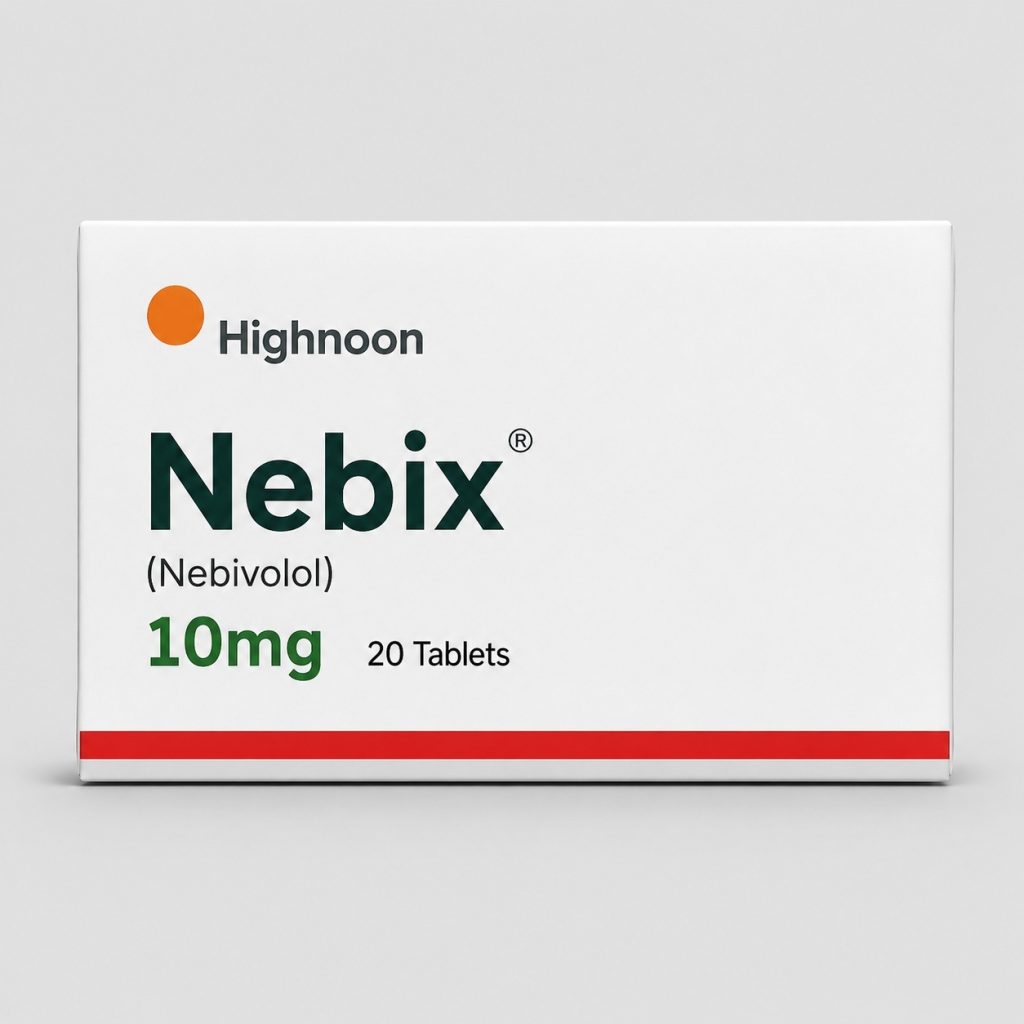
Nebix 10 mg Tablet
- Current Price:
Rs. 678
Price may vary by pharmacy and location.
- Generic Name (Formula)
Nebivolol
- Strength
- 10 mg
- Dosage Form
Tablet
- Manufacturer
- Highnoon Laboratories
- Primary Use
- High Blood Pressure
More Details About the Medicine
Nebix 10 mg Tablet contains Nebivolol 10 mg, a medicine primarily used for the treatment of high blood pressure (hypertension). Nebivolol belongs to the beta-blocker class of cardiovascular medicines and works by reducing the workload on the heart and helping blood vessels relax.
Nebix 10 mg is manufactured by Highnoon Laboratories in Pakistan. Current Pakistani medicine listings confirm Nebivolol 10 mg as its active ingredient.
What Is Nebix 10 mg Used For?
Nebix 10 mg may be prescribed for:
- High blood pressure (hypertension)
- Long-term blood pressure control
- Certain cardiovascular conditions where beta-blocker therapy is appropriate
- Reduction of excessive workload on the heart
Nebivolol may also be used in the management of stable chronic heart failure in selected patients, depending on the patient’s condition and prescribing guidance.
How Does Nebix 10 mg Work?
Nebivolol is a selective beta-1 adrenergic receptor blocker. By blocking certain effects of adrenaline on the heart, it helps slow the heart rate and reduces the force with which the heart pumps.
Nebivolol also has vasodilating properties associated with nitric oxide, which can help blood vessels relax. Together, these effects reduce blood pressure and decrease the workload placed on the cardiovascular system.
Controlling high blood pressure is important because untreated hypertension can gradually damage blood vessels and increase the risk of serious cardiovascular, kidney, and cerebrovascular complications.
How to Take Nebix 10 mg
Nebix should be taken exactly as prescribed by a healthcare professional (most probably a cardiologist).
The tablet is generally taken consistently at approximately the same time each day and can usually be taken with or without food.
The appropriate nebivolol dose varies between patients. A doctor may select the dose based on:
- Blood pressure readings
- Heart rate
- Age
- Kidney and liver function
- Other cardiovascular conditions
- Other medicines being taken
- Individual response to treatment
Nebix 10 mg should not be considered the appropriate starting dose for every patient. Lower-strength nebivolol products are also available, and treatment should be individualized.
Do Not Suddenly Stop Nebix
Patients taking Nebix regularly should not suddenly discontinue nebivolol without medical advice.
Abruptly stopping beta-blocker treatment can potentially worsen cardiovascular symptoms in some patients. When treatment needs to be discontinued, a healthcare professional may recommend gradually reducing the dose depending on the clinical circumstances.
Possible Side Effects
Possible side effects of nebivolol include:
- Headache
- Dizziness
- Tiredness
- Slow heartbeat (bradycardia)
- Low blood pressure
- Nausea
- Shortness of breath
- Swelling of the legs or ankles
Not everyone experiences these effects.
Contact your healthcare provider if you experience a very slow heartbeat, fainting, significant dizziness, worsening breathing problems, or unusual swelling.
Nebix and Heart Rate
Because Nebix reduces the effects of adrenaline on the heart, it can slow the heart rate.
This effect is expected to some degree, but an excessively slow pulse can cause dizziness, weakness, fainting, or exercise intolerance.
Patients receiving nebivolol may therefore have both their blood pressure and pulse rate monitored, particularly when starting treatment or after a dose adjustment.
Precautions
Tell your doctor before taking Nebix 10 mg if you have:
- A very slow heart rate
- Low blood pressure
- Heart conduction problems or heart block
- Heart failure
- Asthma or another breathing disorder
- Poor circulation
- Diabetes
- Kidney disease
- Liver disease
- Thyroid disease
Patients should also inform their doctor about all prescription medicines, over-the-counter medicines, and supplements they take.
Nebix and Diabetes
Beta-blockers require additional consideration in people with diabetes because they can mask some warning symptoms of hypoglycemia, particularly a rapid heartbeat.
Patients taking insulin or medicines capable of causing low blood glucose should continue appropriate glucose monitoring and discuss beta-blocker treatment with their healthcare provider.
Drug Interactions
Nebivolol can interact with medicines that affect blood pressure, heart rate, or cardiac conduction.
These may include:
- Other beta-blockers
- Certain calcium-channel blockers
- Antiarrhythmic medicines
- Other blood-pressure medicines
- Digoxin
- Certain antidepressants and other medicines that affect nebivolol metabolism
The combination is not necessarily inappropriate, but the prescribing doctor should know about all medicines being used.
Disclaimer: This information is for educational purposes only and does not replace professional medical advice. Nebix 10 mg is a prescription cardiovascular medicine. The appropriate dose should be determined by a healthcare professional based on blood pressure, heart rate, other medical conditions, and concurrent medicines. Do not abruptly stop nebivolol without consulting your doctor.
Need Medical Advice?
Find a qualified doctor on NamakMandi.pk to review your symptoms and treatment.
Medical Disclaimer
The content on NamakMandi.pk is written and reviewed for general information only. It does not replace a diagnosis, treatment plan, prescription, or advice from a qualified healthcare professional. Never delay seeking medical care because of something you have read here. In an emergency, contact your nearest hospital immediately.