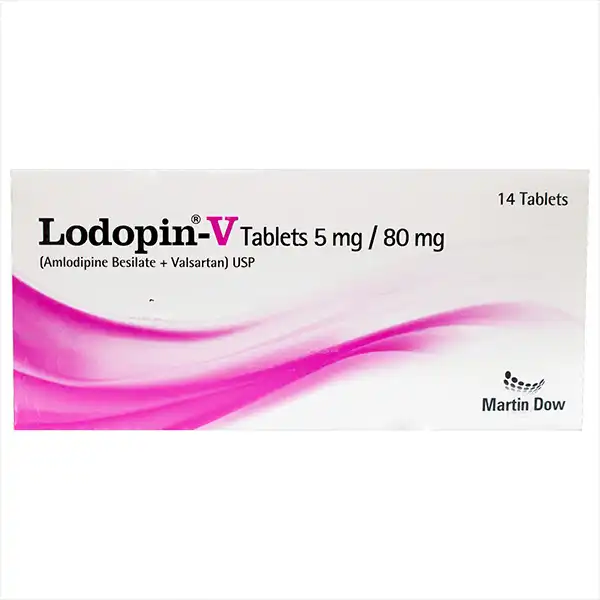
Lodopin-V 5/80 mg Tablet
- Current Price:
Rs. 372
Price may vary by pharmacy and location.
- Generic Name (Formula)
Amlodipine + Valsartan
- Strength
- 5/80 mg
- Dosage Form
Tablet
- Manufacturer
- Martin Dow
- Primary Use
- Blood Pressure Control
More Details About the Medicine
Lodopin-V 5/80 mg Tablet is a combination medicine used for the treatment of high blood pressure (hypertension). Each tablet contains two antihypertensive medicines: amlodipine 5 mg and valsartan 80 mg.
The combination targets blood pressure through two complementary mechanisms. Amlodipine relaxes the arterial walls, while valsartan reduces the blood-vessel-tightening effects of angiotensin II. Lodopin-V 5/80 mg may be prescribed when a doctor considers combination therapy more appropriate than treatment with a single blood-pressure medicine.
What Is Lodopin-V 5/80 mg Used For?
Lodopin-V 5/80 mg is prescribed to help bring elevated blood pressure under control.
A doctor may consider this combination when:
- A single antihypertensive medicine is not providing sufficient control
- A patient needs the effects of both amlodipine and valsartan
- The individual has previously been using the two components separately
- A fixed-dose combination could make the treatment regimen simpler
The tablet is intended for ongoing management of hypertension rather than occasional treatment whenever a blood-pressure reading happens to be high.
Understanding the 5/80 mg Strength
The two numbers in Lodopin-V 5/80 mg represent two different active ingredients:
5 mg = Amlodipine
80 mg = Valsartan
The 80 mg figure does not mean that this tablet contains 80 mg of amlodipine.
This distinction is particularly important because Lodopin-V is available in other strengths. Patients should check the complete strength printed on their prescription and medicine pack.
How the Combination Controls Blood Pressure
Lodopin-V does not rely on a single mechanism.
Amlodipine 5 mg
Amlodipine belongs to the calcium channel blocker family. It reduces calcium entry into the smooth muscle of the arteries.
This allows the arterial walls to relax, creating more space for blood to flow and reducing vascular resistance.
Valsartan 80 mg
Valsartan is an angiotensin II receptor blocker (ARB).
Angiotensin II is involved in narrowing blood vessels and regulating blood pressure. Valsartan blocks its action at AT1 receptors, helping prevent excessive constriction of the arteries.
Together, the two medicines provide a broader antihypertensive effect than either mechanism alone.
Why Is Hypertension Treatment Necessary?
High blood pressure can gradually damage blood vessels and organs without producing noticeable symptoms.
Poorly controlled hypertension is associated with an increased risk of:
- Stroke
- Heart attack
- Heart failure
- Kidney disease
- Eye damage
- Other cardiovascular complications
For this reason, blood-pressure medicines are usually taken regularly even when a person feels completely well.
How to Take Lodopin-V 5/80 mg
Lodopin-V is generally taken once daily, according to the doctor’s prescription.
For routine use:
- Swallow the tablet with water.
- Take it at approximately the same time each day.
- It can generally be taken with or without food.
- Do not take additional tablets because of one unusually high reading.
- Do not change to another Lodopin-V strength without medical advice.
Regular home blood-pressure monitoring may help your doctor determine how effectively the treatment is working.
Possible Side Effects
Lodopin-V 5/80 mg can produce adverse effects associated with either of its active ingredients.
Possible effects include:
- Dizziness
- Headache
- Tiredness
- Swelling around the ankles or feet
- Flushing
- Palpitations
- Nausea
- Abdominal discomfort
- Low blood pressure
Many people do not experience significant problems, but persistent or troublesome symptoms should be discussed with a healthcare professional.
Potassium Levels
Valsartan can cause blood potassium to increase in some patients.
Extra caution may be required with:
- Potassium supplements
- Potassium-containing salt substitutes
- Potassium-sparing diuretics
- Other medicines that increase serum potassium
High potassium does not always produce obvious symptoms, which is why laboratory monitoring may be appropriate in higher-risk patients.
Drug Interactions
Tell your doctor or pharmacist about all prescription medicines, non-prescription medicines and supplements you use.
Relevant interactions can include:
- Other antihypertensive medicines
- Diuretics
- Potassium supplements
- Potassium-sparing diuretics
- Lithium
- NSAID painkillers
- Certain CYP3A4 inhibitors or inducers
- Some medicines used for infections
The presence of an interaction does not always mean two medicines cannot be used together. Sometimes monitoring or dose adjustment is sufficient.
Who Should Use Lodopin-V Carefully?
Additional medical assessment may be required if you have:
- Kidney impairment
- Liver disease
- Very low blood pressure
- Significant dehydration
- Severe aortic stenosis
- Heart failure
- High potassium levels
- Previous allergy to amlodipine or valsartan
Also tell your doctor if you are taking other medicines that act on the renin-angiotensin system.
Important Safety Information
Lodopin-V 5/80 mg is a two-drug antihypertensive treatment and should be used according to a prescribed regimen. Patients with kidney disease or an increased risk of electrolyte abnormalities may need periodic monitoring of creatinine, eGFR and potassium.
Seek urgent medical attention if very high blood pressure occurs together with chest pain, severe shortness of breath, confusion, weakness or numbness, difficulty speaking, severe headache or sudden visual disturbance.
Explore More Medicines
Browse our Medicines A–Z directory to find information about other medicines, including their uses, strengths, side effects and precautions.
Need Medical Advice?
Find a qualified doctor on NamakMandi.pk to review your symptoms and treatment.
Medical Disclaimer
The content on NamakMandi.pk is written and reviewed for general information only. It does not replace a diagnosis, treatment plan, prescription, or advice from a qualified healthcare professional. Never delay seeking medical care because of something you have read here. In an emergency, contact your nearest hospital immediately.