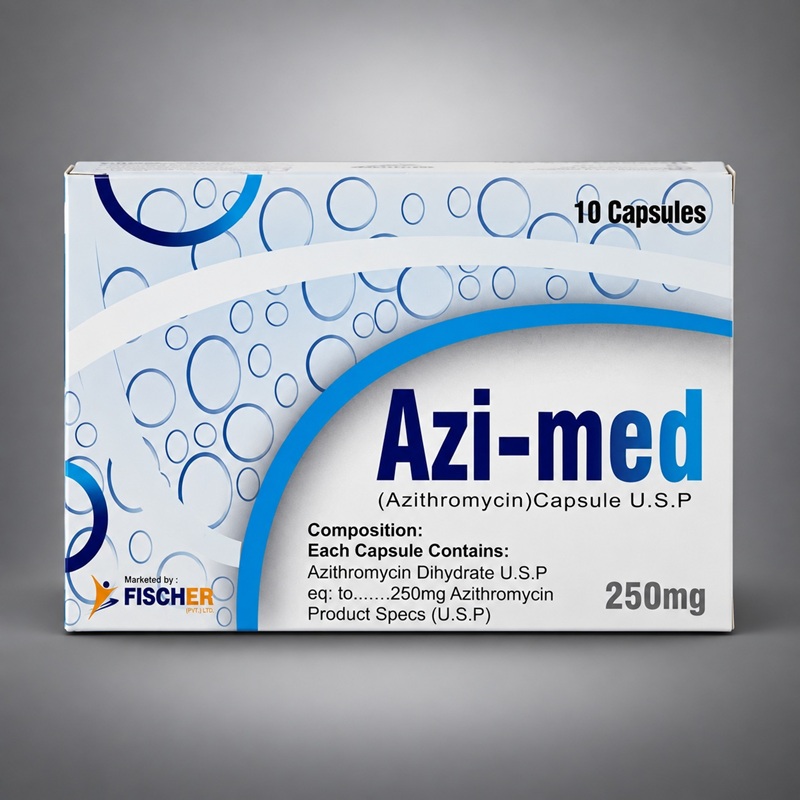
Azi-Med 250 mg Capsule
- Current Price:
Rs. 525
Price may vary by pharmacy and location.
- Generic Name (Formula)
Azithromycin
- Strength
- 250 mg
- Dosage Form
Tablet
- Manufacturer
- Mediate Pharmaceuticals (Pvt.) Ltd.
- Primary Use
- Treatment of Severe Bacterial Infections
More Details About the Medicine
Azi-Med 250 mg Capsule is an oral antibiotic containing azithromycin 250 mg. It is manufactured in Pakistan by Mediate Pharmaceuticals (Pvt.) Ltd. and belongs to the macrolide antibiotic group. The manufacturer lists Azi-Med 250 mg Capsules as an azithromycin dihydrate product.
Azi-Med is prescribed for susceptible bacterial infections affecting areas such as the respiratory tract, throat, sinuses, skin and certain other parts of the body. It does not work against viral infections such as the common cold or flu.
Primary Uses
Doctors may prescribe azithromycin for susceptible bacterial infections including:
- Bacterial throat and tonsil infections in appropriate patients
- Acute bacterial sinusitis
- Selected respiratory tract infections
- Community-acquired pneumonia
- Certain bacterial skin and soft-tissue infections
- Some sexually transmitted bacterial infections
The exact use depends on the suspected or confirmed organism, the site of infection, local antibiotic-resistance patterns and the patient’s medical history.
How Azi-Med Works
Azithromycin works by attaching to the 50S subunit of bacterial ribosomes and interfering with bacterial protein production. This prevents susceptible bacteria from growing and multiplying.
Azithromycin also remains in body tissues for a relatively long period. This pharmacological property allows it to be given once daily in many treatment regimens and explains why some azithromycin courses are shorter than those of certain other antibiotics.
Azi-Med 250 mg Dosage
The appropriate dose and duration depend on the type of infection, patient’s age, medical history and severity of illness.
One commonly used adult azithromycin regimen for some respiratory infections is 500 mg on the first day followed by 250 mg once daily on days 2–5. Other infections require different doses or treatment durations.
This example should not be treated as a universal dosing schedule. Azi-Med is an antibiotic and should be taken according to the prescribed regimen.
How to Take Azi-Med
Swallow the capsule with water and follow the dosing schedule prescribed for the infection.
Complete the prescribed course even if symptoms begin to improve earlier, unless a healthcare professional advises you to stop because of an adverse reaction or another clinical reason.
Do not use leftover Azi-Med from a previous illness or share antibiotics with another person.
Azi-Med for Sore Throat and Cough
Azi-Med is not a general medicine for cough, sore throat, fever or flu.
Many respiratory illnesses are viral and do not benefit from antibiotics. Azithromycin may be prescribed when a healthcare professional determines that a susceptible bacterial infection is present or sufficiently likely.
Unnecessary antibiotic use increases the risk of antimicrobial resistance and exposes the patient to side effects without providing benefit.
Common Side Effects
Azithromycin is generally well tolerated, but possible side effects include:
- Diarrhea
- Nausea
- Abdominal pain
- Vomiting
- Indigestion
- Headache
- Dizziness
These effects are often mild and temporary.
Serious Side Effects
Seek medical attention if symptoms suggest a serious reaction, including:
- Severe or persistent diarrhea
- Bloody diarrhea
- Severe allergic reaction
- Yellowing of the skin or eyes
- Unusual or irregular heartbeat
- Fainting
- Severe skin rash or blistering
Azithromycin can rarely affect the heart’s electrical rhythm and cause QT prolongation, particularly in people who already have certain cardiac risk factors. Serious liver reactions and severe antibiotic-associated diarrhea have also been reported.
Who Should Use Azi-Med With Caution?
Tell your doctor if you have:
- Liver disease
- A history of liver problems caused by azithromycin
- Heart rhythm problems
- Long QT syndrome
- Low potassium or magnesium levels
- Myasthenia gravis
- Previous severe reactions to macrolide antibiotics
Azi-Med should not be used by someone with a known serious allergy to azithromycin, erythromycin or related macrolide antibiotics.
Drug Interactions
Azithromycin can interact with certain medicines. Particular attention may be required with:
- Warfarin and other anticoagulant therapy
- Digoxin
- Some antiarrhythmic medicines
- Other medicines capable of prolonging the QT interval
- Cyclosporine or tacrolimus
- Aluminium- or magnesium-containing antacids
Tell your doctor or pharmacist about other prescription medicines, supplements and over-the-counter products you use before starting an antibiotic.
Antibiotic Resistance
Azi-Med should be used only when there is an appropriate reason to use an antibiotic.
Taking azithromycin unnecessarily, using an incorrect dose, repeatedly self-medicating or failing to follow an appropriate treatment regimen can contribute to antibiotic resistance. Resistant bacteria can make future infections more difficult to treat.
Explore More Medicines
Browse our Medicines A–Z directory to find information about other medicines, including their uses, strengths, side effects and precautions.
Need Medical Advice?
Find a qualified doctor on NamakMandi.pk to review your symptoms and treatment.
Medical Disclaimer
The content on NamakMandi.pk is written and reviewed for general information only. It does not replace a diagnosis, treatment plan, prescription, or advice from a qualified healthcare professional. Never delay seeking medical care because of something you have read here. In an emergency, contact your nearest hospital immediately.