


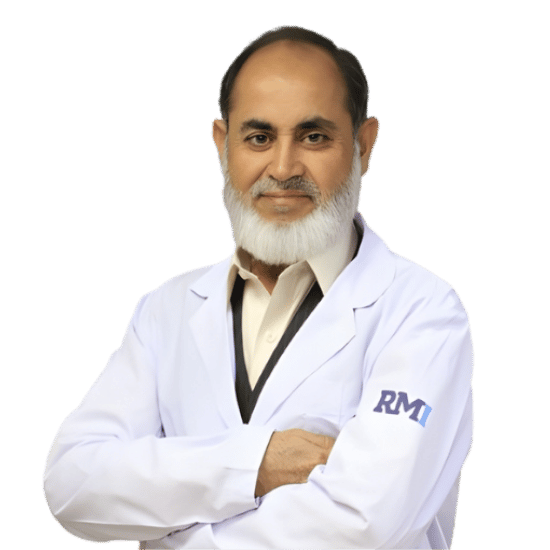
Prof. Dr. Miqdad Ali Khan – Cardiologist
- Cardiologist
- MBBS
- Hospital
- Private Clinic
None
- Appointment Contact
091-5838666
About the Doctor
Prof. Dr. Miqdad Ali Khan is a senior Cardiologist and Interventional Cardiologist in Peshawar with extensive experience in the diagnosis and treatment of coronary artery disease and other cardiovascular conditions. He currently serves as Head of the Department of Cardiology at Rehman Medical Institute (RMI), Peshawar, where he works as a consultant cardiologist and cardiac interventionist.
He received postgraduate medical training in the United States at Michigan State University and the University of Wisconsin and holds American board certifications in Internal Medicine, Cardiovascular Diseases, and Interventional Cardiology. His professional career has combined clinical cardiology, complex coronary interventions, medical education, and cardiovascular research.
A particularly important part of his practice is interventional cardiology. He has advanced experience in coronary procedures and the management of high-risk and complex cardiac cases.
Prof. Dr. Miqdad Ali Khan Specializes In
- Interventional Cardiology
- Coronary Artery Disease
- Ischemic Heart Disease
- Angina
- Heart Attack / Myocardial Infarction
- Coronary Angiography
- Coronary Angioplasty
- Complex Coronary Interventions
- Cardiac Catheterization
- High-Risk Coronary Procedures
- Heart Failure
- Hypertension
- Abnormal Heart Rhythm / Arrhythmias
- Preventive Cardiology
- Cardiovascular Risk Assessment
- Heart and Vascular Disease
Interventional Cardiology
Interventional cardiology involves the use of minimally invasive, catheter-based procedures to diagnose and treat certain cardiovascular diseases.
Prof. Dr. Miqdad Ali Khan is specifically trained in complex coronary procedures and has experience managing high-risk cases. His interventional work includes coronary angiography and angioplasty, with RMI highlighting his expertise in advanced cardiac and vascular interventions.
During coronary angiography, contrast imaging is used to identify narrowing or blockage within the arteries supplying blood to the heart. When clinically appropriate, angioplasty can be performed to open a significantly narrowed artery, often with placement of a coronary stent.
Whether a patient requires medication, angioplasty, bypass surgery, or another treatment depends on the nature and severity of the disease and the patient’s overall condition.
Coronary Artery Disease and Heart Attack
Prof. Dr. Miqdad Ali Khan’s expertise in complex coronary intervention is particularly relevant to patients with advanced coronary disease or cases where conventional treatment may present additional challenges. RMI has documented his involvement in treating high-risk patients through interventional cardiac techniques when conventional surgery carried substantial risk or was declined.
Heart Failure and Cardiovascular Care
Patients with heart failure may experience breathlessness, fatigue, difficulty exercising, or swelling of the feet and ankles. Management depends on the cause and severity and can involve medications, lifestyle changes, monitoring, and cardiac procedures in selected cases.
Prof. Dr. Miqdad Ali Khan also evaluates patients with hypertension, chest pain, abnormal heart rhythms and other cardiovascular problems. Current clinical listings include heart failure management, angiography, angioplasty and cardiac catheterization among his services.
Academic and International Experience
Prof. Dr. Miqdad Ali Khan has substantial academic experience in the United States.
His professional experience includes academic appointments at Michigan State University College of Human Medicine, including Clinical Instructor, Assistant Professor and Associate Professor roles. He has also been involved in postgraduate teaching associated with the University of Wisconsin Medical School and Michigan State University.
His background also includes cardiovascular research and postgraduate medical education. This combination of clinical, interventional, research and teaching experience distinguishes his profile from a general cardiology practice.
Qualifications & Professional Credentials
The strongest current sources support:
- Medical degree / primary medical qualification
- Postgraduate training – Michigan State University
- Postgraduate training – University of Wisconsin
- Diplomate, American Board of Internal Medicine
- Diplomate, American Board of Cardiovascular Diseases
- Diplomate, American Board of Interventional Cardiology
- FACC
- FISCI
- FSCAI
- FACP (USA)
Are you a healthcare professional?
Join NamakMandi.pk and make it easier for patients to find your professional information.
More Doctors in Peshawar


Doctor profiles on NamakMandi.pk are provided for informational purposes. Qualifications, affiliations, consultation timings, fees and availability may change. Please confirm current information with the relevant healthcare provider.