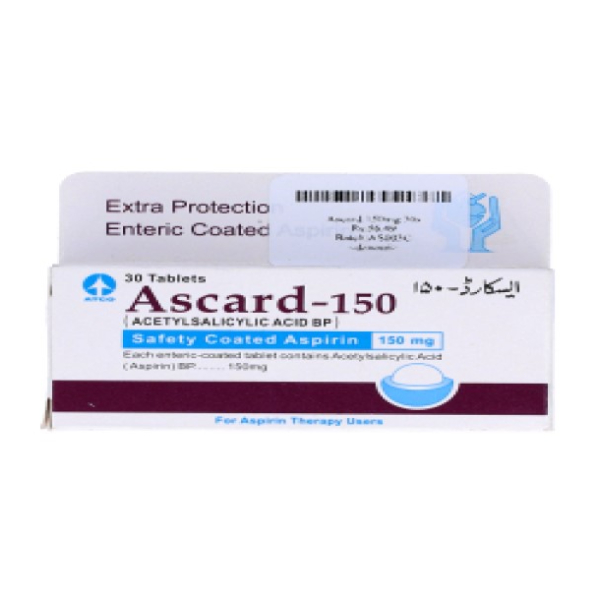
Ascard 150 mg Tablet
- Current Price:
Rs. 195
Price may vary by pharmacy and location.
- Generic Name (Formula)
Aspirin (Acetylsalicylic Acid)
- Strength
- 150 mg
- Dosage Form
Tablet
- Manufacturer
- ATCO
- Primary Use
- Prevention of harmful blood clots
More Details About the Medicine
Ascard 150 mg Tablet is an aspirin (acetylsalicylic acid) 150 mg medicine manufactured by ATCO Laboratories in Pakistan. At this dose, aspirin is commonly used for its antiplatelet effect, helping reduce the formation of harmful blood clots in patients with certain cardiovascular or cerebrovascular conditions. Multiple Pakistani medicine sources identify Ascard 150 mg specifically as aspirin 150 mg, so it should not be confused with Ascard Plus, which contains aspirin plus clopidogrel.
What is Ascard 150 mg used for?
Ascard 150 mg may be prescribed to reduce platelet aggregation and lower the risk of clot-related cardiovascular events. Depending on the patient’s condition, aspirin therapy may be used for:
- Prevention of recurrent heart attack
- Certain patients with coronary artery disease
- After some coronary procedures
- Prevention of certain ischemic strokes or transient ischemic attacks (TIAs)
- Other cardiovascular conditions where antiplatelet therapy is indicated
Aspirin should not be started routinely for heart-attack prevention without medical advice. The benefit of preventive aspirin varies according to a person’s cardiovascular and bleeding risks.
How does Ascard 150 mg work?
Aspirin irreversibly blocks the cyclooxygenase-1 (COX-1) enzyme in platelets, reducing production of thromboxane A2. This makes platelets less able to stick together and form a blood clot.
Its effect on platelets lasts for the lifespan of the affected platelet, which is why regular prescribed dosing can provide ongoing antiplatelet protection.
How to Take Ascard 150 mg
Take Ascard 150 mg exactly as prescribed by your doctor. The appropriate aspirin dose depends on the condition being treated and the patient’s individual risk factors.
Swallow the tablet with water. If aspirin causes stomach discomfort, ask your doctor or pharmacist about the appropriate way to take your particular formulation.
Do not increase, reduce or discontinue prescribed aspirin treatment on your own.
Common Side Effects
Possible side effects include:
- Indigestion
- Heartburn
- Nausea
- Stomach discomfort
- Easy bruising
- Nosebleeds
- Bleeding that takes longer than usual to stop
Pakistani pharmacy information for Ascard 150 mg also lists gastrointestinal effects including upset stomach, heartburn, nausea and vomiting.
Important Bleeding Warning
Because aspirin interferes with platelet function, Ascard 150 mg can increase the risk of bleeding.
Seek medical attention for signs such as:
- Black or tarry stools
- Vomiting blood
- Blood in the urine
- Unexplained or persistent bleeding
- Severe or unusual bruising
- Severe headache accompanied by weakness, confusion or other neurological symptoms
The risk can be greater in people with a history of gastrointestinal ulcers or bleeding and in those taking other medicines that affect blood clotting.
Who Should Be Careful With Ascard?
Tell your doctor before taking Ascard 150 mg if you have:
- A stomach or duodenal ulcer
- Previous gastrointestinal bleeding
- A bleeding or clotting disorder
- Aspirin or NSAID allergy
- Aspirin-sensitive asthma
- Kidney or liver problems
- Uncontrolled high blood pressure
- An upcoming operation or dental procedure
Ascard should generally be avoided in people who have previously experienced a serious allergic reaction to aspirin unless a specialist advises otherwise.
Drug Interactions
Important interactions can occur with:
- Warfarin
- Apixaban, rivaroxaban and other anticoagulants
- Clopidogrel and other antiplatelet medicines
- Ibuprofen, diclofenac and other NSAIDs
- Corticosteroids
- Methotrexate
- Certain antidepressants
Taking several medicines that increase bleeding risk can substantially increase the chance of bleeding. Patients should therefore tell their doctor or pharmacist about all medicines and supplements they use.
Ascard 75 mg vs Ascard 150 mg vs Ascard Plus
| Feature | Ascard 75 mg | Ascard 150 mg | Ascard Plus |
|---|---|---|---|
| Active ingredient | Aspirin | Aspirin | Aspirin + Clopidogrel |
| Strength | Aspirin 75 mg | Aspirin 150 mg | Commonly Aspirin 81 mg + Clopidogrel 75 mg* |
| Medicine type | Single antiplatelet | Single antiplatelet | Dual antiplatelet |
| Main purpose | Helps prevent harmful blood clots | Higher aspirin dose for antiplatelet therapy when prescribed | Stronger platelet inhibition when dual therapy is required |
| Common situations | Cardiovascular prevention in selected patients | Specific cardiovascular indications requiring 150 mg aspirin | Often used after ACS or coronary stent when prescribed |
| Bleeding risk | Increased | Increased | Generally higher because it contains two antiplatelet medicines |
| Interchangeable? | No | No | No |
Important Safety Information
Ascard 150 mg should not be treated as a general-purpose medicine for preventing heart attacks. Aspirin can prevent certain clot-related events but can also cause serious bleeding, so long-term treatment should be based on an individual’s medical history and cardiovascular and bleeding risks.
Explore More Medicines
Browse our Medicines A–Z directory to find information about other medicines, including their uses, strengths, side effects and precautions.
Need Medical Advice?
Find a qualified doctor on NamakMandi.pk to review your symptoms and treatment.
Medical Disclaimer
The content on NamakMandi.pk is written and reviewed for general information only. It does not replace a diagnosis, treatment plan, prescription, or advice from a qualified healthcare professional. Never delay seeking medical care because of something you have read here. In an emergency, contact your nearest hospital immediately.