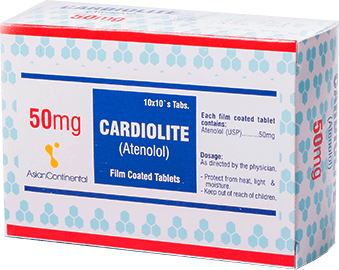
Cardiolite 50 mg Tablet
- Current Price:
Rs. 113
Price may vary by pharmacy and location.
- Generic Name (Formula)
Atenolol
- Strength
- 50 mg
- Dosage Form
Tablet
- Manufacturer
- Asian Continental (Pvt.) Ltd
- Primary Use
- High Blood Pressure
More Details About the Medicine
Cardiolite 50mg contains atenolol, a beta-blocker medicine used mainly for the treatment and control of high blood pressure. It works by reducing the effects of adrenaline on the heart, helping slow the heartbeat and decrease the force of heart contractions. This reduces the workload on the heart and helps lower blood pressure.
Main Uses
Cardiolite 50mg is primarily used for hypertension (high blood pressure). It may also be prescribed for certain cardiovascular conditions, including angina (heart-related chest pain) and some abnormal or rapid heart rhythms.
By reducing the heart rate and workload, it can decrease the amount of oxygen required by the heart. This makes atenolol useful in selected patients with conditions where reducing cardiac workload is beneficial.
It is not a general painkiller, antibiotic or medicine for ordinary weakness. Its use should be based on a specific medical indication.
Composition
Each tablet contains Atenolol 50mg as the active ingredient. Atenolol belongs to the beta-blocker group and primarily affects beta-1 receptors in the heart.
Cardiolite 50mg should not be confused with Cardiolite Plus, which is a different formulation containing atenolol together with chlorthalidone.
How It Works
Atenolol blocks the action of certain hormones, particularly adrenaline, on beta-1 receptors in the heart. This reduces stimulation of the heart and generally causes the heart to beat more slowly and with less force.
The resulting reduction in cardiac workload can help lower blood pressure. In patients with angina, it can also reduce the heart’s oxygen demand, which may help prevent certain episodes of heart-related chest discomfort.
How to Take
Cardiolite should be taken according to the treatment plan provided by a doctor or healthcare professional. Atenolol is commonly taken once daily, although the exact schedule depends on the condition being treated and the individual’s response.
The tablet can generally be taken with or without food. It should be swallowed with water and taken consistently at approximately the same time each day.
If a dose is missed, patients should follow the instructions provided by their doctor or pharmacist. Taking an extra dose to compensate for a missed tablet should generally be avoided.
Atenolol should not be stopped suddenly without medical advice, particularly when it is being used for angina or another heart condition. Sudden discontinuation can cause an increase in heart rate and may worsen some cardiovascular conditions.
Side Effects
Common side effects may include dizziness, lightheadedness, tiredness, weakness, nausea and a slower heartbeat. Some people may also experience cold hands and feet.
These effects can be more noticeable when treatment is first started. If dizziness or tiredness becomes severe or continues for a long time, medical advice should be obtained.
A very slow heartbeat, fainting, severe breathing difficulty or worsening symptoms of heart failure require prompt medical attention.
Warnings and Precautions
Cardiolite should be used carefully in people with asthma, chronic bronchitis, emphysema, heart failure, kidney disease, circulation problems, Raynaud’s disease or certain heart rhythm disorders.
People with diabetes should inform their healthcare professional before using atenolol. Beta-blockers can mask some warning signs of low blood sugar, particularly a rapid heartbeat.
Patients with kidney problems may require closer monitoring because atenolol is mainly removed from the body through the kidneys.
Before starting treatment, patients should inform their doctor about existing heart, breathing, kidney or circulation problems.
Contraindications
Atenolol may not be suitable for people with certain severe heart conduction disorders, very slow heart rate, cardiogenic shock or some forms of uncontrolled heart failure.
It should also be avoided in people with a known allergy to atenolol or any component of the medicine.
Important Interactions
Cardiolite may interact with medicines that also slow the heart or lower blood pressure. Important examples include verapamil, diltiazem, digoxin and other beta-blockers.
Medicines used for diabetes may also require additional monitoring because atenolol can make some symptoms of low blood sugar less noticeable.
Patients should inform their doctor or pharmacist about all prescription medicines, over-the-counter medicines and supplements they are taking.
Explore More Medicines
Browse our Medicines A–Z directory to find information about other medicines, including their uses, strengths, side effects and precautions.
Need Medical Advice?
Find a qualified doctor on NamakMandi.pk to review your symptoms and treatment.
Medical Disclaimer
The content on NamakMandi.pk is written and reviewed for general information only. It does not replace a diagnosis, treatment plan, prescription, or advice from a qualified healthcare professional. Never delay seeking medical care because of something you have read here. In an emergency, contact your nearest hospital immediately.