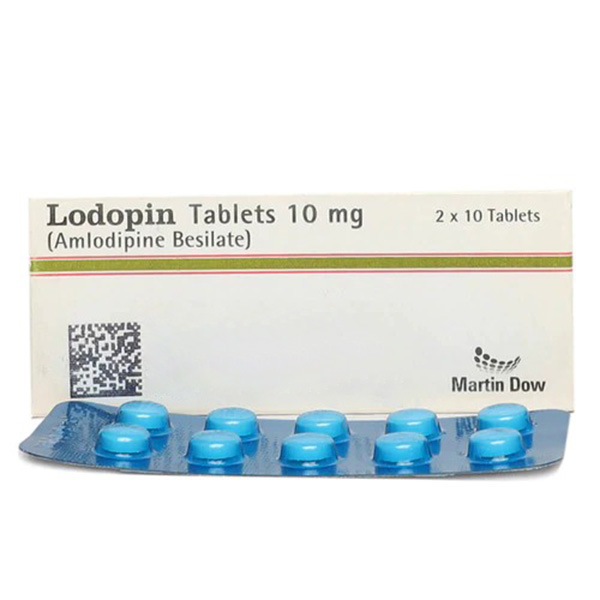
Lodopin 10 mg Tablet
- Current Price:
Rs. 241
Price may vary by pharmacy and location.
- Generic Name (Formula)
Amlodipine
- Strength
- 10 mg
- Dosage Form
Tablet
- Manufacturer
- Martin Dow
- Primary Use
- Angina, High Blood Pressure
More Details About the Medicine
Lodopin 10 mg Tablet is an antihypertensive medicine containing amlodipine 10 mg. It belongs to the dihydropyridine group of calcium channel blockers and is prescribed mainly for controlling high blood pressure (hypertension). It can also form part of long-term treatment for chronic stable angina and vasospastic angina.
The 10 mg tablet provides a higher dose of amlodipine than Lodopin 5 mg and is generally used when a doctor considers stronger blood-pressure or anti-anginal control necessary.
What Is Lodopin 10 mg Used For?
Lodopin 10 mg is prescribed when sustained relaxation of the arteries is needed to reduce blood pressure or decrease the workload placed on the heart.
Its established uses include:
- High blood pressure
- Chronic stable angina
- Vasospastic or Prinzmetal angina
- Cardiovascular treatment in selected patients with coronary artery disease
For hypertension, amlodipine may be used by itself or together with medicines from other antihypertensive classes.
Why Is Controlling High Blood Pressure Important?
Hypertension can remain unnoticed for years because many people experience no symptoms even when their readings are high.
Over time, uncontrolled blood pressure can contribute to damage involving the:
- Heart
- Brain
- Kidneys
- Eyes
- Arteries
Effective blood-pressure treatment helps lower the risk of cardiovascular complications such as stroke and heart disease.
Lodopin controls blood pressure while treatment continues; it does not permanently cure hypertension.
How Does Lodopin 10 mg Lower Blood Pressure?
Amlodipine reduces the movement of calcium into smooth-muscle cells within arterial walls.
With less calcium available for contraction, the arteries become more relaxed and wider. Blood can then move through the circulation against less resistance.
The result is a gradual reduction in blood pressure.
Amlodipine has a relatively long duration of action, allowing it to provide blood-pressure control across a 24-hour period when taken once daily.
Role of Lodopin in Angina
The heart requires a continuous supply of oxygen. When the oxygen supply becomes inadequate for the heart’s needs, some people develop angina.
Amlodipine can help by:
- Dilating arteries
- Reducing resistance against which the heart pumps
- Lowering the heart’s oxygen demand
- Improving coronary blood flow in vasospastic angina
Regular treatment may therefore help reduce the frequency of angina episodes.
Lodopin is not intended to provide rapid relief from a sudden episode of chest pain.
When Is the 10 mg Strength Used?
For many adults, amlodipine treatment starts at a lower dose such as 5 mg once daily.
If blood pressure remains above the desired target and the medicine is tolerated, the doctor may increase the dose to 10 mg once daily.
Ten milligrams is generally the maximum recommended daily adult dose of amlodipine.
The decision to increase treatment should be based on blood-pressure response, other medical conditions and adverse effects—not on a single high reading at home.
How to Take Lodopin 10 mg
Lodopin is normally taken once a day.
For consistent treatment:
- Take the tablet at roughly the same time each day.
- Swallow it with water.
- It can generally be taken with or without meals.
- Continue treatment even when you feel well.
- Do not take an additional tablet for an unexpectedly high blood-pressure reading unless your doctor has instructed you to do so.
Morning or evening administration may both be suitable. Consistency and adherence are generally more important than choosing a particular hour unless your doctor has provided specific instructions.
How Long Does Lodopin Take to Work?
Amlodipine has a gradual onset and long-lasting action.
Blood pressure begins to respond after treatment is started, but doctors usually assess its effectiveness from readings collected over time rather than expecting an immediate maximum effect after the first tablet.
This gradual action is one reason Lodopin is suited to routine daily blood-pressure management rather than emergency treatment of severely elevated blood pressure.
Side Effects of Lodopin 10 mg
Possible adverse effects of amlodipine include:
- Swelling of the ankles or feet
- Headache
- Flushing
- Dizziness
- Tiredness
- Palpitations
- Nausea
- Sleepiness
- Abdominal discomfort
Not every patient develops these effects.
Ankle swelling may be more noticeable at higher doses
Peripheral edema is an important dose-related adverse effect of amlodipine. Consequently, some patients who tolerated 5 mg may experience more ankle swelling after moving to 10 mg.
Persistent swelling should be discussed with the prescribing doctor.
Can Lodopin Lower Blood Pressure Too Much?
It can, particularly when combined with other blood-pressure-lowering medicines.
Symptoms associated with excessively low blood pressure may include:
- Lightheadedness
- Weakness
- Blurred vision
- Feeling faint
- Fainting
If these symptoms are persistent or severe, blood pressure should be checked and medical advice obtained.
Important Drug Interactions
Tell your healthcare professional about prescription medicines, over-the-counter products and supplements you use.
Potentially relevant interactions include certain:
- CYP3A4 inhibitors and inducers
- Antifungal medicines
- Antibiotics
- HIV medicines
- Other antihypertensives
- Simvastatin
When amlodipine is taken with simvastatin, the permitted simvastatin dose may need to be limited because amlodipine can increase exposure to simvastatin.
Lodopin 5 mg vs Lodopin 10 mg
Both strengths contain amlodipine, but the amount in each tablet differs.
| Feature | Lodopin 5 mg | Lodopin 10 mg |
|---|---|---|
| Amlodipine | 5 mg | 10 mg |
| Main indication | Hypertension | Hypertension |
| Angina treatment | Yes | Yes |
| Relative strength | Lower | Higher |
| Typical frequency | Once daily | Once daily |
| Ankle swelling | Can occur | May be more likely at higher dose |
| Adult dose position | Common starting/maintenance dose | Usually upper end of routine dosing |
A patient taking Lodopin 5 mg should not move to 10 mg independently because doubling the strength may increase both the blood-pressure-lowering effect and dose-related adverse effects.
Lodopin 10 mg vs Lodopin-V
Ordinary Lodopin contains only amlodipine.
Lodopin-V is a combination product containing amlodipine and valsartan.
These medicines are therefore not equivalent. A combination tablet may be prescribed when more than one mechanism is required to control hypertension.
Explore More Medicines
Browse our Medicines A–Z directory to find information about other medicines, including their uses, strengths, side effects and precautions.
Need Medical Advice?
Find a qualified doctor on NamakMandi.pk to review your symptoms and treatment.
Medical Disclaimer
The content on NamakMandi.pk is written and reviewed for general information only. It does not replace a diagnosis, treatment plan, prescription, or advice from a qualified healthcare professional. Never delay seeking medical care because of something you have read here. In an emergency, contact your nearest hospital immediately.